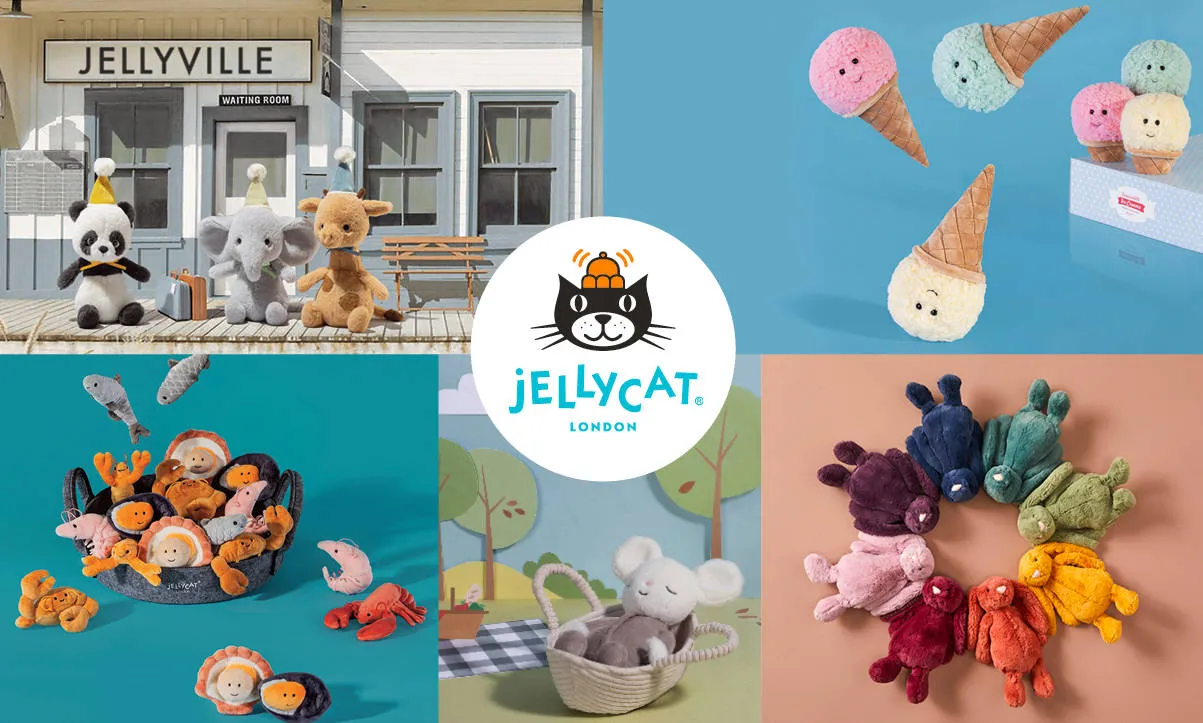
If you've ever held a genuine Jellycat, you know it's more than just a stuffed animal—it's a cloud-soft companion that’s built to last. However, as these whimsical plushies have skyrocketed in popularity, the market has been flooded with convincing knockoffs. Nothing ruins the joy of a new "mail day" like realizing your long-awaited bunny or amuseable feels lumpy or looks a bit "off." To help you protect your collection, we've put together a comprehensive guide on how to spot the subtle differences between the real deal and a counterfeit, ensuring every cuddle is the high-quality experience you paid for.
🧸 Jellycat Plush Toys Overview
Founded in London in 1999, Jellycat has transformed from a niche boutique toy brand into a global cultural phenomenon. Known for their "impossibly soft" fabrics and quirky, sophisticated designs, Jellycats are as popular with adult collectors and Gen Z as they are with children.
1. Why Are They So Popular?
Several factors contribute to the "Jellycat Obsession":
-
The "Squish" Factor: They use high-grade, ultra-plush polyester fabrics and weighted plastic beans to create a unique tactile experience that feels "luxurious" compared to standard plushies.
-
Whimsical Design: Unlike traditional toy brands, Jellycat personifies everyday objects—from sourdough baguettes to sports kettlebells—giving them tiny smiles and "dangly" corduroy limbs.
-
Collectability: Many designs are "Retired" after a limited run, creating a high-demand secondary market for rare items.
-
Safety Standards: Every toy is tested to rigorous international standards (ASTM, EN71, ISO 8124), making them "safe from birth" unless otherwise noted.
2. Core Collections
Jellycat organizes its thousands of designs into several distinct families:
Bashful Bunnies
The most iconic and best-selling range. Recognizable by their long, floppy ears and pink or suede noses. They come in dozens of colors (Beige, Silver, Tulip Pink, etc.) and sizes ranging from "Tiny" (13cm) to "Very Big" (67cm).
Amuseables
The heart of the brand’s quirky identity. This collection features personified:
-
Food & Drink: Avocado, Coffee-to-Go, Croissant, and the viral "Boiled Egg."
-
Plants: Tulips, Aloes, and the "Vivacious Vegetables" line.
-
Lifestyle: Books, pencils, and sports equipment like soccer balls and tennis rackets.
The "Smudge" Range
Known for having the softest fur in the entire catalog. These toys are "under-stuffed," giving them a floppy, weighted, and incredibly cuddly feel. Popular models include Smudge Elephant and Smudge Rabbit.
Fuddlewuddle & Cordy Roy
-
Fuddlewuddle: Features a unique, rippled "fuddle" texture in the fur.
-
Cordy Roy: Made from thick, durable corduroy fabric, often preferred for younger children due to the sensory texture.
3. Gifting & Collecting
-
Jellycat toys are popular gifts for baby showers, birthdays, and holidays thanks to their softness, charm, and personality.
-
Many collectors follow seasonal drops and limited editions. Some retired designs even gain value in secondary markets.
4. Cultural & Market Notes
Jellycats have become a social media phenomenon, especially on platforms like TikTok, where users showcase collections and unboxings. While generally adored, the brand's popularity has led to strong demand, occasional scarcity, and even heightened interest in collectible pieces.
However, with rising popularity comes an unfortunate side effect: counterfeit Jellycat toys flooding online marketplaces. Fake Jellycats often look convincing at first glance, but they fall short in quality, safety, and long-term durability. Below are the most important details to examine before making a purchase.
🧭 Jellycat Plush Toys Real vs. Fake Guide
🔍 Why Jellycat Plush Toys Are Commonly Faked
Before diving into authentication details, it's important to understand why Jellycat is such a frequent target for counterfeiters:
-
High global demand (especially Bashful, Amuseable, and seasonal collections)
-
Premium pricing compared to generic plush toys
-
Strong gifting market (baby showers, birthdays, holidays)
-
High sales volume on third-party platforms (eBay, Shopee, Lazada, Taobao, Facebook Marketplace)
Fake Jellycats are often marketed as:
-
"Factory overstock"
-
"Same quality, no tag"
-
"UK version / export version"
-
"OEM Jellycat"
👉 Important: Jellycat does not sell OEM, factory seconds, or tag-less versions to the public.
⚡ Quick Authentication Checklist
| Check Point | Authentic Characteristics | Red Flags |
| Fabric | Ultra-soft, dense, no shedding | Thin, scratchy, sheds |
| Stitching | Tight & even | Loose, uneven |
| Hang Tag | Crisp, correct font | Blurry, wrong logo |
| Fabric Label | Full safety info | Missing or incorrect |
| Face | Symmetrical embroidery | Crooked or glued |
| Filling | Even, plush | Lumpy or hollow |
| Weight | Balanced | Too light |
| Smell | Neutral | Strong chemical |
| Price | Market-consistent | Unrealistically cheap |
| Seller | Authorized or reputable | Unknown / risky |
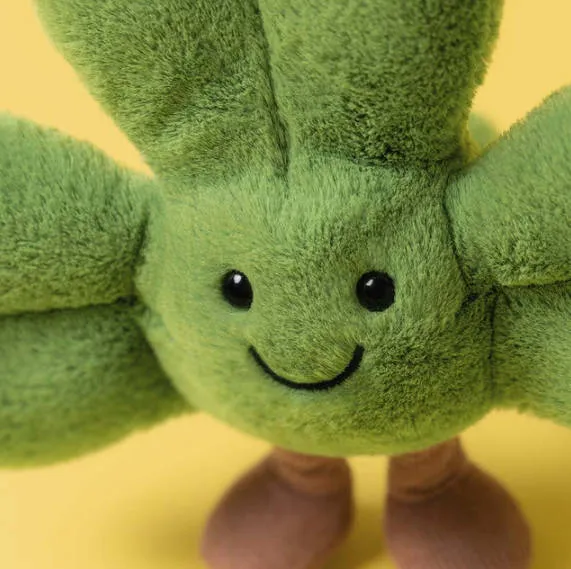
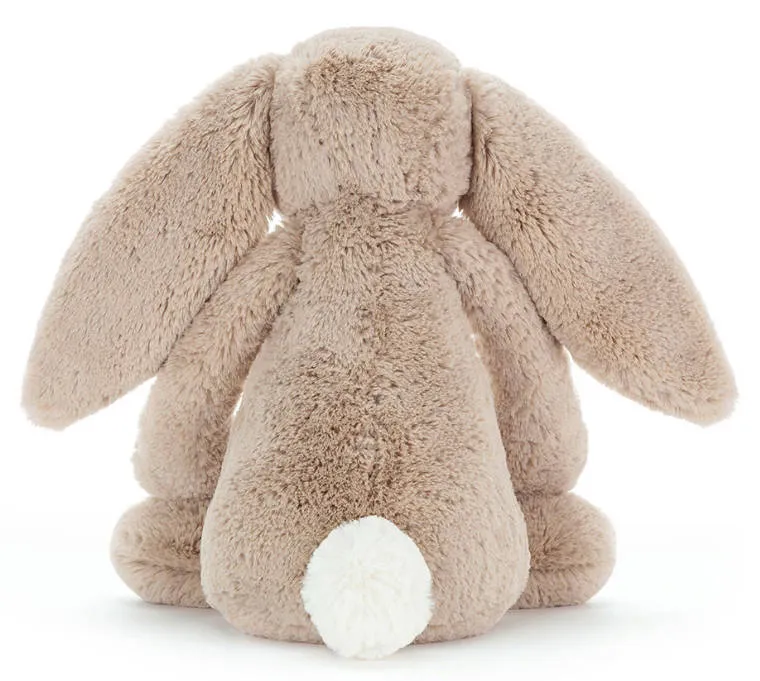
1. Fabric Quality & Softness
✔️ Real
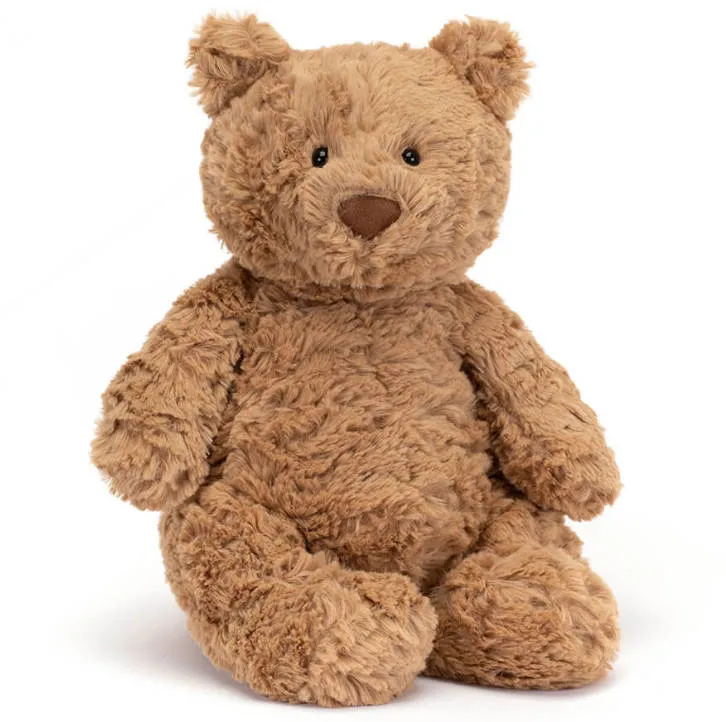
Authentic Jellycat plush toys are famous for their exceptionally soft, dense, and smooth fabrics.
Key characteristics:
-
Ultra-soft hand feel (never scratchy or stiff)
-
Dense pile that rebounds after squeezing
-
No shedding when rubbed
-
Consistent texture across the entire toy
Jellycat uses custom-developed plush fabrics, not generic mass-market materials.
❌ Fake
Counterfeits often use cheaper plush fabrics:
-
Feels thin, dry, or overly fuzzy
-
Loses shape after light squeezing
-
Fibers separate or shed easily
-
Texture varies between body parts
💡 Authentication Tip: Gently rub the plush surface with your fingers. Real Jellycat fabric feels luxurious and resilient, not fluffy or loose.
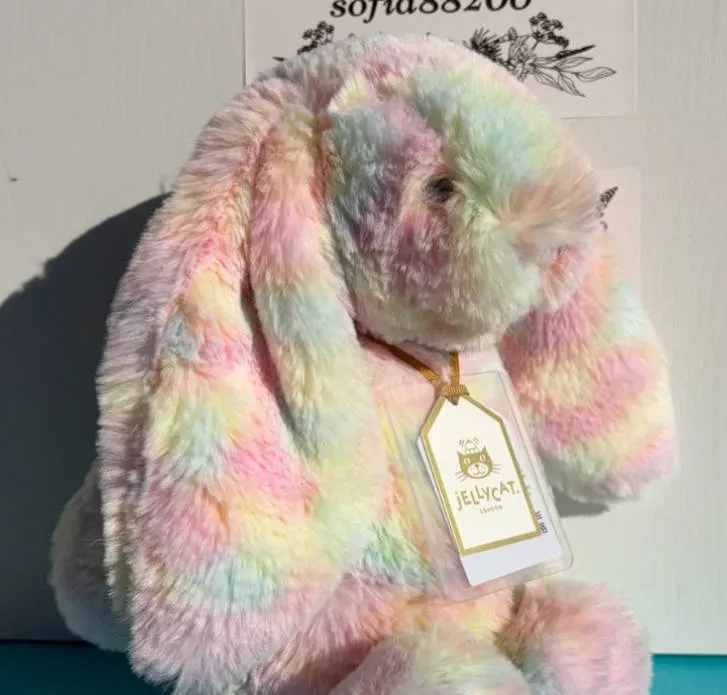
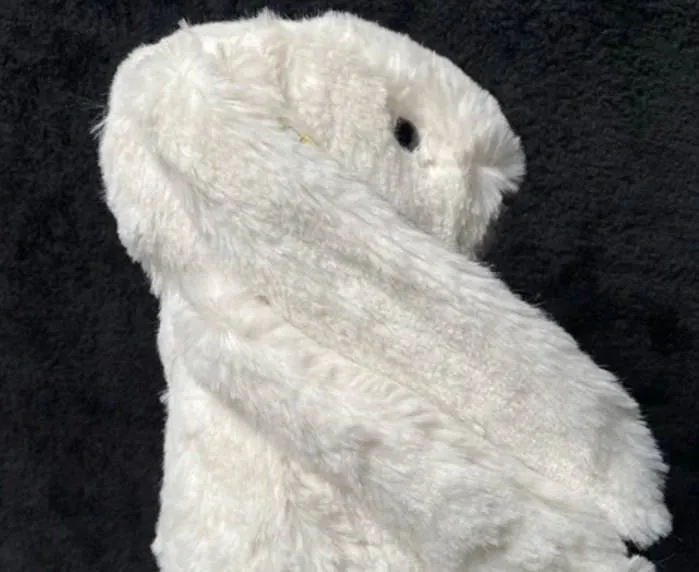
2. Stitching Quality & Construction
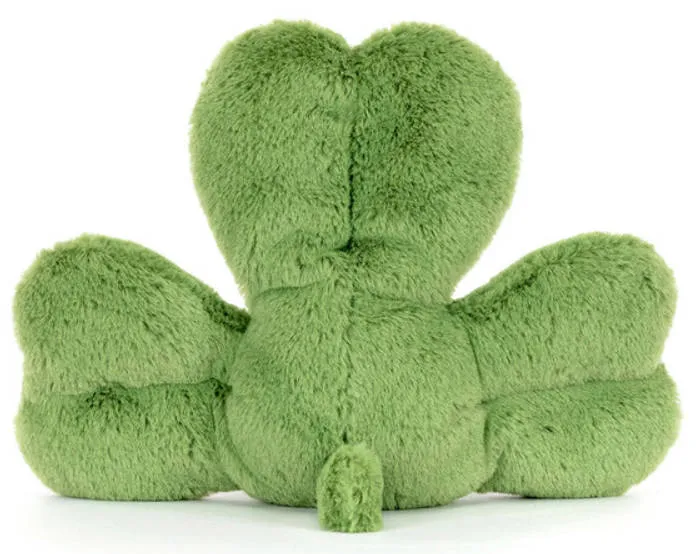
✔️ Real
Stitching on authentic Jellycats is:
-
Tight, even, and nearly invisible
-
Symmetrical on both sides
-
Reinforced at stress points (arms, legs, ears)
-
Free from loose threads
Even playful or "messy-looking" designs are intentionally crafted, not sloppy.
❌ Fake
Common stitching flaws include:
-
Uneven seam lines
-
Loose or fraying threads
-
Misaligned limbs
-
Visible knots or over-stitching
📌 Expert Insight: Jellycat maintains strict QC standards due to child safety regulations—poor stitching is a major red flag.
3. Brand Hang Tag (Paper Tag)
✔️ Real
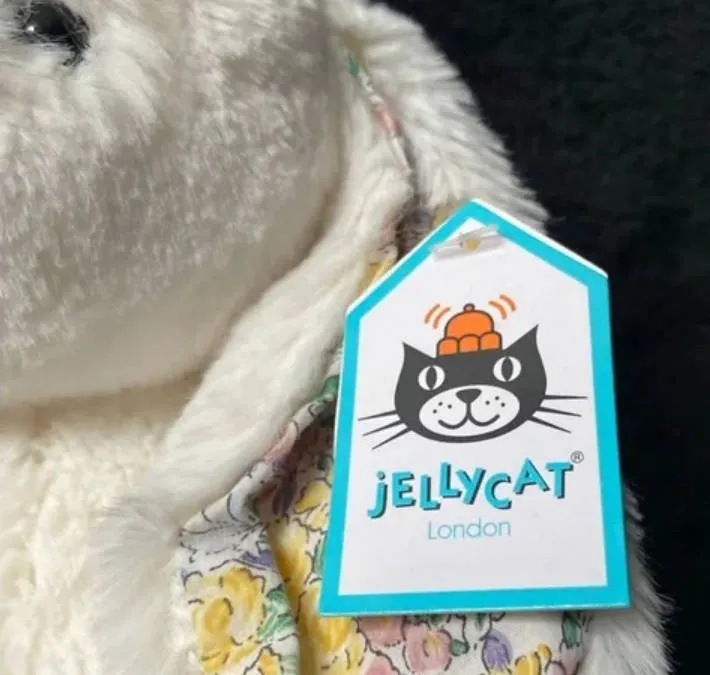
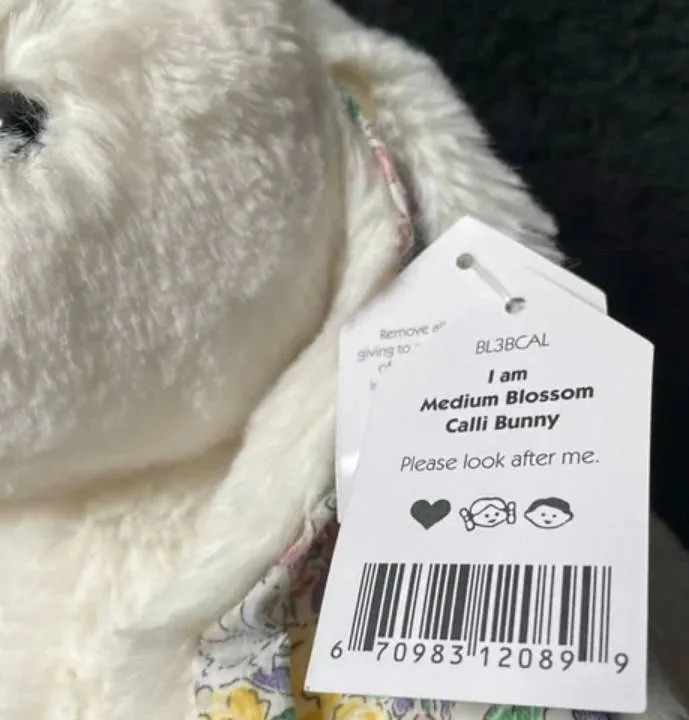
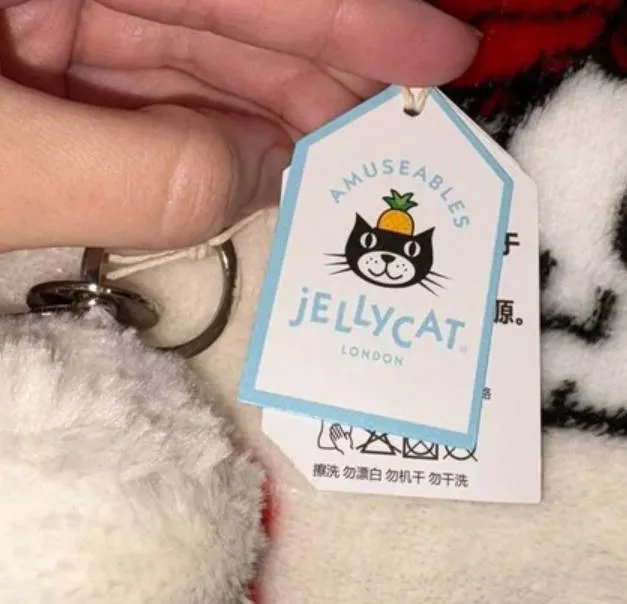
Authentic Jellycat plush toys include a high-quality paper hang tag with:
-
Crisp printing (no blur or pixelation)
-
Correct Jellycat logo font
-
Product name and collection
-
Clear, professional layout
-
Durable cardstock material
The Jellycat logo should appear clean, balanced, and properly spaced.
❌ Fake
Fake tags often show:
-
Misspelled brand name ("Jelly Cat," "Jellykat")
-
Wrong font thickness or spacing
-
Faded ink or low-resolution print
-
Thin, flimsy paper stock
💡 Some fakes copy real tag designs but fail in print quality.
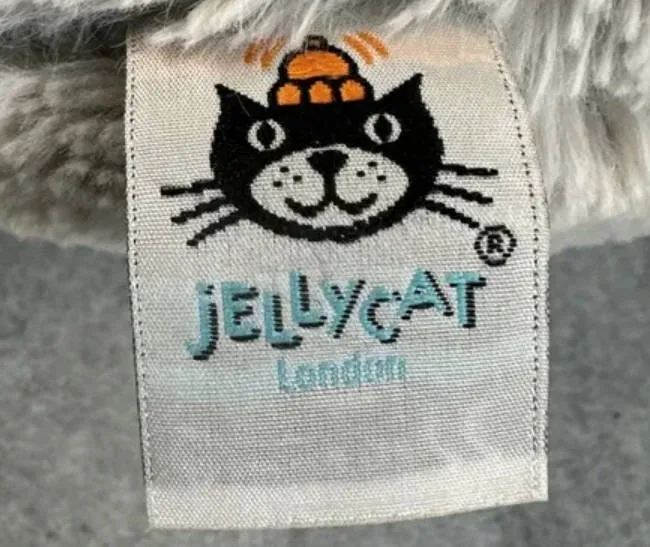
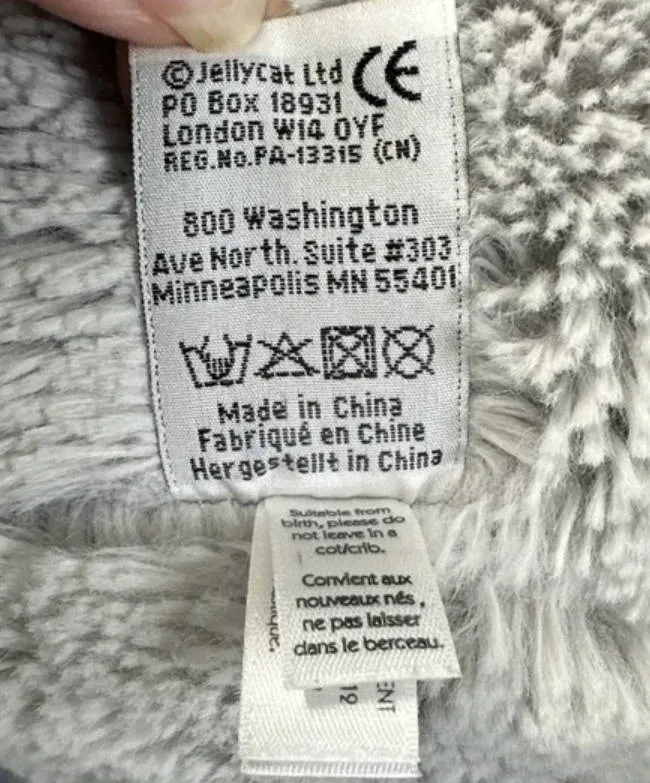
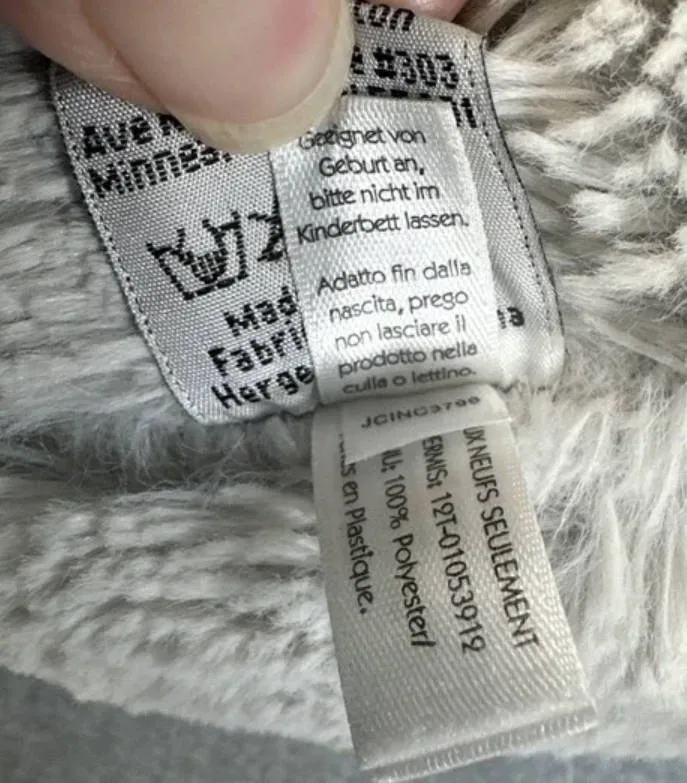
4. Fabric Care & Safety Label
This is one of the strongest authentication indicators.
✔️ Real
Authentic Jellycats include a sewn-in fabric label with:
-
"JELLYCAT" brand name
-
Country of origin (usually "Made in Indonesia" or "Made in China"”)
-
Safety compliance icons (CE, UKCA, ASTM)
-
Washing instructions
-
Batch or style code (on many models)
Text is:
-
Clear
-
Evenly printed
-
Correctly aligned
❌ Fake
Fake labels may:
-
Miss safety certifications
-
Have spelling or grammar errors
-
Use incorrect fonts
-
Feel stiff or plastic-like
-
Be heat-printed instead of woven
⚠️ Safety Note: Missing or incorrect labels often mean the toy does not meet child safety standards.
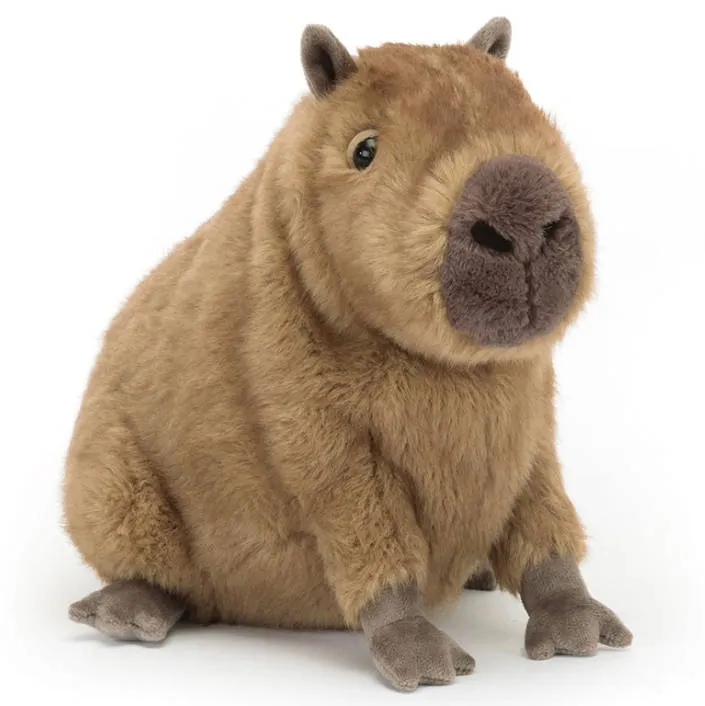
5. Facial Features & Embroidery
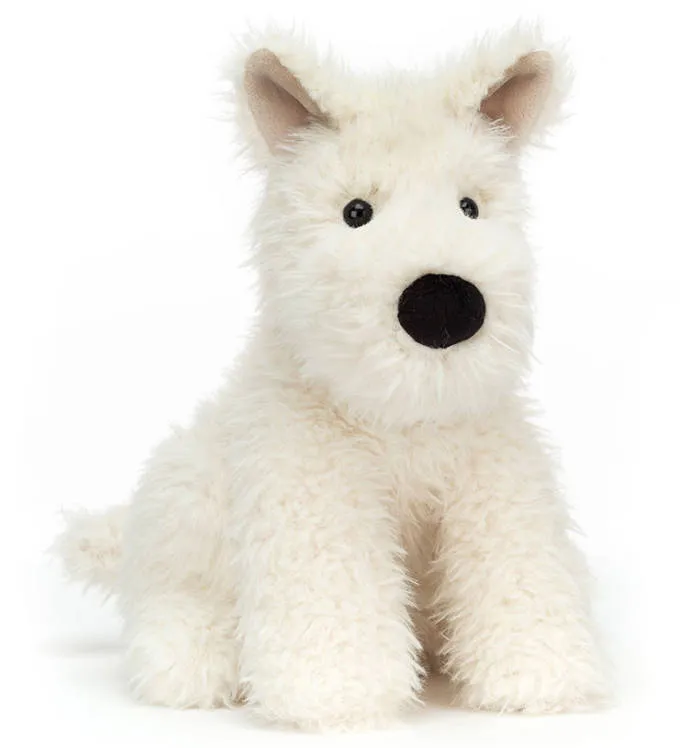
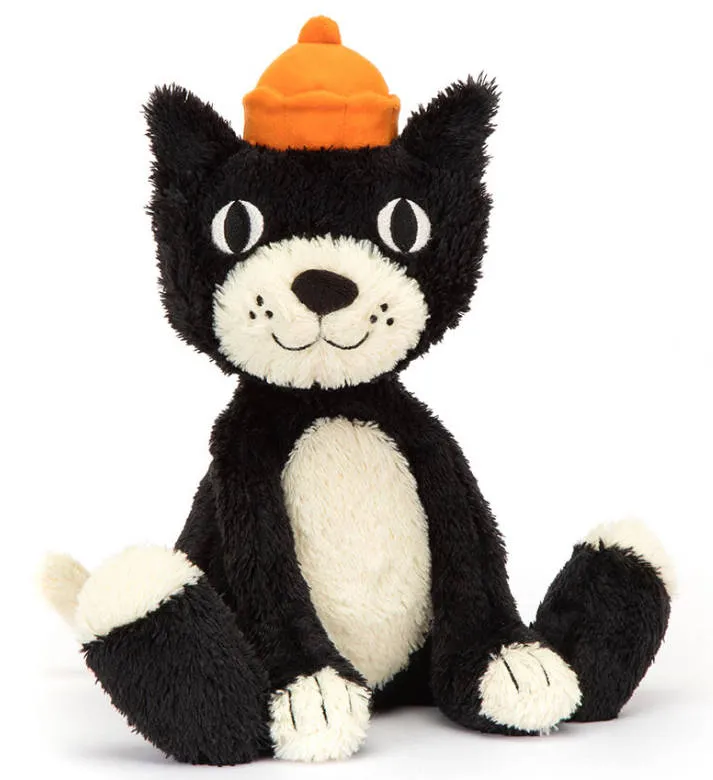
✔️ Real
Jellycat is known for its precise and charming facial expressions:
-
Clean, even embroidery
-
Symmetrical eyes and mouths
-
Soft expression (never harsh or exaggerated)
-
Securely attached eyes (no glue residue)
Each design has a consistent facial style across production runs.
❌ Fake
Fakes often show:
-
Crooked eyes
-
Uneven stitching
-
Overly large or mispositioned features
-
Glue marks around eyes or nose
📌 Close-Recall Check: Compare the face with official Jellycat product photos—small expression differences matter.
6. Filling Material & Shape
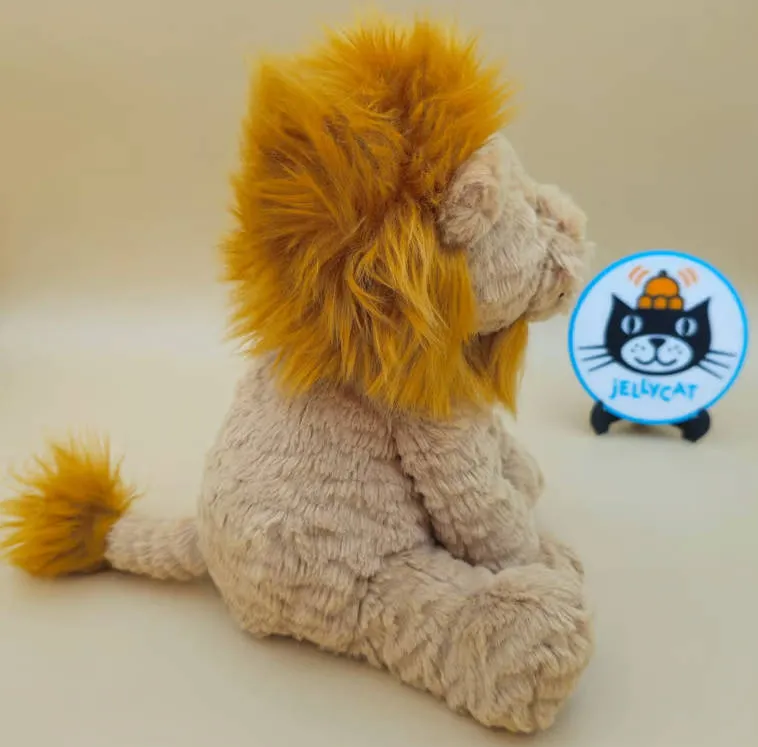
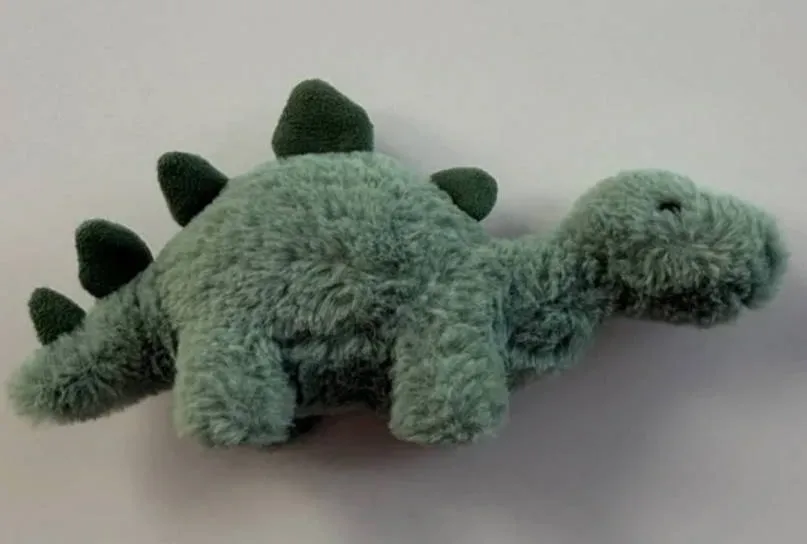
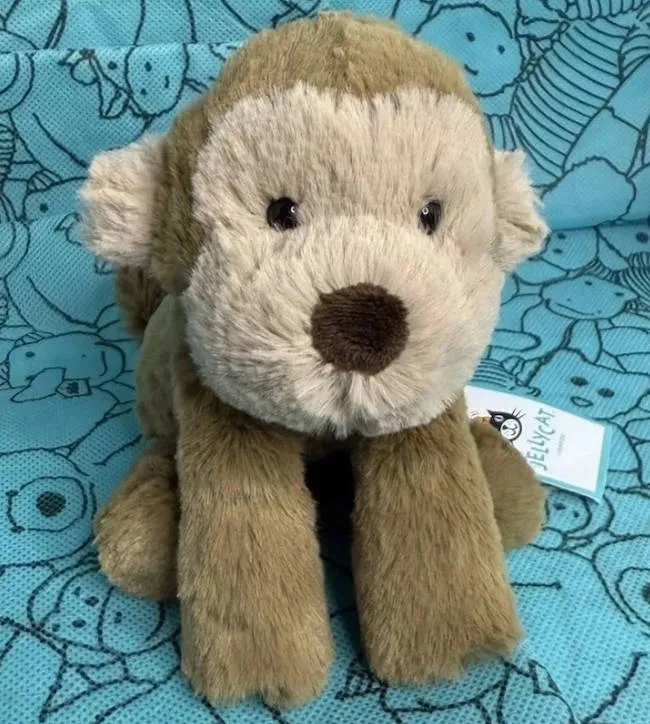
✔️ Real
Authentic Jellycats are filled with:
-
High-quality polyester fiber
-
Even distribution throughout the body
-
Soft but structured feel
-
No hard clumps
They maintain shape even after repeated hugging.
❌ Fake
Counterfeits often use:
-
Cheap cotton or recycled filler
-
Uneven stuffing
-
Hard lumps or empty sections
-
Toys collapsing when held upright
💡 Tip: Gently squeeze different areas—real Jellycats feel consistent everywhere.
7. Weight & Balance
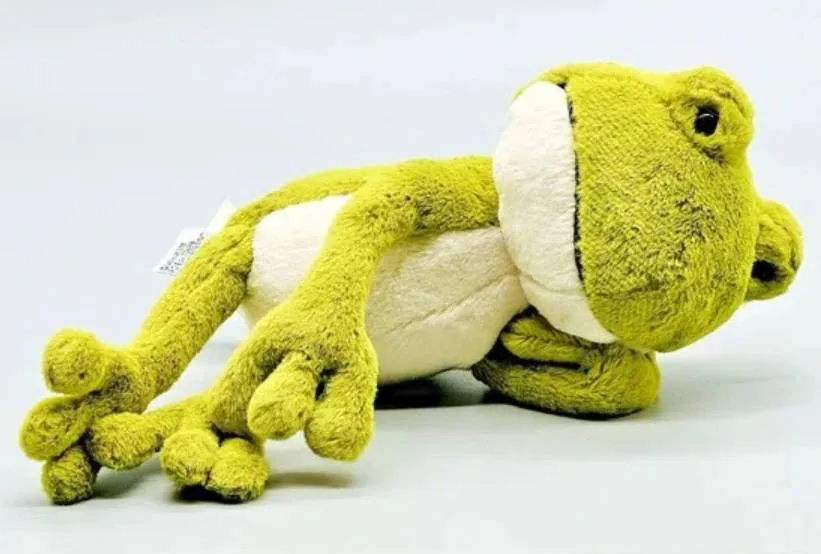
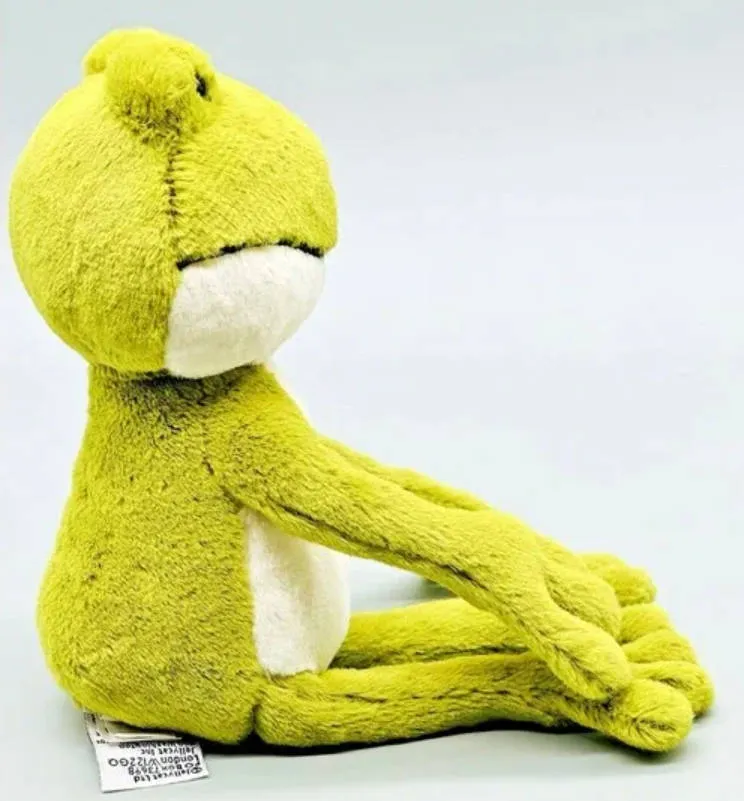
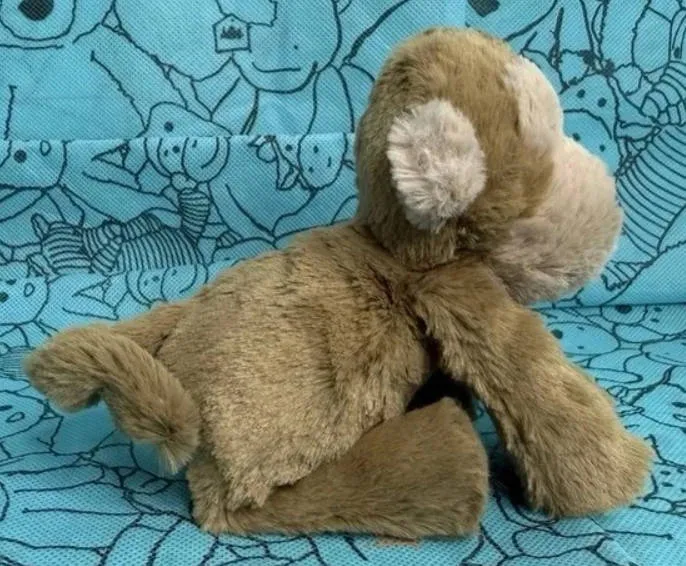
✔️ Real
Authentic plush toys have:
-
Balanced weight distribution
-
A "substantial" feel for their size
-
Natural sitting or lying posture
❌ Fake
Fake versions may:
-
Feel unusually light
-
Tip over easily
-
Have hollow sections
📌 Rule of Thumb: If it feels too light for its size, be suspicious.
8. Packaging & Presentation
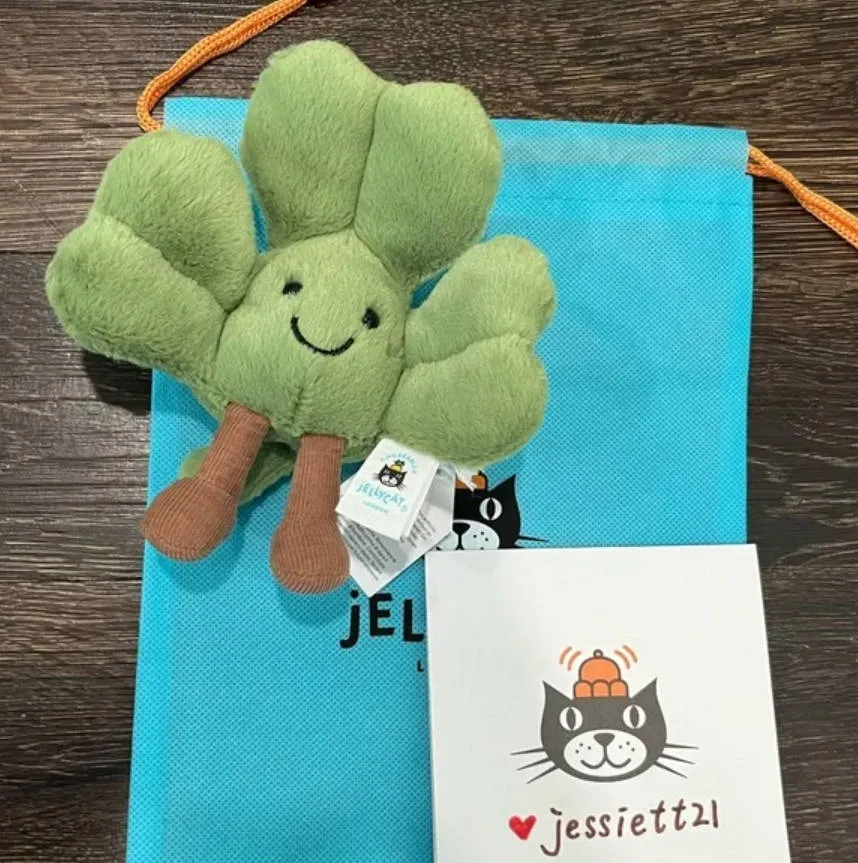
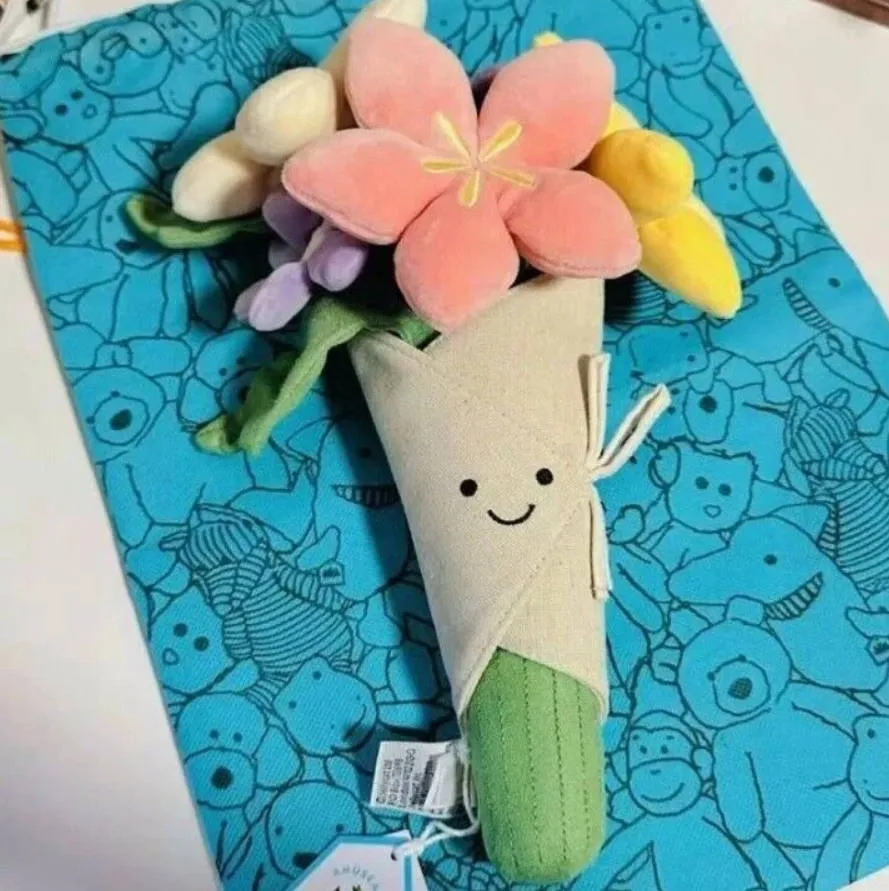
✔️ Real
While Jellycat packaging is minimal, it is:
-
Clean and professional
-
Never vacuum-compressed
-
Free from strong chemical odors
-
Shipped with intact tags
❌ Fake
Counterfeits are often:
-
Vacuum-sealed tightly
-
Strong chemical or plastic smell
-
Creased tags or bent labels
-
Poorly packed
9. Price vs. Market Value
✔️ Real
Jellycat plush toys are not cheap, especially for larger sizes or limited collections.
Typical pricing:
-
Small: $20–30
-
Medium: $30–45
-
Large: $50–80+
-
Limited editions: higher
❌ Fake
Red flags include:
-
"Authentic Jellycat $8.99"
-
Massive discounts year-round
-
"Wholesale price, no tag"
⚠️ Jellycat does not authorize extreme discounts outside official retailers.
10. Seller Reputation & Sales Channel
✔️ Real
-
Official Jellycat website
-
Authorized retailers
-
Reputable department stores
-
Well-reviewed specialty toy shops
❌ Fake
-
Unknown third-party marketplaces
-
Sellers with stock photos only
-
No return policy
-
Refusal to show label photos
❓ FAQ: Jellycat Authentication
Q1: Are there "OEM" or "factory version" Jellycats?
No. Jellycat does not sell OEM, factory seconds, or untagged versions.
Q2: Are Jellycats made in China fake?
No. Many authentic Jellycats are made in China or Indonesia, but under strict quality control.
Q3: Can vintage Jellycats look different?
Yes—older designs may vary slightly, but labels and stitching quality remain high.
Q4: Are Jellycats on marketplaces always fake?
Not always, but risk is higher. Always request label and tag photos.
Q5: Is it dangerous to buy fake Jellycats?
Potentially yes—fake plush toys may not meet child safety standards.
📝 Final Thoughts
Authentic Jellycat plush toys stand out through superior materials, precise craftsmanship, and strict safety compliance. While counterfeits may look similar in photos, they fail in real-world touch, durability, and detail.
✅ Remember This:
If the price feels too good to be true, it usually is.
For safe purchases:
-
Buy from trusted sellers
-
Check labels first, not just the design
-
Compare with official product photos
-
Trust your hands—real Jellycats feel different
Whether you're buying for a child, a collector, or a gift, this guide will help you spot fake Jellycats instantly and buy with confidence.