For many fans, Pokémon HeartGold represents the absolute pinnacle of the franchise. However, revisiting the Johto region today comes with a hefty price tag—and a massive risk. As demand for this classic title continues to skyrocket, the market has been flooded with convincing counterfeit Pokémon cartridges. Finding an authentic DS game isn't as simple as it used to be, and many unsuspecting buyers are ending up with glitchy reproduction copies. Whether you are a hardcore collector or a casual fan looking to recapture your childhood, this comprehensive guide will show you exactly how to separate the genuine masterpieces from the fake imitations before you hand over your hard-earned cash.
🎮 Pokémon HeartGold Cartridge Overview
Pokémon HeartGold is one of the most celebrated entries in the Pokémon series. Released for the Nintendo DS in 2009 (Japan) and 2010 internationally, it is a full remake of the original Pokémon Gold Version for the Game Boy Color, rebuilt with Generation IV graphics, mechanics, and features.
1. What Makes HeartGold Special?
HeartGold isn't simply a graphical remake. It expands almost every aspect of the original Pokémon Gold experience.
Major features include:
-
Entire Johto region
-
Post-game Kanto region
-
16 Gym Badges
-
Battle against Red on Mt. Silver
-
Any Pokémon in your party can follow you
-
Updated DS graphics and soundtrack
-
Touchscreen support
-
Pokéathlon minigames
-
Safari Zone customization
-
Pokéwalker compatibility via infrared cartridge technology
2. The Unique Cartridge
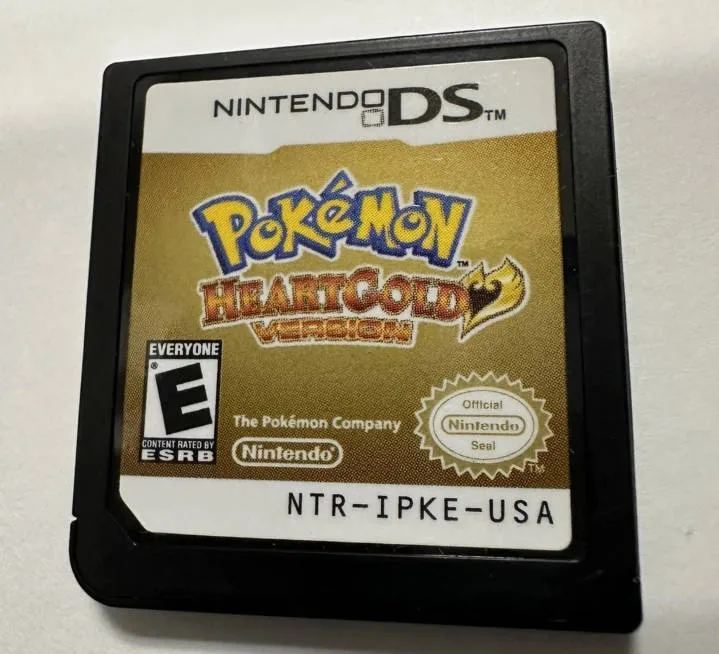
HeartGold is one of only a handful of Nintendo DS games that uses a black translucent cartridge instead of the normal gray shell.
This is because it contains an infrared (IR) transmitter, allowing communication with the included Pokéwalker.
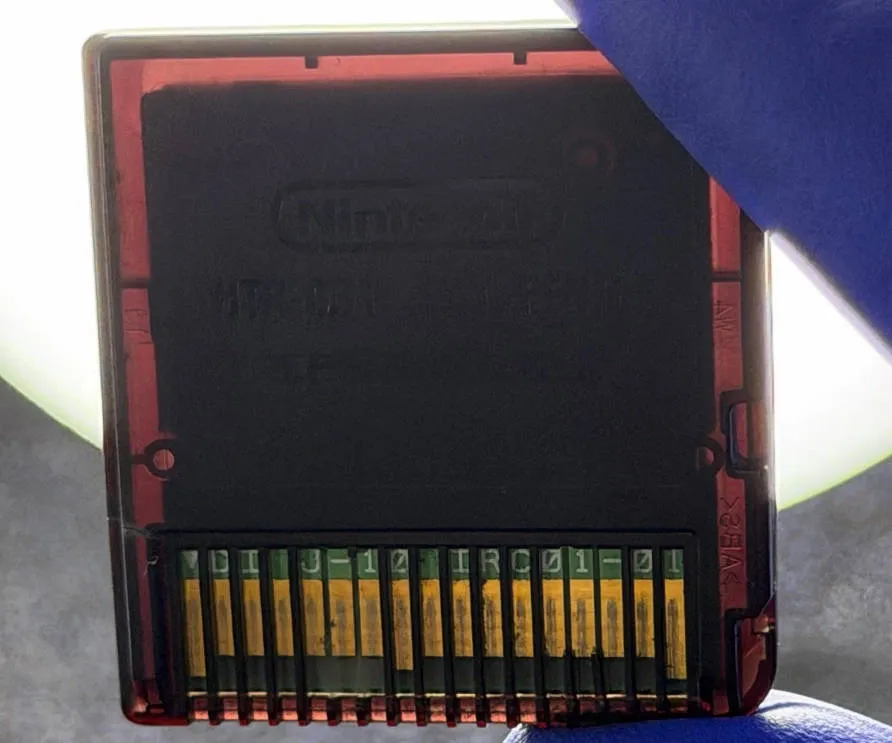
When held against a bright light, an authentic cartridge usually appears dark red or magenta because the shell is semi-transparent. Counterfeit copies typically use an opaque gray shell and lack the proper IR hardware.
3. Pokéwalker
One of HeartGold's most iconic accessories is the Pokéwalker, a pedometer bundled with the original retail release.
Players could:
-
Transfer one Pokémon
-
Earn Watts by walking
-
Catch wild Pokémon
-
Find held items
-
Unlock exclusive routes
-
Return rewards back to the game
Because it communicates using infrared, authentic cartridges contain additional hardware not found in ordinary DS games.
4. Why Collectors Love It
HeartGold has become one of the most valuable Nintendo DS games because of:
-
Limited production
-
Strong nostalgia
-
High gameplay quality
-
Included Pokéwalker bundle
-
Frequent counterfeit copies
-
Excellent replay value
Complete-in-box editions that include the Pokéwalker, manuals, cardboard outer box, and inserts command much higher prices than loose cartridges.
Among all Nintendo DS titles, Pokémon HeartGold Version is consistently one of the most frequently counterfeited games on the second-hand market. Its enduring popularity, bundled Pokéwalker accessory, and steadily increasing collector value have made it an attractive target for counterfeit manufacturers. Below are the most important details to examine before making a purchase.
🧭 Pokémon HeartGold Cartridge Real vs. Fake Guide
⚡ Quick Comparison Table
| Check Point | Authentic Characteristics | Red Flags |
| Cartridge Color | Semi-transparent black shell | Opaque gray or solid black plastic |
| Front Label | Sharp colors & metallic finish | Blurry printing or faded artwork |
| Nintendo Logo | Crisp molded lettering | Soft or uneven molding |
| Rear Code | Deep, clean stamped code | Missing, shallow, or inconsistent code |
| PCB Board | Correct Nintendo PCB visible | Generic green board or wrong layout |
| Infrared Window | Built-in IR-compatible shell | Missing IR features or incorrect shell |
| Pins & Contacts | Gold, evenly finished contacts | Rough, scratched, poorly aligned pins |
| Game Performance | Stable saves & wireless functions | Save corruption, freezing, crashes |
1. Cartridge Shell Color
One of the quickest ways to identify an authentic Pokémon HeartGold cartridge is by looking at the shell itself.
Unlike most standard Nintendo DS games, Pokémon HeartGold uses a translucent black cartridge because the game includes an infrared communication component.
Many counterfeit manufacturers ignore this important feature.
✔️ Real:
-
Semi-transparent black plastic
-
Light passes through when held against a bright source
-
Smooth matte finish
-
Premium-feeling plastic
-
Consistent molding throughout
❌ Fake:
-
Solid gray plastic
-
Completely opaque black shell
-
Glossy cheap plastic
-
Visible molding imperfections
-
Uneven coloring
💡 Pro Tip: Hold the cartridge under a flashlight. Genuine shells reveal a subtle translucent appearance that many fake copies cannot replicate.
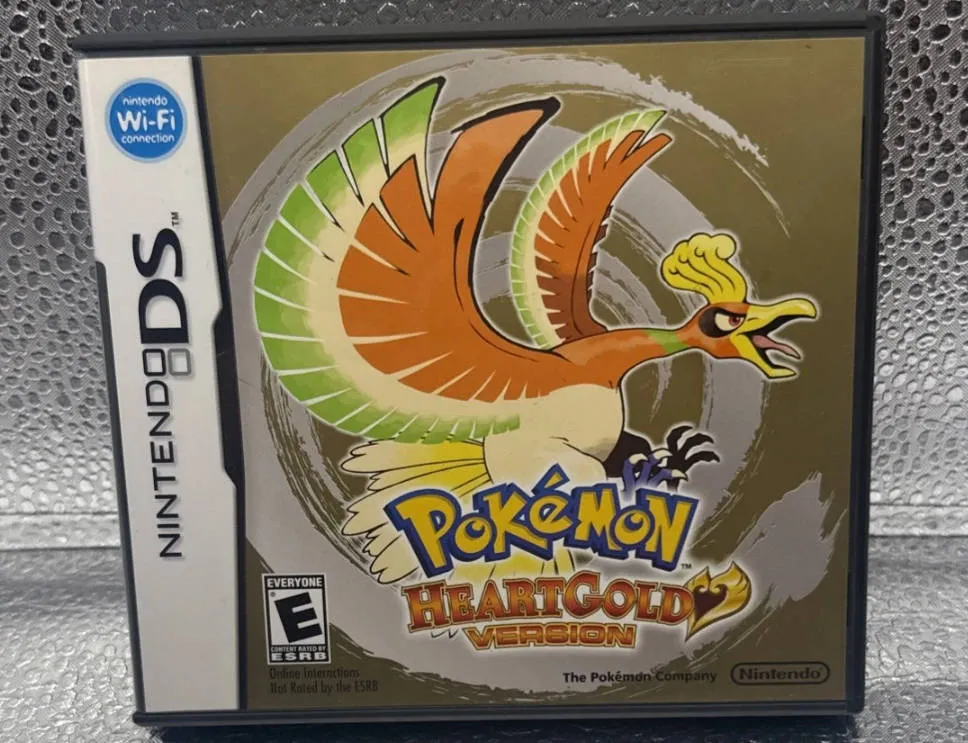
2. Front Label Quality
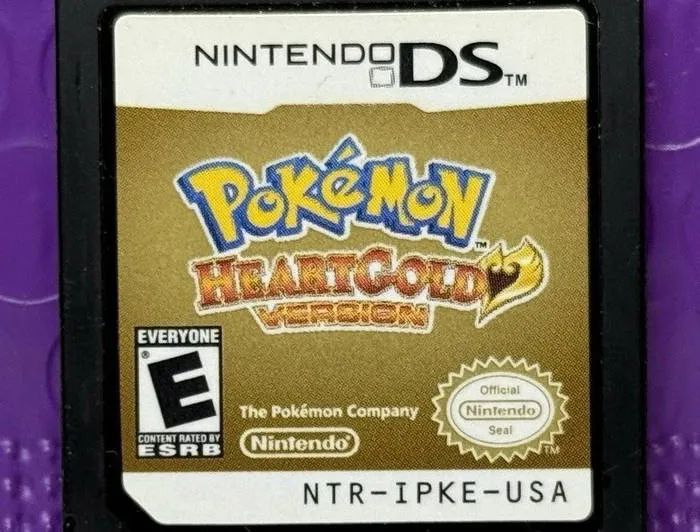
Counterfeit labels have improved over the years, but printing quality still gives away many replicas.
Authentic labels are professionally printed with excellent color accuracy and precise cutting.
✔️ Real:
-
Sharp Pokémon logo
-
Rich, saturated colors
-
Metallic reflective finish
-
Clean borders
-
High-resolution artwork
-
Correct ESRB rating placement
❌ Fake:
-
Blurry printing
-
Washed-out colors
-
Incorrect logo proportions
-
Crooked label application
-
White edges around artwork
-
Low-quality paper
3. Nintendo Logo & Cartridge Molding
Nintendo's injection molding quality is extremely consistent.
Fake manufacturers often struggle to reproduce these tiny molded details.
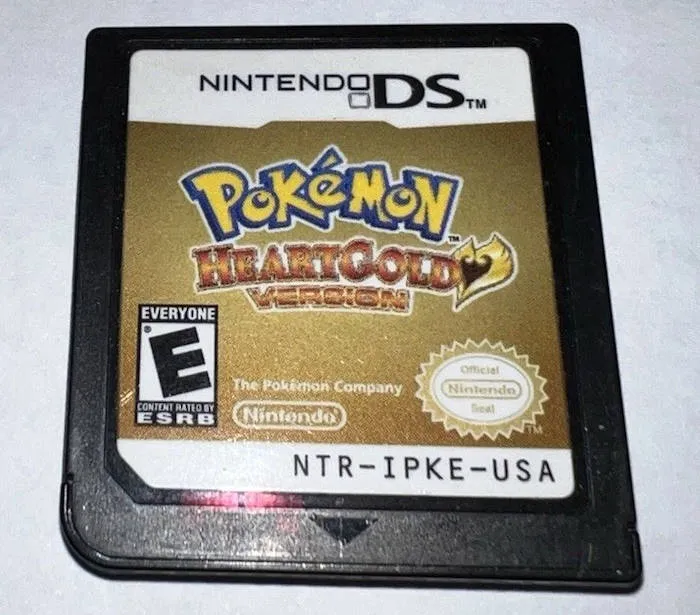
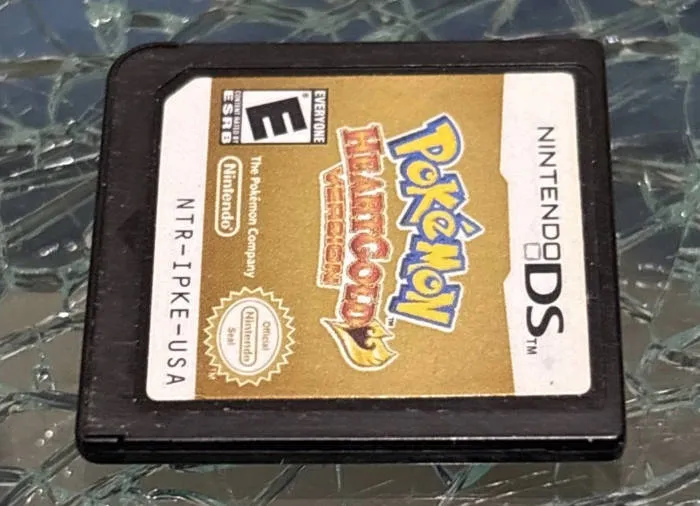
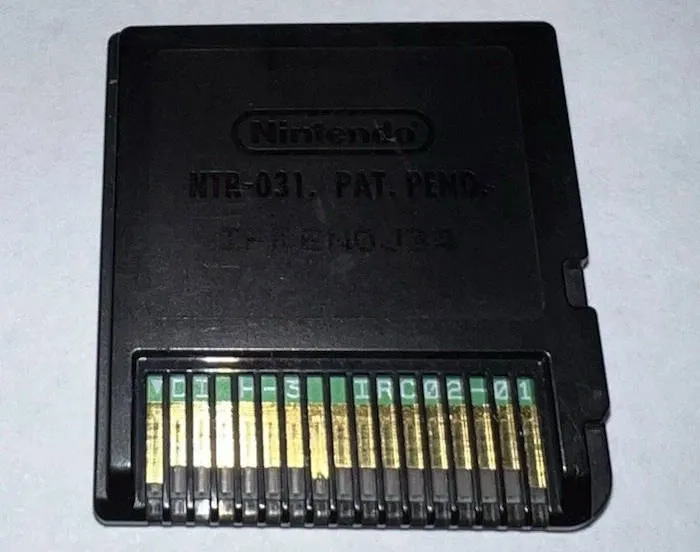
✔️ Real:
-
Crisp Nintendo logo
-
Clean "NTR-031" molding
-
Smooth cartridge edges
-
Uniform plastic texture
-
No excess flashing
❌ Fake:
-
Soft lettering
-
Crooked molded text
-
Rough plastic edges
-
Misspelled markings
-
Uneven mold lines
⚠️ Even if the front label looks convincing, poor molding is usually a strong counterfeit indicator.
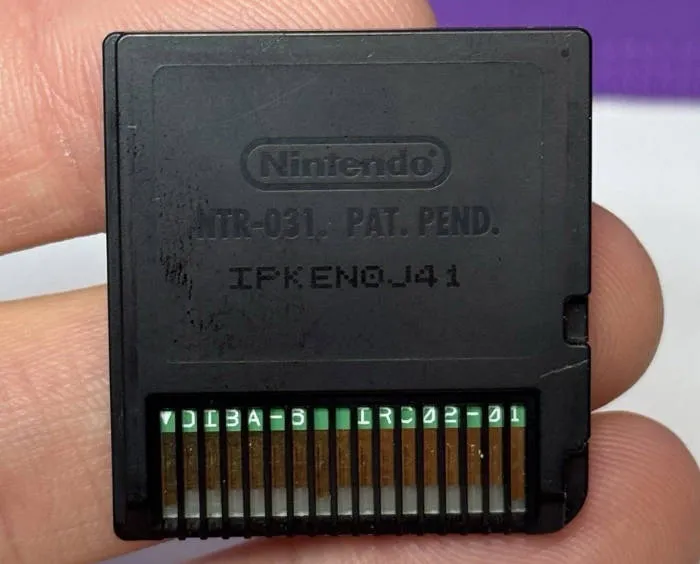
4. Verify the Rear Engraving and Stamp Codes
Nintendo cartridges include factory markings that counterfeit manufacturers frequently overlook.
✔️ Real:
Expect to find:
-
Mold numbers
-
Production identifiers
-
Consistent font
-
Neat engraving
❌ Fake:
Possible issues include:
-
Missing codes
-
Incorrect fonts
-
Uneven engraving
-
Random characters
-
Completely blank rear shell
While codes alone don't prove authenticity, they should always appear professionally manufactured.
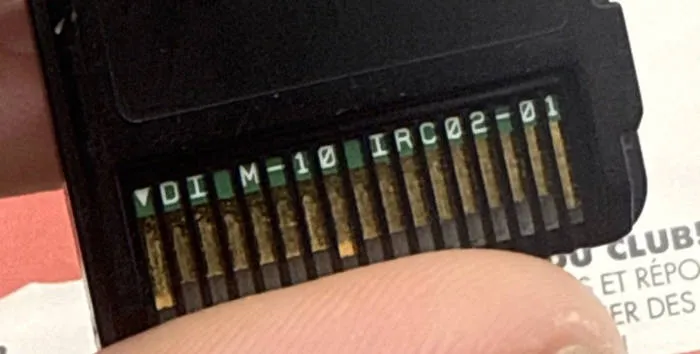
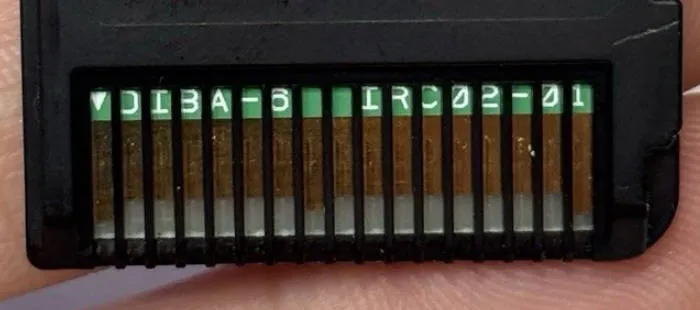
5. Rear Stamp Code
Flip the cartridge over.
Authentic Nintendo DS games feature a tiny stamped production code above the contact pins.
Many buyers overlook this detail.
✔️ Real:
-
Small engraved factory code
-
Cleanly stamped
-
Consistent depth
-
Easily visible under light
❌ Fake:
-
No stamp at all
-
Printed instead of stamped
-
Crooked alignment
-
Extremely shallow markings
-
Random font styles
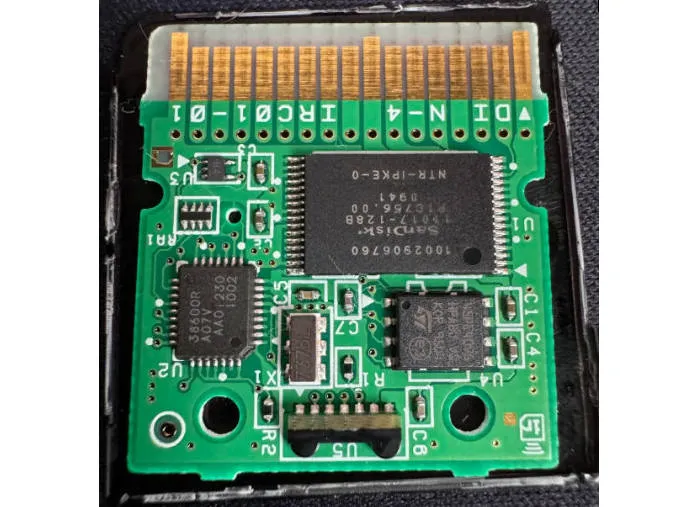
6. Internal PCB Board
The circuit board inside the cartridge is one of the strongest authentication points.
Opening the cartridge (using the proper security bit) reveals the internal PCB.
✔️ Real:
-
Official Nintendo PCB
-
Professional soldering
-
Clean component layout
-
Proper chip placement
-
Consistent gold traces
❌ Fake:
-
Generic green PCB
-
Poor solder joints
-
Missing components
-
Different board layout
-
Cheap flash memory chips
💡 Never rely solely on exterior appearance if you're buying an expensive collector's copy.
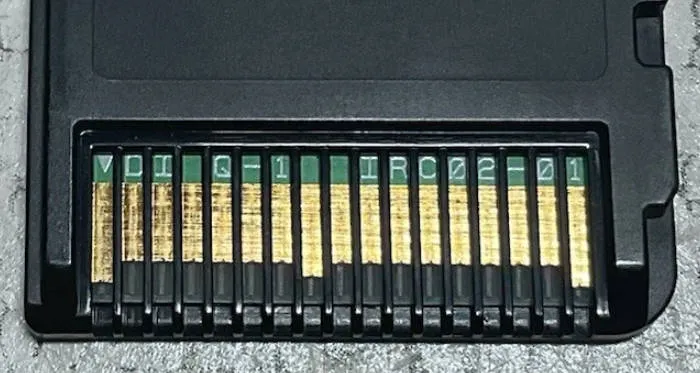
7. Gold Contact Pins
The cartridge contacts often reveal manufacturing quality.
✔️ Real:
-
Even gold finish
-
Smooth edges
-
Identical spacing
-
Clean surface
-
No corrosion on new-looking copies
❌ Fake:
-
Rough plating
-
Uneven spacing
-
Scratches from manufacturing
-
Cheap copper appearance
-
Crooked contacts
Poor-quality contacts often lead to read errors inside the Nintendo DS.
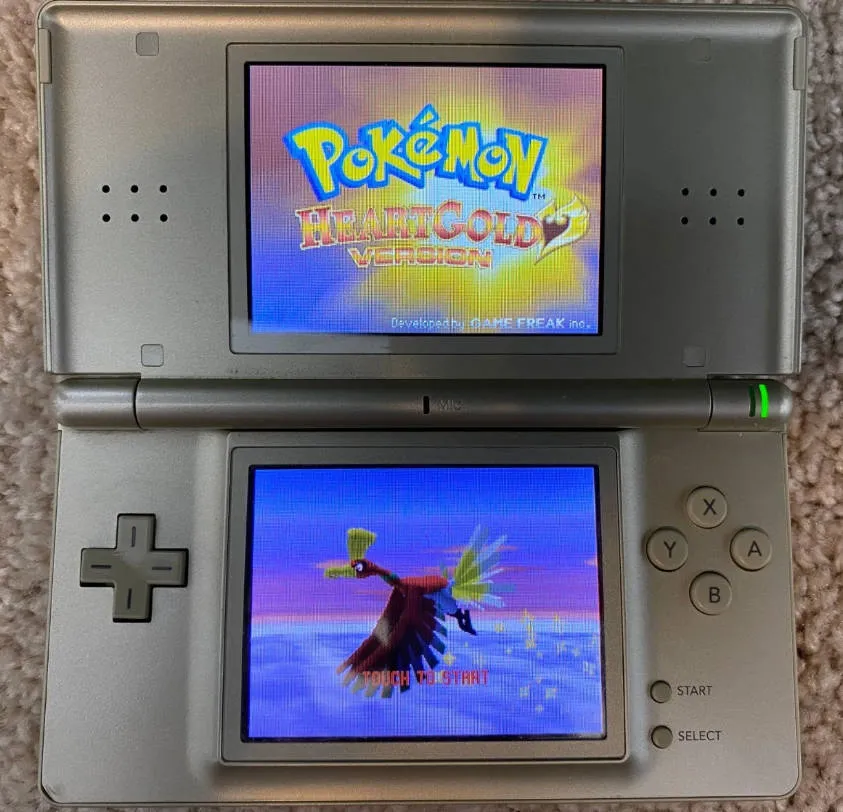
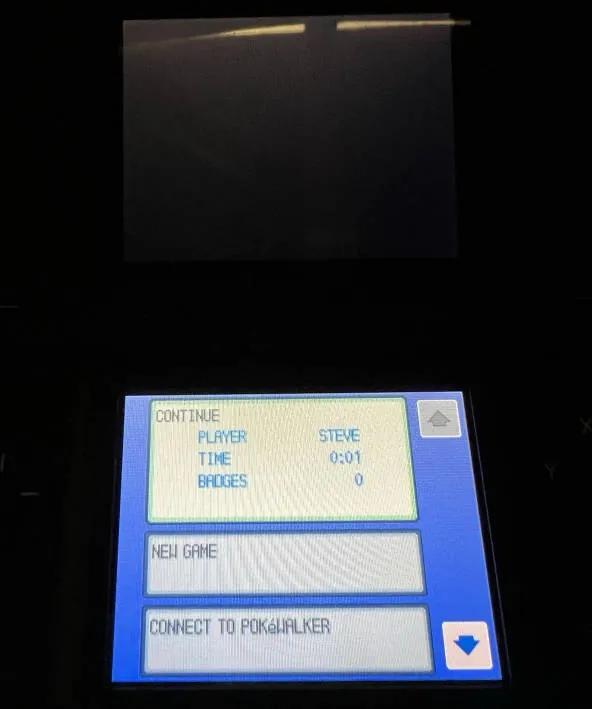
8. Save Function & Gameplay Stability
Many counterfeit cartridges initially appear functional.
Problems usually emerge after extended gameplay.
✔️ Real:
-
Saves reliably
-
Loads quickly
-
Stable gameplay
-
Works on original DS hardware
-
Compatible with Pokéwalker
-
Consistent wireless features
❌ Fake:
-
Save corruption
-
Random freezing
-
White screen errors
-
"Save data could not be accessed"
-
Unexpected crashes
-
Failure to detect accessories
⚠️ If purchasing locally, ask the seller to demonstrate that an existing save file loads correctly.
🧠 Pro Tips for Buyers
When shopping online
Always:
-
Request high-resolution photos of both sides
-
Ask for close-ups of the rear stamp
-
Request images under bright light to show shell transparency
-
Verify the seller's feedback history
-
Ask whether the game has been tested for saving
Avoid listings that:
-
Use stock images only
-
Hide the back of the cartridge
-
Show blurry labels
-
Refuse additional photos
-
Offer prices far below market value
Buying Tips in Person
If you have the cartridge in hand, inspect:
-
Shell transparency
-
Label quality
-
Rear production stamp
-
Contact pins
-
Plastic molding
-
Save functionality
-
Overall build quality
Bring a flashlight to quickly verify the translucent shell.
❓ FAQ: Pokémon HeartGold Authentication
Q1. Why is Pokémon HeartGold more commonly counterfeited than other DS games?
Its popularity, collector demand, and higher resale value make it a frequent target for counterfeit manufacturers.
Q2. Are all authentic HeartGold cartridges translucent?
Yes. Genuine cartridges use a semi-transparent black shell to accommodate the infrared hardware used with the Pokéwalker.
Q3. Can fake cartridges still save the game?
Some can, but many eventually experience save corruption, freezing, or data loss. Long-term reliability is one of the biggest differences between authentic and counterfeit copies.
Q4. Is opening the cartridge necessary?
Not for every purchase. External inspection is usually sufficient. However, checking the PCB provides one of the most definitive authentication methods if you're buying a high-value collector's item.
Q5. Does region affect authenticity?
No. North American, European, and Japanese releases have different labels and serial numbers, but each should still exhibit Nintendo's high manufacturing quality and, where applicable, the translucent infrared-compatible shell.
Q6. Is a missing rear stamp always proof of a fake?
Not necessarily, but it is a significant warning sign. Some legitimate cartridges may have faint stamps due to wear, so evaluate this alongside the shell, label, PCB, and gameplay stability.
📝 Final Thoughts
Authenticating a Pokémon HeartGold cartridge requires attention to several details rather than relying on a single feature. Counterfeit copies have become increasingly sophisticated, but they often fall short in manufacturing quality, infrared hardware, and long-term reliability.
If you only remember three things before making a purchase:
✔️ Check that the cartridge shell is semi-transparent black.
✔️ Inspect the label, molded Nintendo markings, and rear production stamp for sharp, consistent quality.
✔️ Test save functionality and overall gameplay stability, especially if buying in person.
Whether you're adding HeartGold to a personal collection or investing in a complete Nintendo DS library, taking a few extra minutes to inspect multiple authentication points can help you avoid costly mistakes. The more details you compare—from the shell and PCB to the contact pins and infrared compatibility—the more confident you can be that you're buying a genuine copy rather than a convincing counterfeit.