
Finding an authentic copy of Pokémon FireRed nowadays can feel like searching for a shiny Pokémon in the wild. As one of the most beloved entries in the Game Boy Advance era, its popularity has sparked a massive wave of bootlegs that flood online marketplaces. Whether you are looking to relive your childhood memories or complete your vintage Nintendo collection, falling for a bootleg can mean losing your hard-earned cash—and your save files.
In this comprehensive breakdown, we will show you exactly how to spot counterfeit Pokémon cartridges using simple, foolproof visual checks. From shell transparency to motherboard tells, here is everything you need to know to verify your copy before hitting the "buy" button.
🎮 Pokémon FireRed Cartridge Overview
Released in 2004 for the Game Boy Advance, Pokémon FireRed Version (alongside LeafGreen) holds a legendary status as the franchise's first-ever enhanced remake, modernizing the original Generation I Kanto adventure.
Because it is one of the most heavily counterfeited video games in history, looking at a Pokémon FireRed cartridge requires understanding both its in-game specifications and its physical hardware design.
1. Hardware & Physical Characteristics
An authentic Game Boy Advance (GBA) FireRed cartridge has distinct physical markers that separate it from typical grey GBA games and modern counterfeit bootlegs.
-
The Plastic Casing: Unlike standard charcoal-grey GBA cartridges, FireRed uses a customized, semi-translucent fire-red plastic shell. When held up to the light, you can vaguely see the silhouette of the circuit board inside.
-
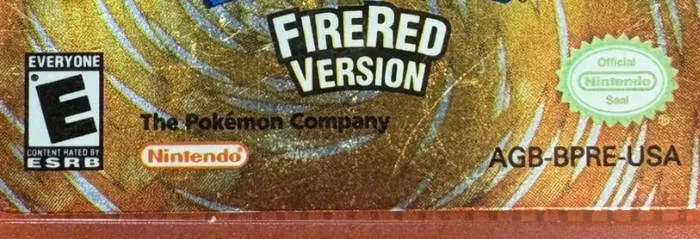
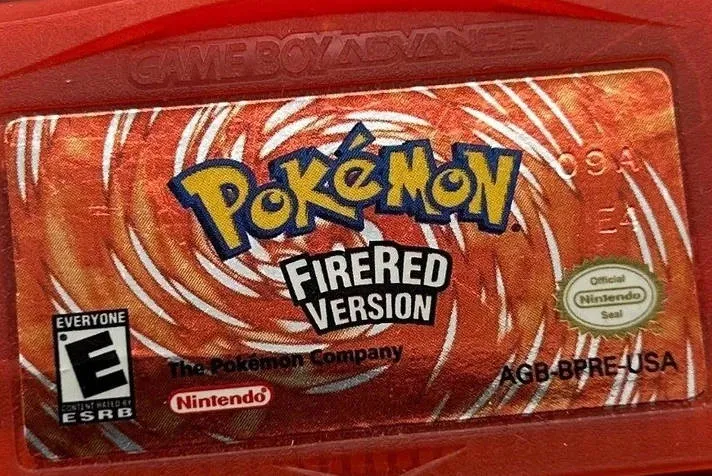
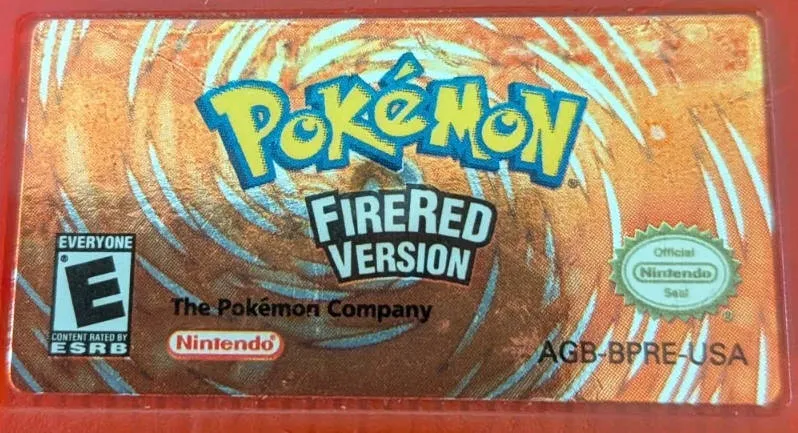
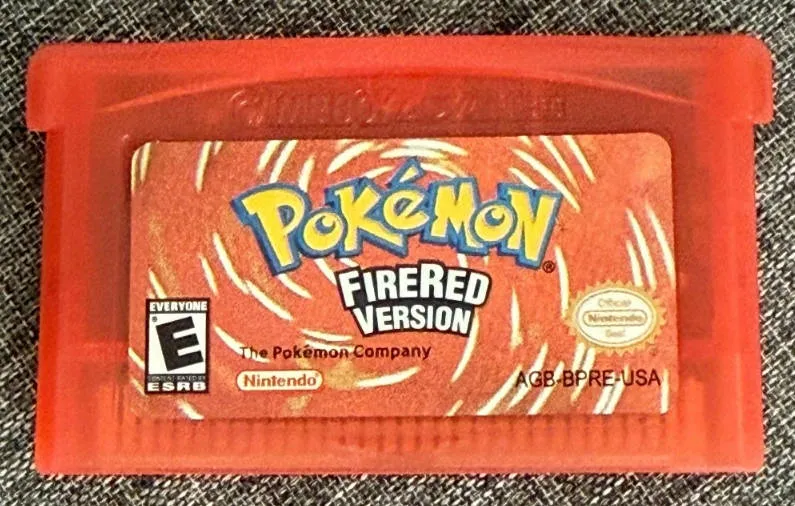
The Label: The sticker features a distinct metallic, glittering foil background with a fiery, swirling pattern behind the main logo. It includes the official Nintendo Seal, the ESRB "E" rating, and the specific production code AGB-BPRE-USA (for North American copies).
-
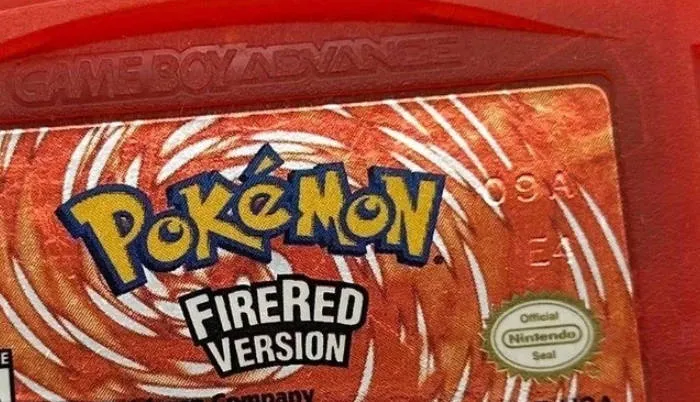
The Factory Stamp: Genuine cartridges feature a two-digit number (sometimes followed by a letter, like "34 E4" visible on the right side of the image above) physically indented or stamped directly into the foil label. Bootleg copies almost always print this flat or omit it entirely.
-
Internal Save Structure: Notably, Pokémon FireRed does not use an internal battery for time-based events (unlike Ruby, Sapphire, and Emerald). It utilizes flash memory to save game data. If a cartridge says "The battery has run dry," it is a fake.
2. Game Overview & Key Features
FireRed successfully brought the 1996 retro classics into the modern era by utilizing the updated Game Boy Advance engine.
-
The Kanto Region Redone: Players re-experience the journey from Pallet Town to the Indigo Plateau with fully updated 16-bit color graphics, remastered audio, and gender selection for the protagonist (Red or Leaf).
-
The Sevii Islands: The biggest addition to the original game was this brand-new post-game archipelago. The Sevii Islands introduced an extended storyline involving Team Rocket, allowed players to catch Generation II (Johto) Pokémon, and unlocked connectivity with Ruby and Sapphire.
-
The Wireless Adapter: Original physical copies of FireRed and LeafGreen were bundled with a unique hardware accessory: the GBA Wireless Adapter. Plugs into the link extension port, it allowed players to gather in a virtual "Union Room" to chat, trade, and battle without tangle-prone link cables.
3. Why Collectors Love FireRed
✔ Nostalgia
For many players, FireRed represents the definitive version of the original Kanto adventure.
✔ Generation III Mechanics
The game updates the classic experience with:
-
Improved battle system
-
Better user interface
-
Enhanced graphics
-
Modernized Pokémon management
✔ Strong Hardware Compatibility
The cartridge works on:
-
Game Boy Advance
-
Game Boy Advance SP
-
Game Boy Micro
-
Nintendo DS
-
Nintendo DS Lite
✔ Collector Demand
FireRed remains one of the most sought-after Pokémon Game Boy Advance cartridges, leading to a large number of counterfeit reproductions appearing on secondary marketplaces. Community collectors frequently recommend careful authentication before purchasing.
The market for retro Pokémon games has exploded over the past few years, and few titles are more frequently counterfeited than Pokémon FireRed for the Pokémon FireRed. Some fakes look surprisingly accurate in online photos, making it difficult for collectors and buyers to identify them before purchase. Below are the most important details to examine before making a purchase.
🧭 Ultimate Pokémon FireRed Cartridge Real vs. Fake Guide
⚡ Quick Comparison Table
| Check Point | Authentic Characteristics | Red Flags |
| Cartridge Shell | High-quality translucent red plastic | Opaque or incorrect plastic color |
| Nintendo Logo | Crisp molded logo | Soft, blurry, or uneven logo |
| Front Label | Sharp print quality | Blurry artwork or incorrect colors |
| ESRB Rating | Clean printing and proportions | Distorted rating logo |
| Internal Circuit Board | Official Nintendo PCB | Generic or incorrect board |
| Game Code Imprint | Visible stamped code | Missing or poorly reproduced code |
| Back Shell Details | Precise molding and screws | Cheap plastic and incorrect screws |
| Save Functionality | Stable save performance | Save failures or corruption |
| Overall Build Quality | Consistent professional finish | Rough construction and defects |
1. Cartridge Shell Color & Transparency
The cartridge shell is often the fastest authentication checkpoint.
Authentic Pokémon FireRed cartridges were produced using a distinctive translucent red plastic shell. The transparency allows some visibility of the internal circuit board when viewed under sufficient lighting.
Many counterfeit manufacturers struggle to reproduce the exact appearance.
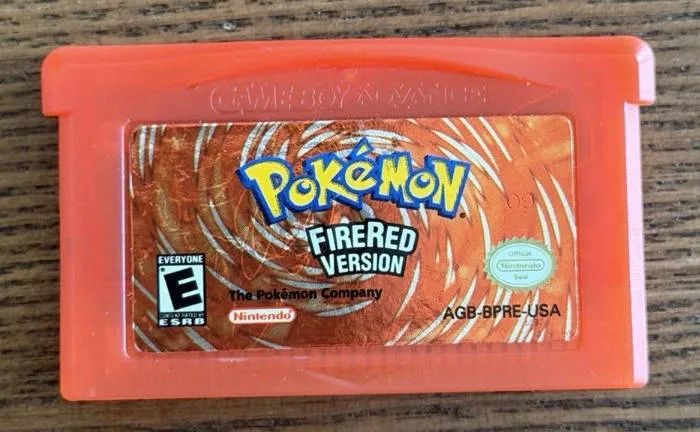
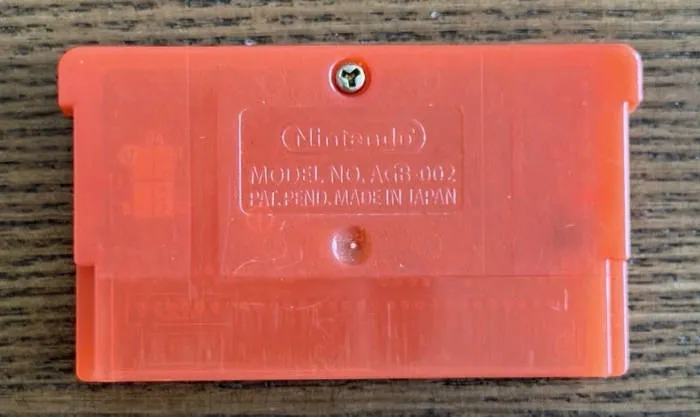
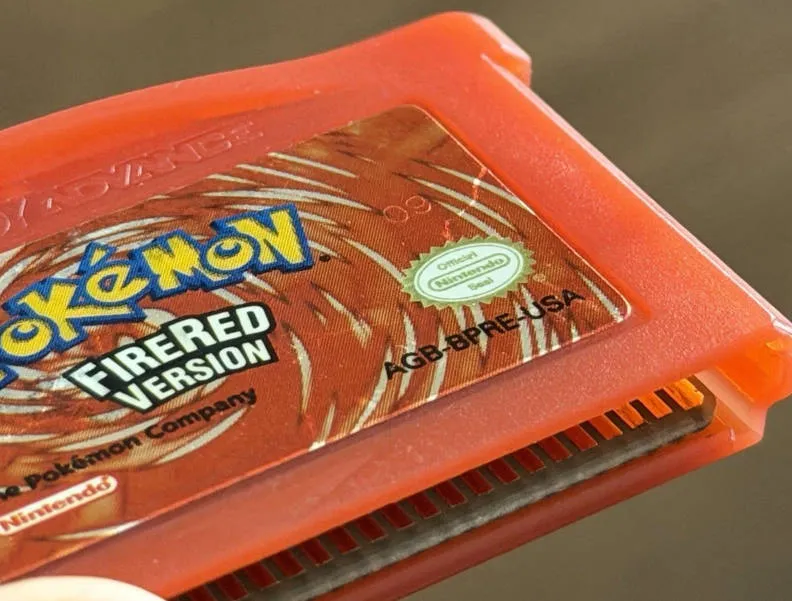
✔️ Real:
-
Semi-transparent ruby-red plastic
-
Consistent coloration throughout shell
-
Internal PCB partially visible
-
Smooth professional molding
-
Uniform transparency
❌ Fake:
-
Completely opaque red plastic
-
Plastic appears overly dark
-
Bright candy-red appearance
-
Uneven coloration
-
Cheap glossy finish
💡 A shell that appears solid red with no transparency should immediately raise suspicion.
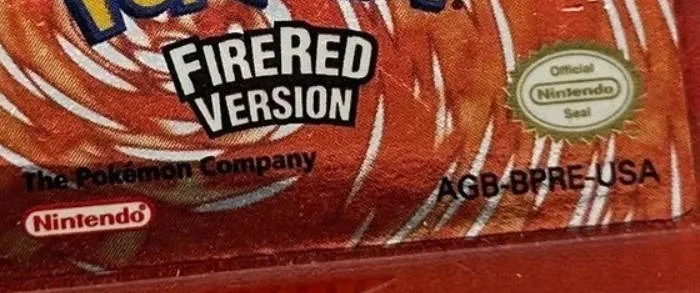
2. Nintendo Logo Quality
The molded Nintendo logo located on the cartridge shell remains one of the most overlooked authentication details.
Official Nintendo molds produce extremely clean and consistent lettering.
Counterfeit shells frequently show imperfections due to lower manufacturing standards.
✔️ Real:
-
Sharp molded lettering
-
Consistent depth
-
Clean border edges
-
Professional finish
-
Easily readable logo
❌ Fake:
-
Soft lettering edges
-
Uneven depth
-
Poor molding quality
-
Rough surfaces around logo
-
Difficult-to-read characters
3. Front Label Printing
The front label is usually the first area buyers inspect, but it should never be the only authentication checkpoint.
While some modern counterfeits use convincing artwork, many still reveal flaws under close inspection.
✔️ Real:
-
Sharp character artwork
-
Vibrant but balanced colors
-
Clean text printing
-
Consistent gloss finish
-
Proper label alignment
❌ Fake:
-
Blurry graphics
-
Oversaturated colors
-
Faded printing
-
Pixelated artwork
-
Crooked label placement
Areas Worth Inspecting
✦ Pokémon Logo
✦ FireRed Title
✦ Nintendo Seal
✦ ESRB Rating
✦ Background Artwork
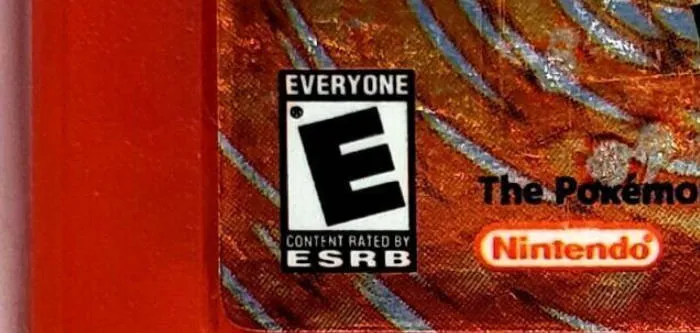
4. ESRB Rating & Seal Details
Many fake cartridges contain small inaccuracies around the ESRB logo and official seal graphics.
These areas contain fine details that become obvious under magnification.
✔️ Real:
-
Sharp ESRB borders
-
Correct proportions
-
Crisp black printing
-
Clear Nintendo Seal details
-
Professional appearance
❌ Fake:
-
Blurry edges
-
Distorted proportions
-
Fuzzy printing
-
Incorrect spacing
-
Poor detail reproduction
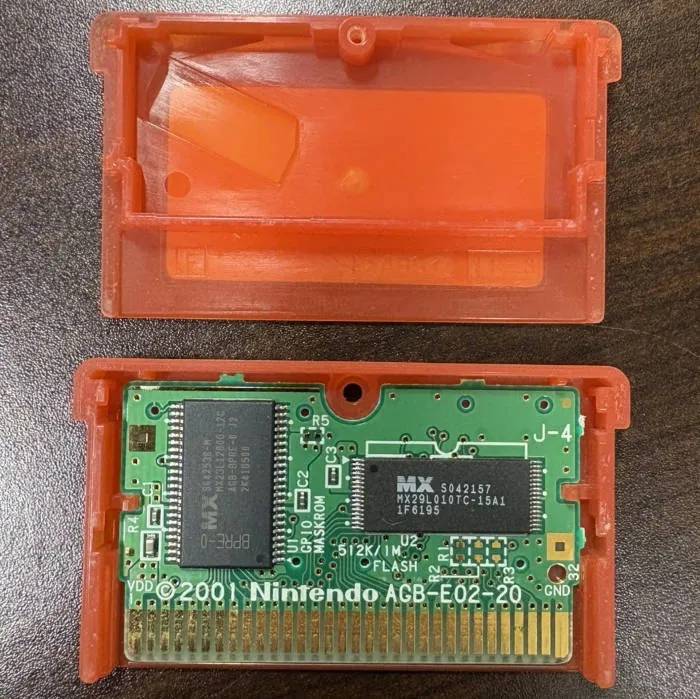
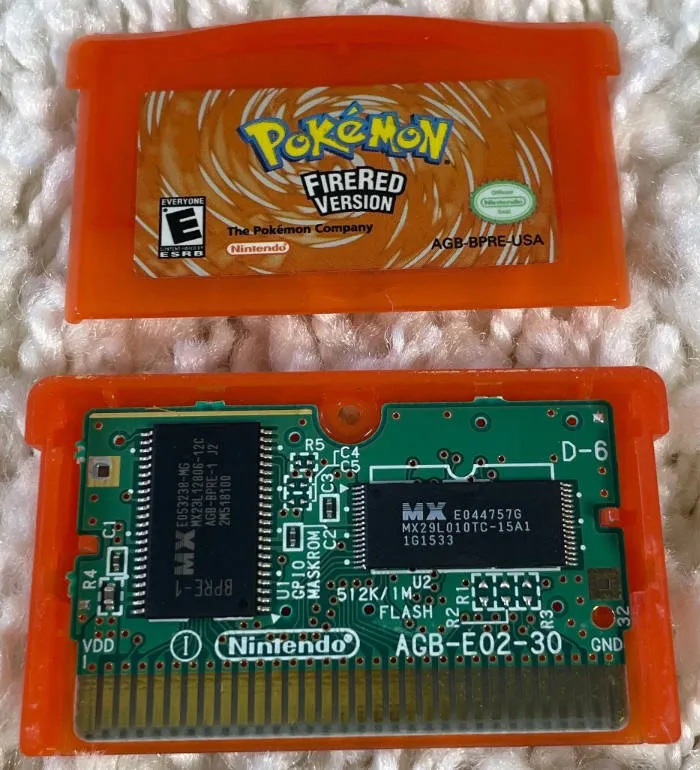
5. Internal Circuit Board Inspection
One of the most reliable authentication methods involves inspecting the PCB through the translucent shell.
In some cases, opening the cartridge provides an even clearer answer.
✔️ Real:
-
Official Nintendo PCB layout
-
Professional soldering
-
Consistent component placement
-
Factory-quality manufacturing
-
Correct board shape
❌ Fake:
-
Generic PCB design
-
Messy solder joints
-
Inconsistent component arrangement
-
Low-quality manufacturing
-
Incorrect board dimensions
Why This Matters
Counterfeiters may successfully copy labels and shells, but reproducing official Nintendo circuit board designs is much more difficult.
For high-value purchases, PCB verification is often the strongest authentication step available.
6. Stamped Game Code Imprint
Many authentic Game Boy Advance labels contain a small production code stamped directly into the label surface.
The imprint is usually subtle and only visible when viewed from certain angles.
✔️ Real:
-
Visible embossed production code
-
Consistent placement
-
Difficult to see straight-on
-
Becomes visible under angled light
-
Clean factory stamping
❌ Fake:
-
No stamped code
-
Printed imitation code
-
Incorrect placement
-
Inconsistent appearance
-
Artificial-looking embossing
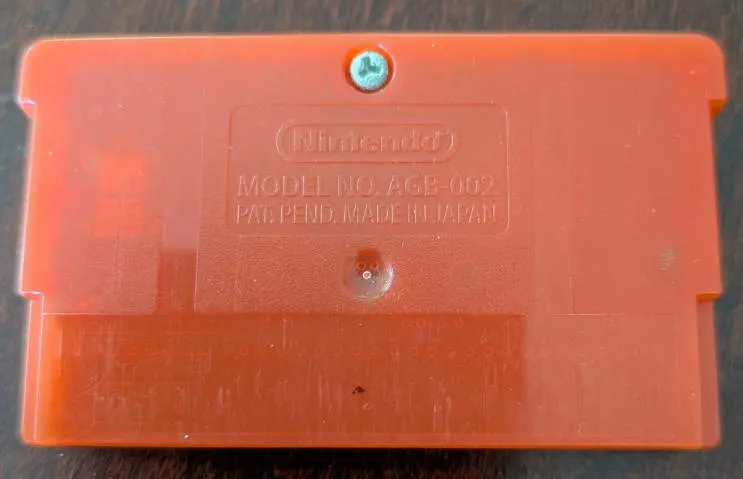
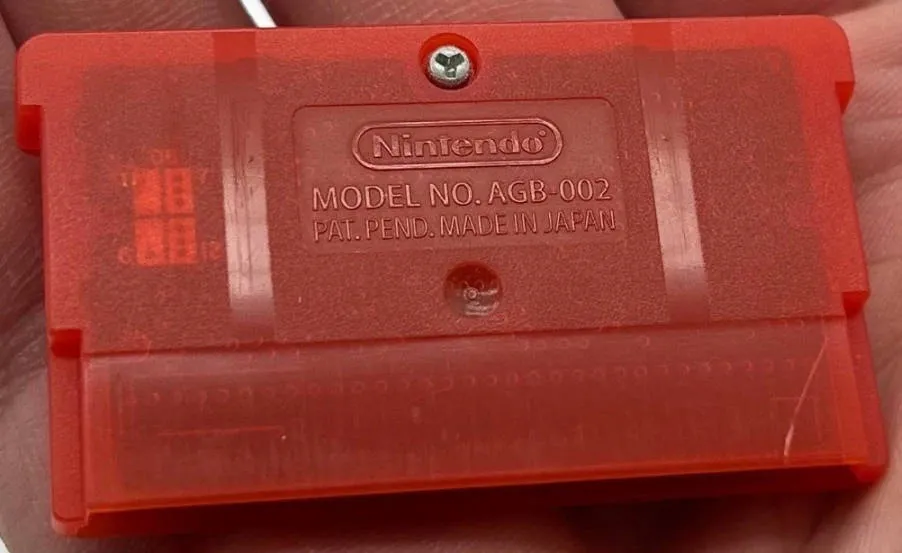
7. Rear Shell Construction
Turning the cartridge over can reveal numerous manufacturing clues.
Official Nintendo shells demonstrate exceptional molding precision.
✔️ Real:
-
Clean plastic finish
-
Precise molding lines
-
Correct screw placement
-
Consistent texture
-
Professional assembly
❌ Fake:
-
Rough plastic edges
-
Uneven molding
-
Cheap screw quality
-
Excess flashing marks
-
Poor alignment
Rear Details Worth Checking
✦ Nintendo Branding
✦ Patent Information
✦ Mold Quality
✦ Screw Type
✦ Plastic Texture
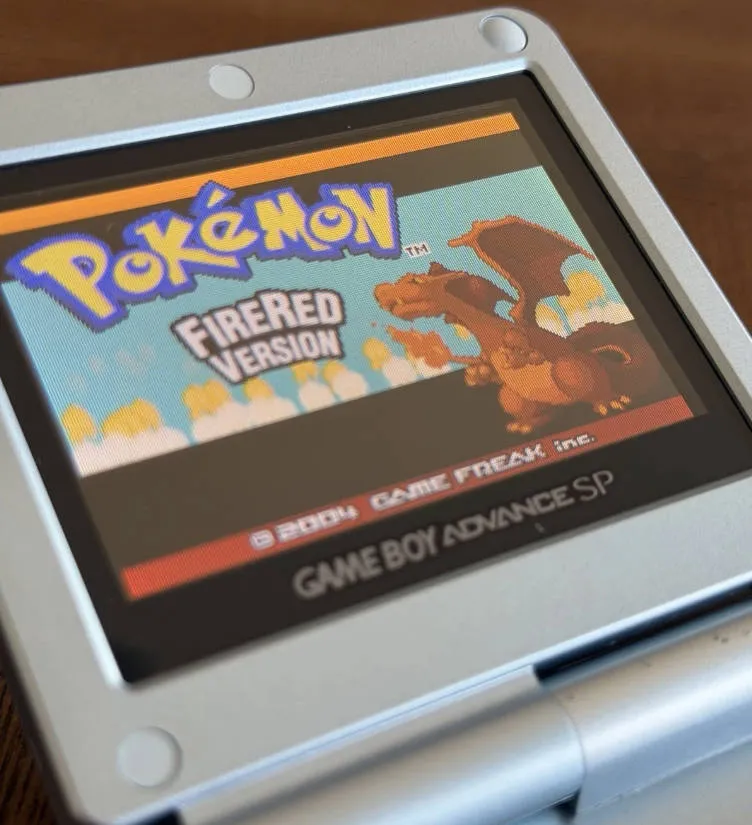
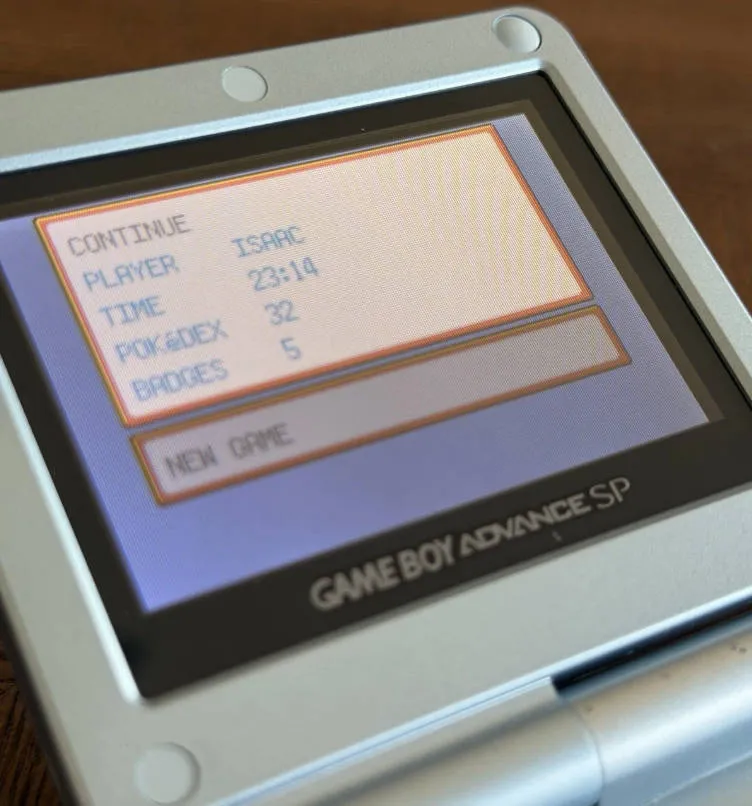
8. Save Function Performance
Functionality can also provide useful clues.
Authentic FireRed cartridges should save reliably and maintain save data over time.
Many counterfeit cartridges use lower-quality memory components.
✔️ Real:
-
Stable save files
-
Reliable long-term storage
-
Consistent gameplay performance
-
No unexpected save loss
-
Proper battery-independent saving
❌ Fake:
-
Random save corruption
-
Lost progress
-
Inconsistent loading
-
Save errors
-
Unreliable memory behavior
📌 Some counterfeit cartridges work initially but develop save problems weeks or months later.
9. Overall Build Quality & Weight
Authentic Nintendo cartridges generally feel extremely well-made.
Even before close inspection, experienced collectors often notice quality differences.
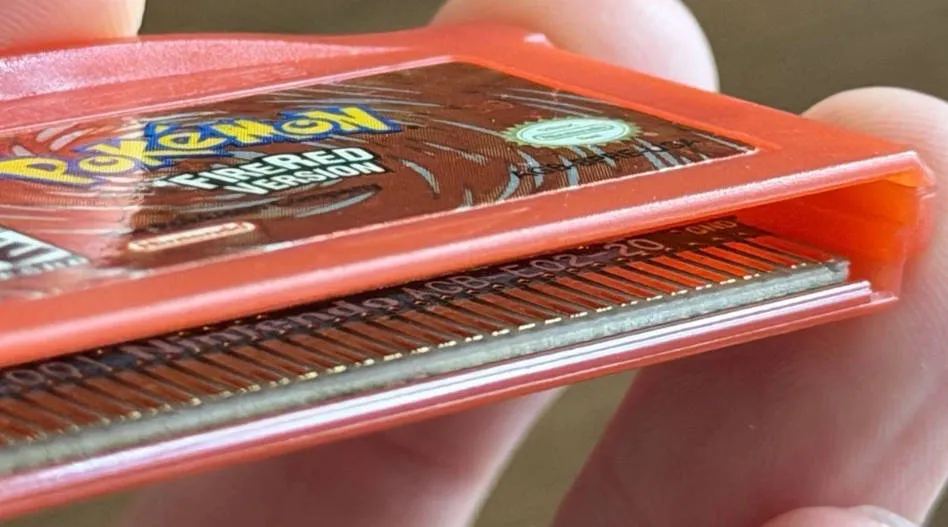
✔️ Real:
-
Solid construction
-
Tight shell fitment
-
Professional finish
-
Consistent weight
-
High manufacturing quality
❌ Fake:
-
Loose shell halves
-
Rattling components
-
Cheap plastic feel
-
Visible defects
-
Poor assembly quality
⚠️ If multiple small quality issues appear throughout the cartridge, authenticity should be questioned immediately.
🧠 Pro Tips for Buyers
When Shopping Online
Always:
✔️ Request front and back photos
✔️ Ask for close-ups of the label
✔️ Request PCB photos if possible
✔️ Inspect cartridge transparency
✔️ Verify seller reputation
Avoid listings that:
❌ Use only stock photos
❌ Hide the back shell
❌ Refuse additional pictures
❌ Use blurry images
❌ Offer unusually low prices
When Buying In Person
Check:
✔️ Shell transparency
✔️ Label quality
✔️ Stamped production code
✔️ Rear shell molding
✔️ Overall construction quality
❓ FAQ: Pokémon FireRed Authentication
Q1. Are all translucent red cartridges authentic?
No.
Many modern counterfeits also use translucent red plastic. Transparency alone should never be considered definitive proof of authenticity.
Q2. Is the stamped game code always present?
Most authentic copies contain a production stamp, but visibility can vary depending on lighting and wear.
A missing stamp should not automatically determine authenticity without examining other details.
Q3. Can counterfeit cartridges save normally?
Yes.
Some replicas function correctly for extended periods. However, save instability remains more common among counterfeit copies than genuine Nintendo cartridges.
Q4. Does cartridge weight reliably identify fakes?
Not by itself.
Weight differences are usually subtle. Weight should only be considered alongside other authentication checkpoints.
Q5. Is opening the cartridge necessary?
Not always.
Many counterfeits can be identified through shell quality, label details, and production stamps. However, PCB inspection provides one of the strongest forms of verification.
Q6. Why is Pokémon FireRed frequently counterfeited?
FireRed remains one of the most popular and valuable Game Boy Advance Pokémon games.
Strong collector demand and rising resale prices make it an attractive target for counterfeit production.
Q7. Are reproduction cartridges legal?
Legality varies by jurisdiction and specific circumstances.
Regardless of legality, reproduction cartridges should always be disclosed clearly when sold and should never be represented as authentic Nintendo products.
📝 Final Thoughts
Authenticating a Pokémon FireRed cartridge is rarely about finding a single "magic detail." Instead, successful authentication comes from examining multiple checkpoints and building a complete picture of the cartridge's authenticity.
While counterfeit manufacturers have become increasingly sophisticated, they still struggle to perfectly reproduce Nintendo's original manufacturing standards. Small inconsistencies in shell transparency, label quality, molded details, PCB construction, and production stamps often reveal the truth.
If you remember just three things:
✔️ Check the translucent red shell carefully
✔️ Look for the stamped production code
✔️ Verify the internal PCB whenever possible
—you will avoid the vast majority of counterfeit Pokémon FireRed cartridges on the market.
For expensive collector-grade copies, never rely on a single photograph or a seller's description alone. Compare multiple authentication points, request additional images when necessary, and approach unusually cheap listings with caution.
The more verification steps you perform, the more difficult it becomes for a counterfeit cartridge to pass as genuine, helping you protect both your collection and your investment.