For over half a century, the Audemars Piguet Royal Oak has stood as the pinnacle of luxury sports watches, defined by its iconic octagonal bezel and meticulous 'Tapisserie' dial. However, as the secondary market surges, so does the sophistication of 'super-clones' that challenge even seasoned collectors. In this comprehensive guide, we dive deep into the world of luxury watch authentication, examining the subtle nuances in movement finishing and case architecture that separate a genuine masterpiece from a high-end counterfeit.
⌚ About Audemars Piguet Royal Oak
Overview
The Audemars Piguet Royal Oak is one of the most iconic luxury watch collections in the history of modern watchmaking. Introduced in 1972, it is widely recognized as the world's first luxury sports watch made of stainless steel, redefining the perception of both sports watches and high horology.
Created by legendary watch designer Gérald Genta, the Royal Oak challenged traditional norms by combining industrial design elements with haute horlogerie craftsmanship. Today, it remains the cornerstone of Audemars Piguet's identity and a benchmark for luxury sports watches worldwide.
Design Origins and Name
The Royal Oak's distinctive design was inspired by traditional naval diving helmets, reflected in its octagonal bezel secured by eight visible hexagonal screws. This bold aesthetic was revolutionary at the time and instantly recognizable.
The name "Royal Oak" originates from British history, referring to the oak tree that sheltered King Charles II while fleeing his enemies. The name symbolizes strength, resilience, and prestige, values closely aligned with the watch's design philosophy.
Signature Design Features
-
Octagonal Bezel with Exposed Screws
A defining visual signature that emphasizes both engineering precision and bold design.
-
"Grande Tapisserie" Dial
The iconic three-dimensional checkered pattern adds depth, texture, and refinement to the dial.
-
Integrated Bracelet
Seamlessly connected to the case, the bracelet features alternating brushed and polished surfaces, offering exceptional comfort and elegance.
-
Advanced Finishing on Steel
Despite being made of stainless steel, the Royal Oak receives extensive hand-finishing, elevating it to true luxury status.
Movements and Complications
The Royal Oak collection spans a wide range of mechanical excellence:
-
Automatic and ultra-thin movements
-
Chronograph models
-
Perpetual calendars
-
Openworked (skeleton) designs
-
High-complication and limited editions
Audemars Piguet manufactures its movements in-house, maintaining the highest standards of traditional Swiss watchmaking.
Notable Models
-
Royal Oak "Jumbo" Extra-Thin (39mm)
The closest modern interpretation of the original 1972 model, celebrated for its slim profile and historical authenticity.
-
Royal Oak Selfwinding (37mm / 41mm)
Contemporary automatic models designed for everyday wear, balancing sportiness and refinement.
-
Royal Oak Chronograph
Combines sporty functionality with luxury finishing.
-
Royal Oak Perpetual Calendar & Openworked Models
High-complication timepieces showcasing Audemars Piguet's technical mastery and artisanal craftsmanship.
Style, Wearability, and Collectability
The Royal Oak is renowned for its versatility—it pairs equally well with formal attire and casual outfits. Its bold yet refined design has made it a favorite among collectors, celebrities, and watch enthusiasts.
Due to limited production and high demand, many Royal Oak models hold strong value on the secondary market, with certain references considered highly collectible investment pieces.
From low-grade replicas to highly sophisticated "super clones," fake Royal Oaks now imitate the original with alarming accuracy. As a result, authenticating a Royal Oak requires close attention, rather than relying on a single detail. This guide consolidates proven, real-world authentication insights into a clear and practical reference to help you identify whether a Royal Oak is genuine or fake.
⌚ Audemars Piguet Royal Oak Real vs. Fake Guide
Quick Authenticity Checklist
| Checkpoint | Genuine Royal Oak | Common Fake Issues |
| Tapisserie dial | Deep, sharp, 3D pattern | Flat or uneven texture |
| Bezel screws | Perfectly aligned, flush | Misaligned or incorrect |
| Case finishing | Sharp bevels, refined brushing | Rounded edges, rough finish |
| Bracelet | Smooth, precise articulation | Stiff, loose, or rattling |
| Logo & text | Crisp, correct font | Blurry or incorrect font |
| Movement | High-grade, finely finished | Generic or decorative |
| Weight & balance | Solid, well-balanced | Light or unbalanced |
| Serial & papers | Fully matching | Missing or inconsistent |
1. Dial & Tapisserie Pattern
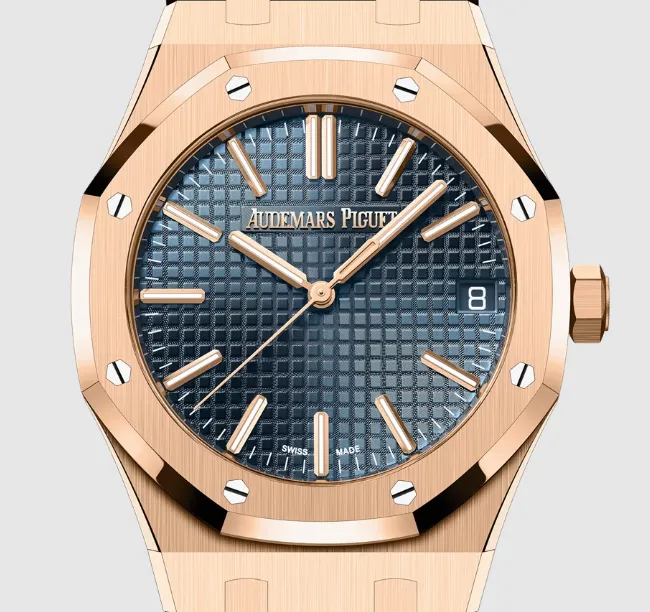

Real
-
The signature Grande or Petite Tapisserie pattern is deep, crisp, and three-dimensional.
-
Each square is evenly cut, perfectly aligned, and reflects light differently depending on the angle.
-
The pattern looks sharp even under magnification.
Fake
-
The pattern often appears flat, stamped, or shallow.
-
Squares may be uneven, misaligned, or overly thick.
-
Under light, the dial lacks depth and dynamic reflection.
2. Bezel, Screws & Case Geometry


Real
-
The iconic octagonal bezel has razor-sharp edges with flawless transitions between brushed and polished surfaces.
-
All eight hexagonal screws are perfectly aligned and sit flush with the bezel.
-
Case proportions are precise, with no distortion or soft edges.
Fake
-
Screws may be misaligned, incorrectly shaped, or uneven in depth.
-
Bezel edges may look rounded or poorly defined.
-
Overall case geometry may feel slightly "off" when viewed closely.
3. Finishing Quality & Bracelet Construction
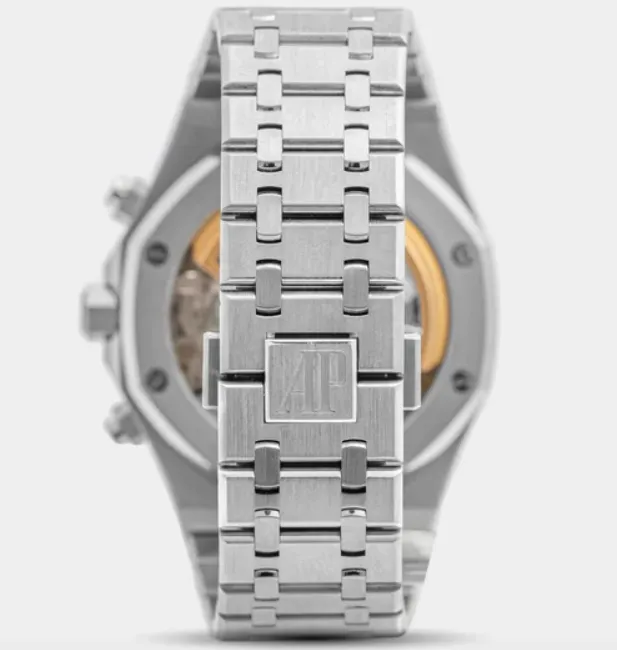
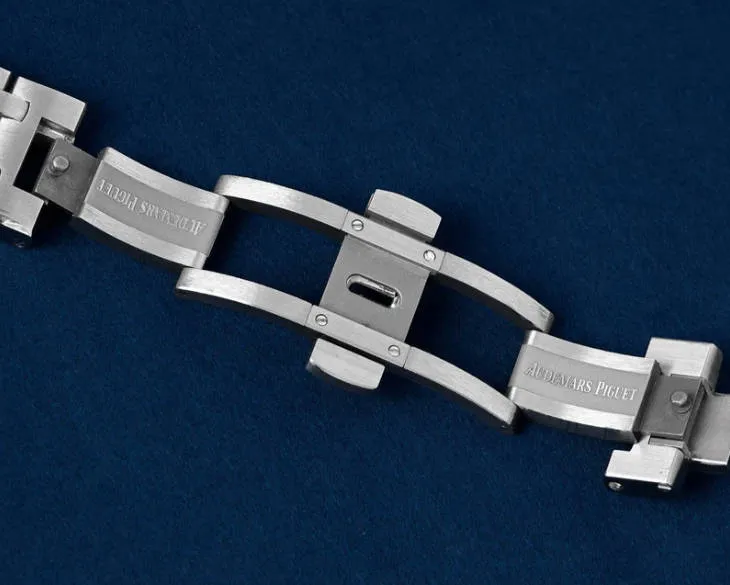
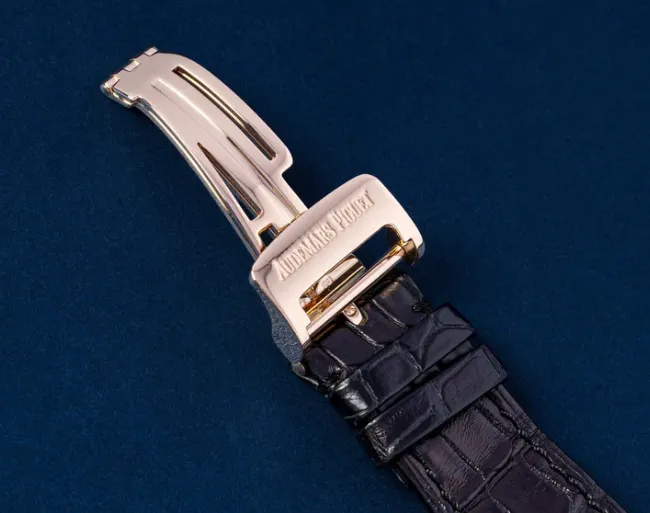
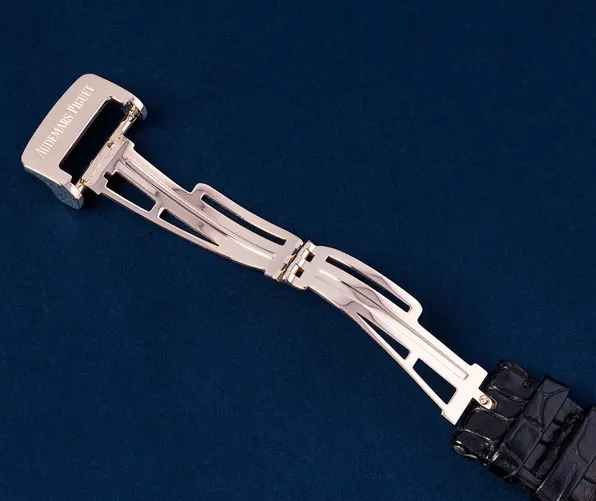
Real
-
Audemars Piguet is renowned for its exceptional hand-finishing.
-
Brushed surfaces are fine and consistent; polished bevels are sharp and clean.
-
The integrated bracelet moves smoothly, with tight tolerances and no rattling.
Fake
-
Coarse or uneven brushing.
-
Rounded or dull bevels instead of sharp chamfers.
-
Bracelet links may feel stiff, loose, or roughly finished.
4. Logo, Text & Small Details
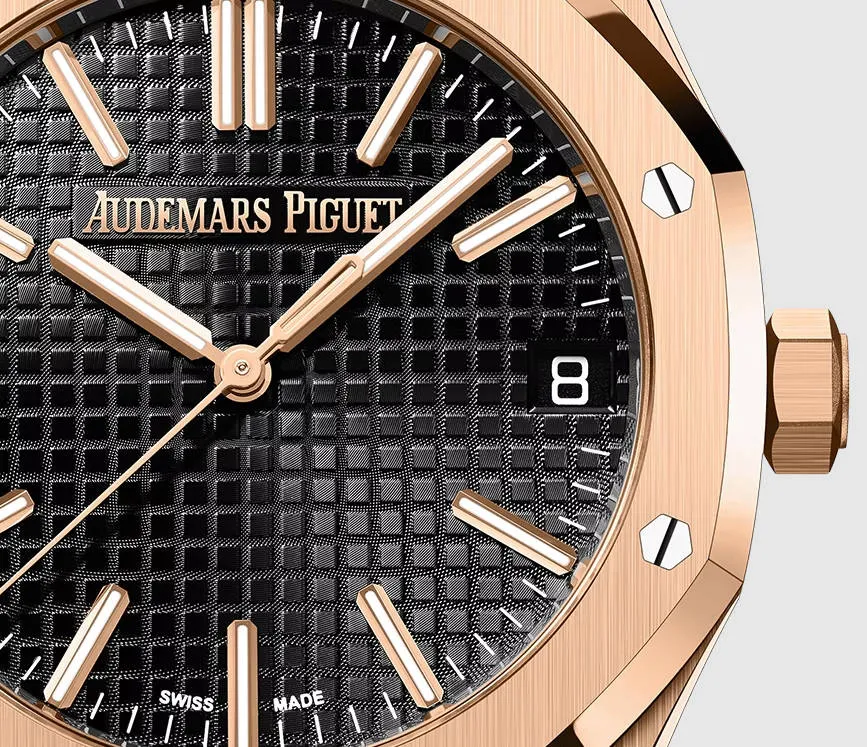

Real
-
The "Audemars Piguet" text is perfectly centered, cleanly printed or applied, and uses the correct font and spacing.
-
Hour markers and hands are precisely finished and evenly applied.
-
Date window alignment is exact, with clean numerals.
Fake
-
Fonts may be incorrect, too thick, or uneven.
-
Printing can appear blurry under magnification.
-
Date numerals may be misaligned or poorly cut.
5. Movement & Caseback



Real
-
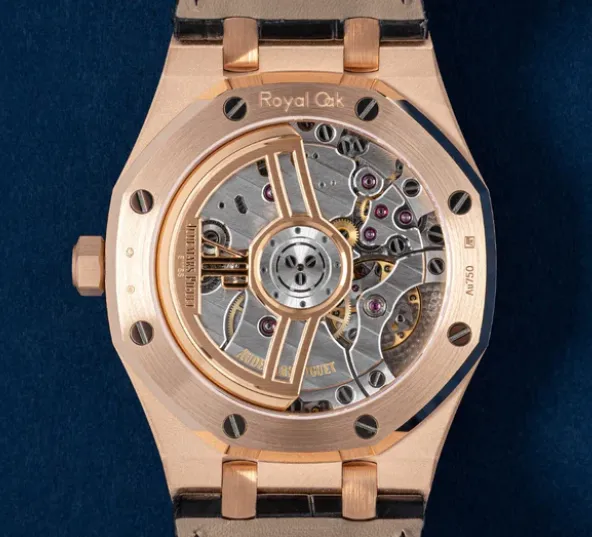
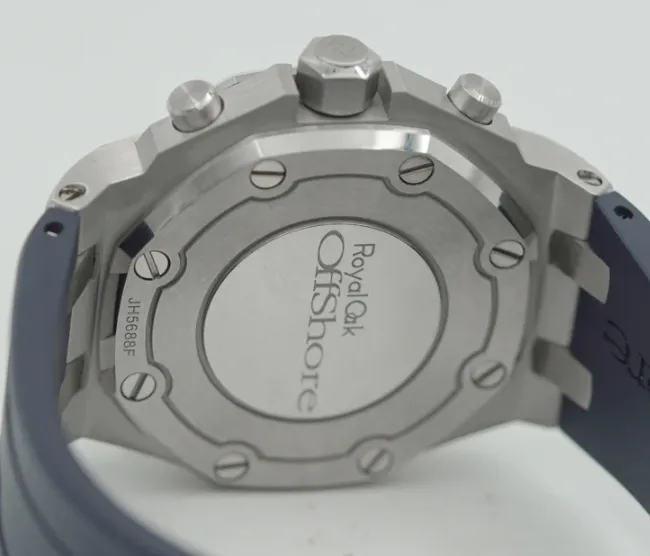
Uses high-grade in-house or AP-specific movements with refined finishing.
-
Decorations such as Geneva stripes, perlage, and rotor engravings are crisp and functional—not merely decorative.
-
Rotor materials and engravings are consistent with the model.
Fake
-
Often based on generic or modified movements.
-
Decorative elements may look convincing at a glance but lack refinement.
-
Engravings can be shallow, incorrect, or purely cosmetic.
If the watch can be opened safely or viewed through a display caseback, this is often the most decisive step in authentication.
6. Weight, Materials & Wearing Feel


-
Genuine Royal Oaks feel solid, balanced, and substantial, whether made of steel, gold, or titanium.
-
Many replicas feel lighter or unbalanced due to inferior materials.
7. Documentation & Provenance
-
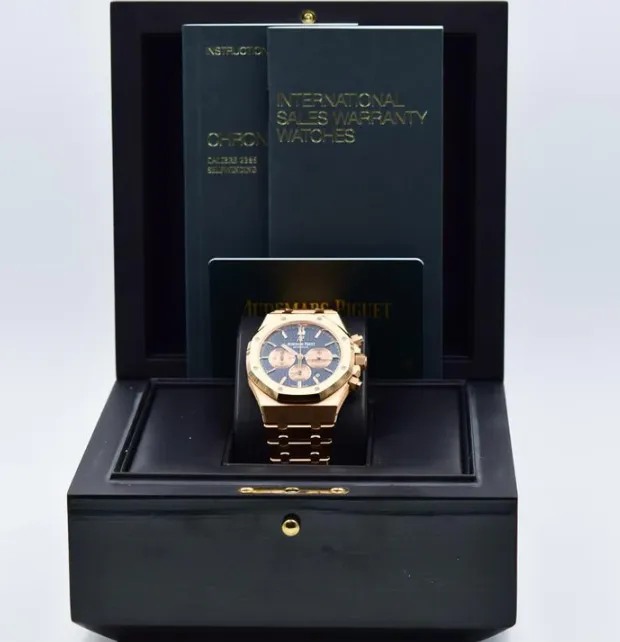
A genuine Royal Oak should come with matching warranty card, serial numbers, box, and paperwork.
-
All numbers must align exactly with the watch.
-
Be aware: paperwork can also be forged, so documents alone are not proof of authenticity.
🔔 Conclusion
The Audemars Piguet Royal Oak is a masterpiece of design and craftsmanship, and authentic examples reflect that quality in every detail. While modern counterfeits can appear convincing at first glance, they almost always fall short in dial depth, finishing precision, movement quality, and overall refinement.
No single detail can guarantee authenticity, but when multiple inconsistencies appear—especially in finishing, screws, and movement—the risk is high. For high-value purchases, professional verification or official inspection remains the safest approach.
When in doubt, remember: true Royal Oaks do not rely on shortcuts—every surface, angle, and component is finished to an exceptional standard.