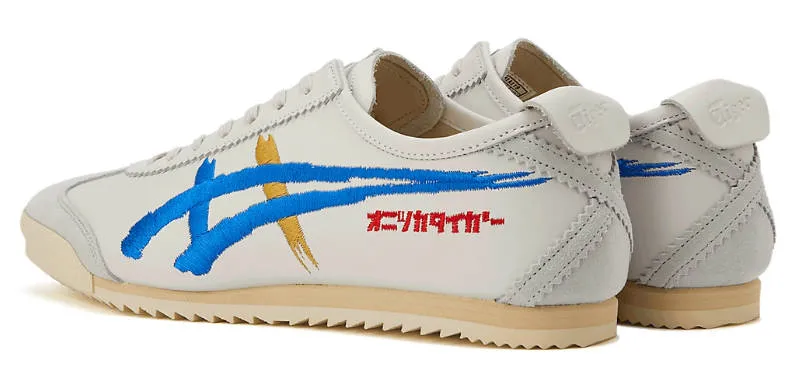
The Double-Edged Sword of Minimalism
In 2026, the Onitsuka Tiger Mexico 66 remains an unstoppable force in streetwear. Riding the wave of the "thin-sole" and retro-minimalist aesthetic popularized across TikTok and Instagram, colorways like the iconic "Kill Bill" Yellow/Black and the classic White/Blue/Red are global staples.
However, the Mexico 66’s genius is also its biggest vulnerability. Because the shoe features an incredibly simple, low-tech construction—just leather, suede overlays, and a thin rubber sole—the barrier to entry for counterfeiters is practically zero.
Today, secondary marketplaces like Depop, Vinted, and Poshmark are heavily flooded with counterfeit pairs. While cheap factories can easily replicate the basic color blocking, they fundamentally fail at the artisanal stitching, the specific shoe molds (the "last"), and the hidden ergonomic details that make genuine Onitsuka Tigers comfortable.
This guide will empower you to look past the superficial colors and act like an expert authenticator by focusing on the 5 ultimate structural details that replica factories simply cannot afford to perfect.
The 30-Second Authenticity Checklist
Buying online and need to quickly filter out bad fakes? Run through this rapid checklist. If the shoe fails any of these points, you are likely dealing with a counterfeit:
-
🚩 The Heel Flap: Does the "TIGER" flap on the heel look stiff, synthetic, and point straight up into the air? (Authentic flaps are soft, natural leather that fold down easily).
-
🚩 The Toe Box Profile: Does the front of the shoe look bulky, tall, and round like a chunky skate shoe? (Authentic Mexico 66s have an incredibly sleek, flat, and narrow, aerodynamic profile).
-
🚩 The Insole Feel: Is the inside of the shoe completely flat and hard? (Despite being a thin shoe, authentic pairs have a distinct, raised ergonomic bump on the medial side to support the arch).
-
🚩 The Tiger Stripe Edges: Look closely at the side stripes. Are the edges fuzzy, rough, or unevenly cut? (Authentic stripes feature razor-sharp, precision die-cuts).
Want to see exactly what to look for? Keep reading for our detailed visual breakdown.
Deep Dive: The 5 Ultimate Signs of Authenticity
Sign 1: The Iconic Heel Flap & X-Stitch (The Biggest Tell)
The heel of the Mexico 66 is its most recognizable feature, specifically the crossed suede overlays and the branded leather flap. This area requires manual alignment during manufacturing, making it a nightmare for cheap counterfeit factories.
|
Feature |
✅ Authentic Onitsuka Tiger |
❌ Counterfeit (Fake) |
|---|---|---|
|
The "TIGER" Flap Material |
Made of premium, soft leather. It is supple enough that it naturally wants to fold down or rests flexibly. |
Made of cheap, stiff synthetic polyurethane (PU). It often sticks straight up like a piece of rigid cardboard and cracks if you try to fold it forcibly. |
|
The X-Stitch |
Look at the suede cross below the flap. The 'X' is stitched tightly, cleanly, and is geometrically symmetrical. |
The stitching is loose, chaotic, crooked, or the two crossing lines are noticeably asymmetrical. |
|
Flap Printing |
The "TIGER" text is crisp and deeply stamped. |
The text is often smudged, printed too lightly, or easily rubs off with a thumbnail. |
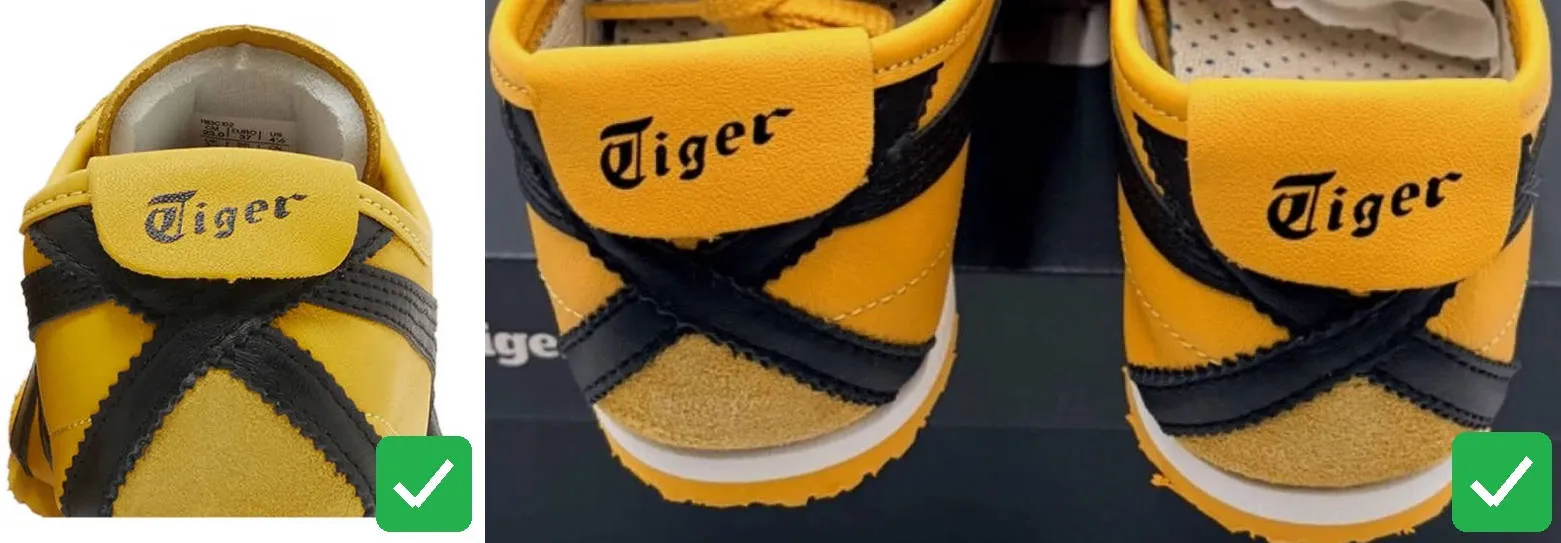
Caption: Authentic heel reference. Notice how the genuine leather flap is soft enough to fold down naturally. Below it, the suede X-stitch is tight, symmetrical, and cleanly executed. Fakes frequently feature stiff flaps that point straight up and sloppy, uneven cross-stitching.
Sign 2: The Toe Box Silhouette (Sleek vs. Bulky)
The physical mold used to shape a shoe is called a "last." Onitsuka Tiger uses a very specific, narrow, and low-profile last to give the Mexico 66 its elegant, track-inspired aerodynamic shape.
|
Feature |
✅ Authentic Onitsuka Tiger |
❌ Counterfeit (Fake) |
|---|---|---|
|
Side Profile (The Slope) |
The toe box is incredibly low-profile, sleek, and hugs the foot tightly. It slopes down elegantly toward the front. |
The "Clown Shoe" Flaw: Counterfeit factories use generic, wider molds to save money. The result is a toe box that looks bloated, excessively tall, and chunky, completely ruining the sleek aesthetic. |
|
The Suede T-Toe (Bumper) |
The suede overlay at the front is symmetrical, perfectly centered, and made of soft split suede. |
The suede bumper is often crooked, cut too wide, or made of a harsh, cardboard-like synthetic material. |
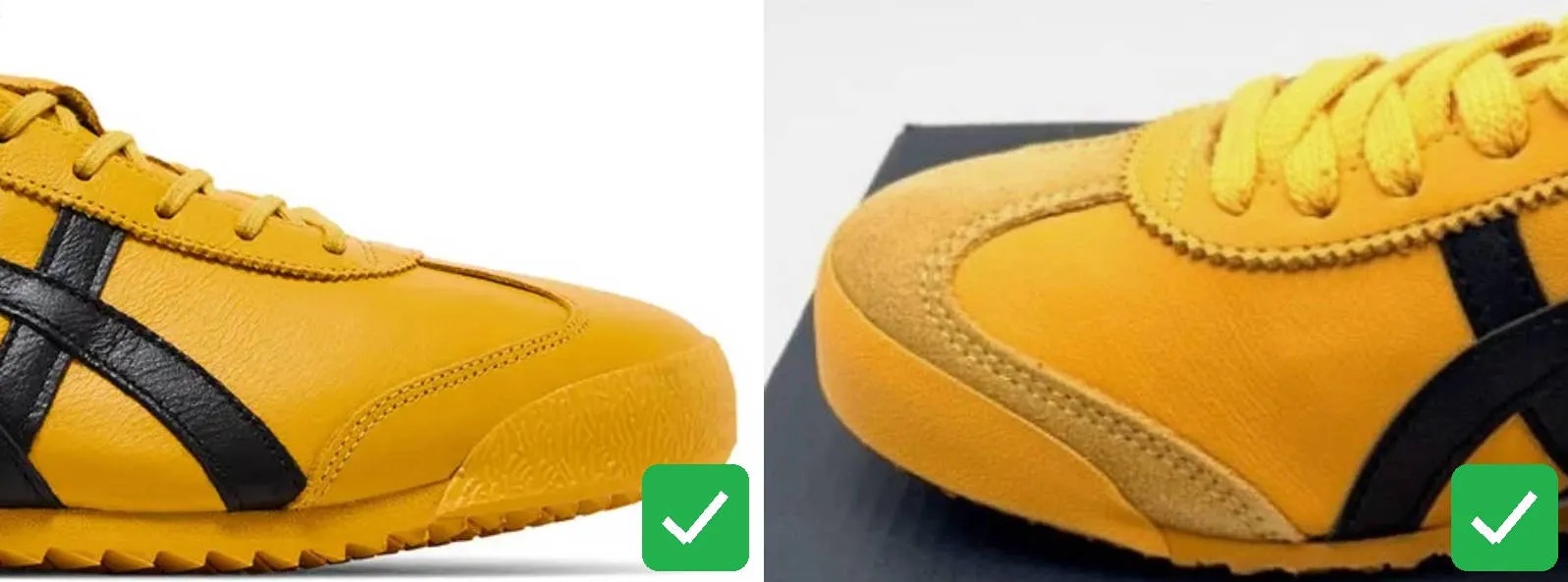
Caption: Authentic side profile reference. The genuine Mexico 66 features an unmistakably low, aerodynamic toe box that hugs the foot. Replicas notoriously fail here, utilizing generic wide molds that result in a tall, chunky, and bulbous toe box.
Sign 3: The Hidden Ergonomics (Arch Support & Insole)
This is the ultimate insider secret for authenticating the Mexico 66. Because it is a "minimalist" shoe with a very thin outsole, people assume the inside is totally flat. Counterfeiters assume this too, which is why they get it wrong.
|
Feature |
✅ Authentic Onitsuka Tiger |
❌ Counterfeit (Fake) |
|---|---|---|
|
The Arch Bump (Crucial) |
Run your hand inside the shoe. On the medial (inner) side of the insole, there is a distinct, raised, molded bump designed to provide ergonomic arch support. |
The inside is completely flat, utilizing a paper-thin, cheap sheet of EVA foam with absolutely zero arch support. |
|
Insole Attachment |
On standard retail pairs, the insole is securely glued down to the midsole and is extremely difficult to tear out. |
The insole often slides around or lifts out easily right out of the box. |
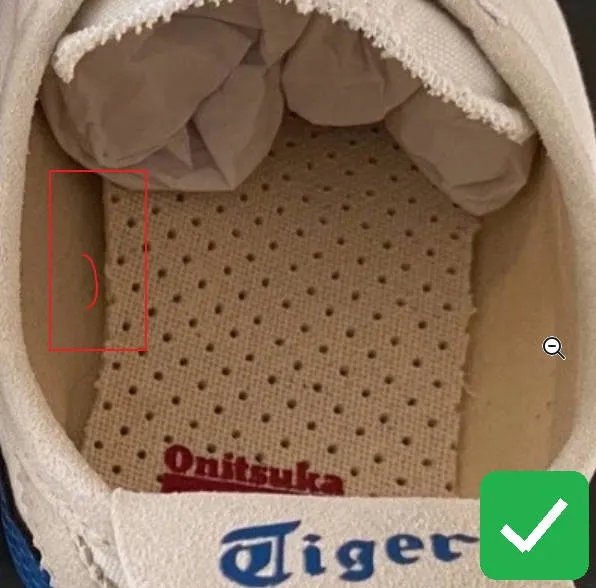
Caption: Authentic interior reference. (Editor's note: Highlight the medial side of the insole). Notice the distinctly raised ergonomic bump designed for arch support. Cheap counterfeit factories completely skip this crucial comfort feature, providing a completely flat, paper-thin insole instead.
Sign 4: The Tiger Stripes & Leather Cut Quality
The intersecting "Tiger Stripes" on the side of the shoe are die-cut from thin leather or synthetic materials. The quality of these cuts and the surrounding leather is a massive indicator of origin.
|
Feature |
✅ Authentic Onitsuka Tiger |
❌ Counterfeit (Fake) |
|---|---|---|
|
Stripe Edges (Razor-Sharp) |
The edges of the overlapping stripes are perfectly crisp, clean, and razor-sharp. |
The edges look fuzzy, frayed, or jagged, indicating cheap die-cutting blades were used. |
|
Stitching Precision |
The stitching runs perfectly parallel to the edge of the stripes, maintaining a consistent distance. |
The stitching wavers away from the edges, looks crooked, or has loose threads hanging off the corners. |
|
Leather Creasing |
Uses supple full-grain or high-quality smooth leather. When bent, it forms fine, natural, organic wrinkles. |
Uses cheap, stiff polyurethane (PU). When bent, it forms harsh, sharp, plastic-like creases that look unnatural. |
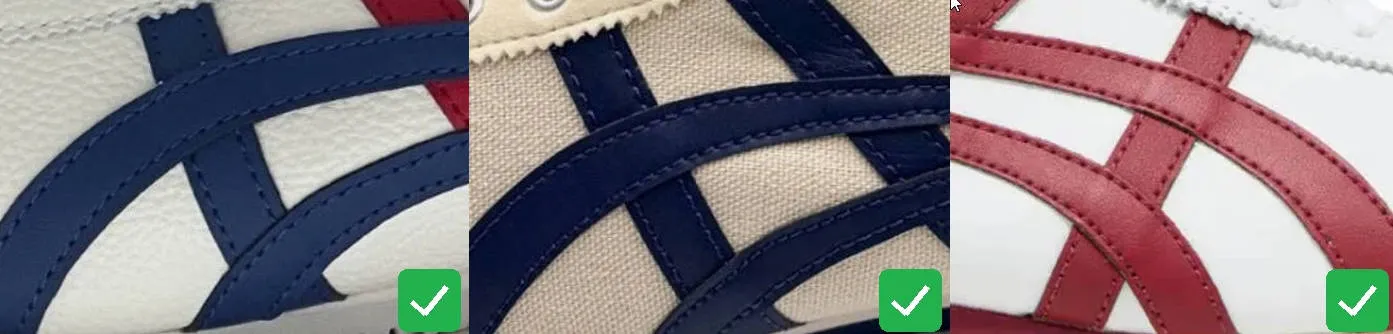
Caption: Authentic Tiger Stripe reference. Look closely at the edges of the overlapping stripes—they must be razor-sharp and clean. The stitching should run perfectly parallel to these edges without wavering. Notice the natural, fine wrinkling of the premium leather base.
Sign 5: The Outsole Texture & Branding
Flip the shoe over. The thin rubber outsole of the Mexico 66 features a specific, track-inspired traction pattern and central branding that fake molds frequently mess up.
|
Feature |
✅ Authentic Onitsuka Tiger |
❌ Counterfeit (Fake) |
|---|---|---|
|
Central Logo Engraving |
The "ONITSUKA TIGER" text molded into the center of the rubber is crisp, clean, and perfectly legible. |
The counterfeit molds are often too shallow. The resulting text looks bloated, blurry, or like it is melting into the surrounding rubber. |
|
Tread Pattern |
The triangular/suction-cup tread pattern is deeply grooved and defined. |
The tread pattern is shallow, overly "beefy," slippery, and wears down incredibly fast. |
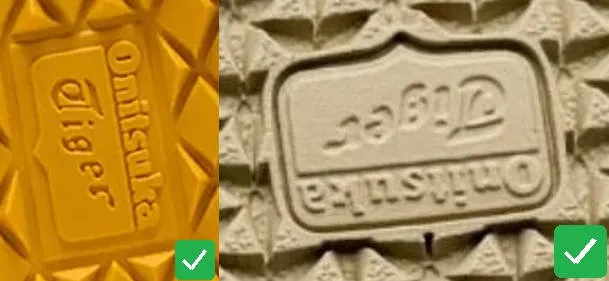
Caption: Authentic outsole reference. The "ONITSUKA TIGER" text molded into the center must be crisp, deep, and perfectly legible. Counterfeit molds are typically shallow, resulting in bloated letters that look like they are melting into the surrounding rubber.
Beyond the Basics: Regular vs. SD vs. Nippon Made (Deluxe)
Before authenticating, you must know which version of the Mexico 66 you are looking at. While the 5 signs above apply to the general construction, Onitsuka Tiger produces this silhouette in three distinct tiers, each with its own materials and technologies.
Counterfeiters frequently mix up these features, providing a massive red flag for educated buyers.
|
Feature |
Mexico 66 (Regular/Standard) |
Mexico 66 SD (Super Deluxe) |
Mexico 66 Deluxe (Nippon Made) |
|---|---|---|---|
|
Retail Price (Avg) |
~$100 - $120 USD |
~$150 - $170 USD |
~$300+ USD |
|
Manufacturing Origin |
Usually Indonesia or Vietnam. |
Usually Vietnam (sometimes Japan). |
Strictly Made in Japan. |
|
Cushioning & Insole |
Standard thin EVA foam insole with the signature molded arch bump. |
Upgraded AmpliFoam midsole and premium OrthoLite insole. Significantly bouncier. |
Hand-crafted premium insoles, often utilizing Gel technology. |
|
Laces & Hardware |
Standard flat, wide cotton laces. |
Often features ultra-thin, refined laces (often waxed) and sometimes metal eyelets. |
Premium materials, varying by specific artisan design. |
|
Leather Aesthetic |
Standard smooth full-grain or synthetic blends. Clean finish. |
High-grade supple leather. Clean finish. |
The Artisan Wash: Leather is hand-washed in hot water and squeezed, resulting in a unique, natural, vintage wrinkled texture. |
|
The "TIGER" Heel Flap |
Flat printing on the leather flap. |
Often features deep debossing (pressed into the leather) alongside printing. |
Precise artisan stamping on premium soft hide. |
|
Outsole Tread |
Signature small triangles (suction cups). |
Upgraded rugged "Dragon Scale" tread pattern for better grip. |
Usually standard triangles, but made of higher-grade rubber. |
How to Spot Fake SD & Nippon Made Pairs:
Faking the SD (Super Deluxe): Counterfeiters hate buying new manufacturing molds, so they frequently try to pass off standard regular-tier materials as the premium SD version.
-
The Sole Swap Flaw: Authentic SD pairs feature an upgraded, rugged "Dragon Scale" tread pattern and a noticeably bouncy AmpliFoam step. Fakes routinely use the standard rock-hard triangle rubber sole from their regular Mexico 66 batches.
-
The Flap & Laces: Check the heel flap. Authentic SD pairs usually feature a deeply debossed (pressed-in) "TIGER" logo, whereas fakes will just use the flat print of the standard shoe. Finally, fakes often forget to use the SD's signature ultra-thin, slightly waxed laces, relying on standard wide cotton laces instead.
Faking the Nippon Made (Deluxe): The "Artisan Wash" is the ultimate counterfeiter's nightmare. Genuine pairs are crafted in Japan, where the leather is literally hand-washed in hot water and shaped, resulting in natural, soft, organic wrinkling that shrinks to the last.
-
The "Dirty Plastic" Flaw: Fake factories try to mimic this vintage look by taking stiff, cheap PU leather and either artificially tumbling it in a machine or rubbing dark dye onto it. The result looks like cracked, dirty plastic rather than premium aged leather.
-
Inner Lining: Authentic Nippon Made pairs frequently feature a luxurious, full raw-leather inner lining. Counterfeits almost always cut corners here, using standard, cheap synthetic fabric mesh.
-
The Tag & Packaging: Always check the internal size tag—if a Nippon Made pair doesn't proudly state "Made in Japan," it is 100% fake. Furthermore, authentic pairs arrive in premium, distinct packaging (often black or textured boxes), while fakes usually ship in the standard, flimsy brown/black regular cardboard box.
Bonus Checks (Advanced Authentication)
-
The Tongue Tag (Typography Check): This is a secret weapon. The size tag stitched inside the tongue requires high-quality printing.
-
The Authentic Tag: Uses a crisp, breathable font. The ink absorption is calibrated so it does not bleed into the fabric.
-
The Fake Tell: Replicas frequently use a font weight that is too bold/thick, causing the text (especially the "Made in..." line) to look cramped and squished together. Occasionally, fakes will even misspell "Tiger".
-
-
The Shoebox Details: Don't ignore the packaging. Authentic Onitsuka Tiger boxes are sturdy with a sharp, matte finish. The label displaying the style code, barcode, and shoe illustration is printed in high resolution. Fake boxes are frequently made of flimsy cardboard that crushes easily during transit, and the label print is often blurry, off-center, or missing the specific style code entirely.
FAQ & Addressing Misconceptions
"My Mexico 66s feel incredibly light. Are they fake?" Not necessarily. In fact, standard authentic Mexico 66s are exceptionally lightweight (a US Men's Size 9 usually weighs significantly less than a standard lifestyle sneaker, often under 300 grams per shoe). They were originally designed as a lightweight track-and-field warm-up shoe. Base your legit check on structural details, not just a perceived lack of weight.
"My heel flap doesn't stay perfectly folded down. Is it fake?" While authentic flaps are softer and tend to fold down, how they rest can change based on how they were stored or packed. The true test is the material. Squeeze the flap—if it feels like soft, pliable leather, it's likely good. If it feels like a stiff, unyielding piece of cardboard, it's a massive red flag.
"Can I remove the insoles to wear my own orthotics?" On standard Mexico 66 models, the insoles are glued in and are notoriously difficult to remove without damaging the foam bed. If your insoles slide right out effortlessly on a brand new pair, proceed with extreme caution. (Note: Some high-end Nippon Made models do feature removable molded insoles).
Where to Buy Authentic Onitsuka Tiger Mexico 66
Because of the sheer volume of fakes on peer-to-peer apps, we strongly advise exercising caution when shopping for this specific silhouette outside of official channels.
Retail Options (100% Guaranteed Authentic):
-
Onitsuka Tiger Official Boutiques: The absolute safest option.
Reputable Secondary / Resale Markets: If you must buy on the secondary market to find sold-out colorways (like the Kill Bill Yellow), use platforms that offer physical authentication:
-
GOAT: A highly trusted platform that verifies sneakers in-hand before shipping.
-
StockX: The industry standard middleman that physically authenticates pairs.
- Stadium Goods: A premium sneaker and streetwear consignment store. You will pay a higher secondary market premium here, but the inventory is physically authenticated and generally ready to ship immediately.
-
Farfetch: While primarily a luxury marketplace, its sneaker section is heavily supplied by vetted partner boutiques and its subsidiary, Stadium Goods. Expect resale prices for high-demand sneakers like the Mexico 66, but with the backing of strict authenticity guarantees.
- eBay (Authenticity Guarantee): Highly recommended. Ensure the specific listing has the blue "Authenticity Guarantee" checkmark, meaning the shoes will be routed to an independent expert before reaching you.
Warning: Avoid "too good to be true" prices on platforms like Depop, Vinted, or local marketplace meetups unless you can physically inspect the shoe using the 5 signs detailed in this guide.
Disclaimer: This guide is for educational purposes only. All trademarks belong to their respective owners. Authentication involves multiple variables, and counterfeit methods are constantly evolving. Use this information as a guide at your own risk.