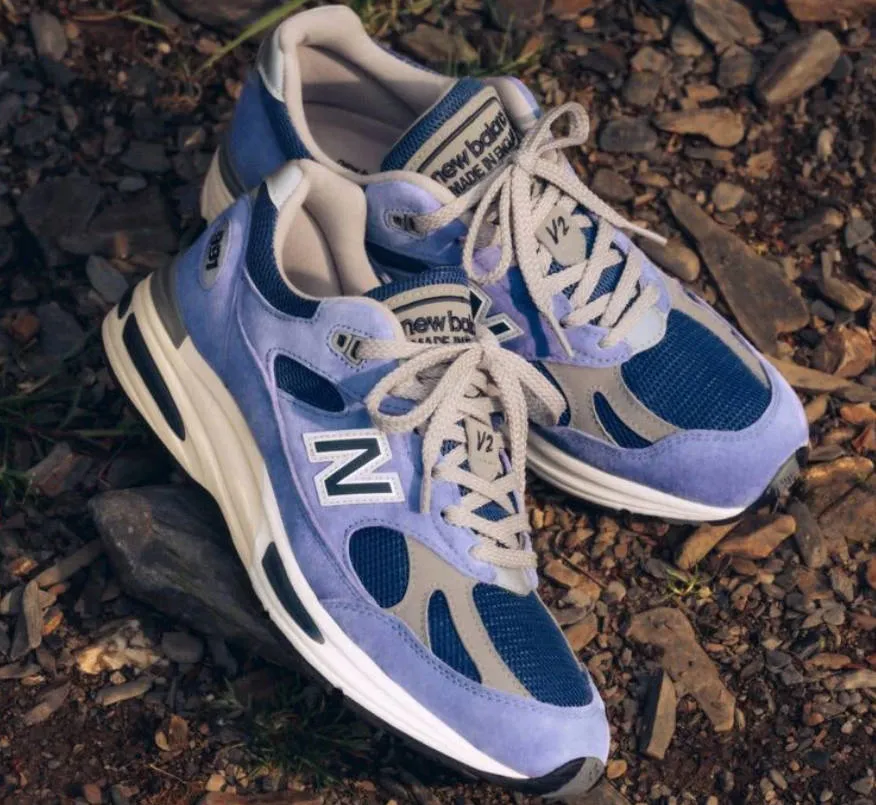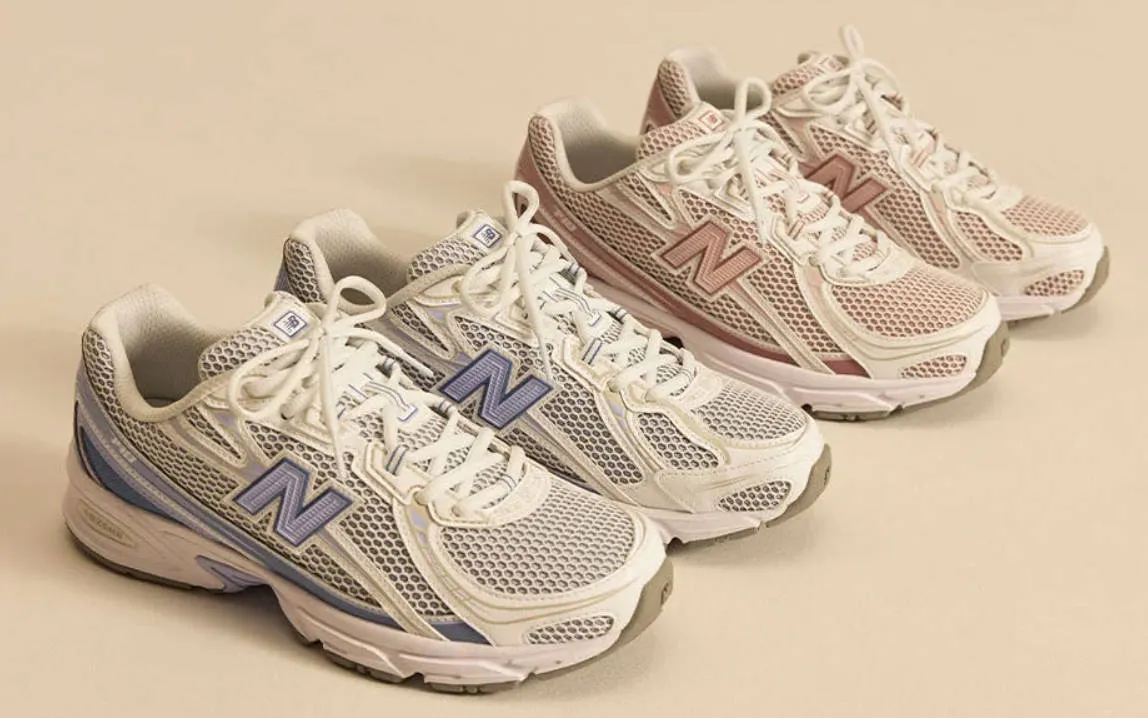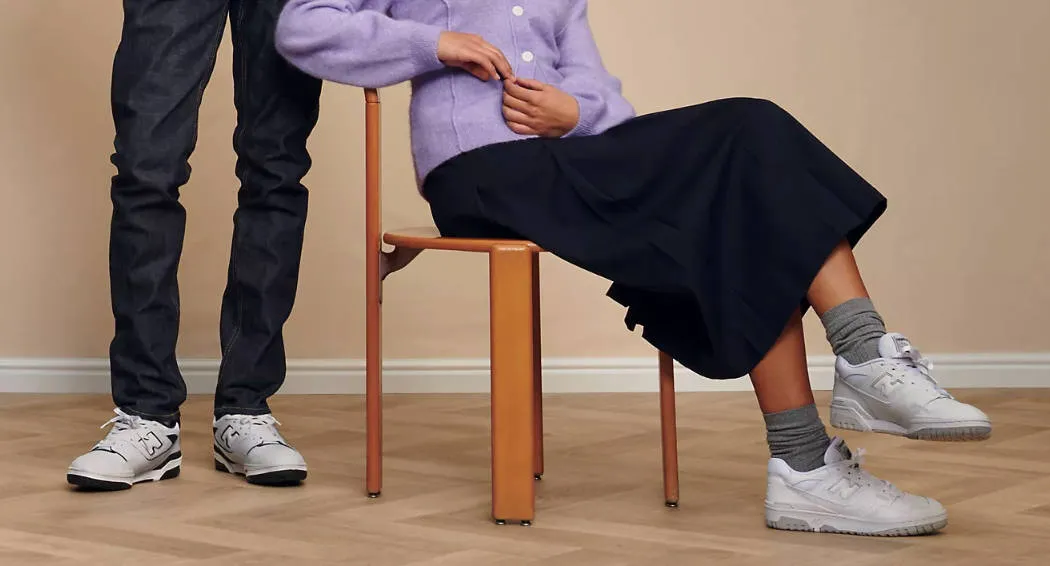
The New Balance 574 is an absolute timeless classic, celebrated globally for its unmatched comfort and retro silhouette. However, its massive popularity has also made it a prime target for counterfeiters. Whether you just scored a deal on a resale marketplace or you're second-guessing a recent purchase, knowing how to distinguish a genuine pair from a replica is crucial. In this comprehensive breakdown, we'll take a close look at the stitching, logo placements, and inner labels so you can confidently verify your sneakers and avoid getting ripped off by high-quality fakes.
👟 New Balance 574 Sneaker Overview
New Balance 574 is one of the most recognizable lifestyle sneakers ever produced by New Balance. Originally introduced in 1988 as a hybrid road-and-trail running shoe, the 574 has evolved from a performance runner into a global casual footwear icon. Today, it remains one of the brand's best-selling models thanks to its timeless design, comfort-focused construction, and versatile styling.
1. History of the New Balance 574
The 574 was created during the late 1980s when New Balance was expanding its running footwear lineup. Instead of being designed as a premium flagship model, the 574 was intended as a practical and affordable running shoe that combined elements from several existing New Balance silhouettes.
Designer Steven Smith blended features from the 576 and 577 models, creating a versatile sneaker that could perform on both roads and light trails. The shoe introduced ENCAP cushioning technology, which combined soft EVA foam with a supportive polyurethane rim for improved stability and durability.
Over time, the 574 transitioned from athletic footwear into a lifestyle staple. Its understated appearance, wide availability, and reputation for comfort helped it become one of New Balance's signature silhouettes. Many sneaker enthusiasts refer to it as the "most New Balance shoe ever made."
2. Design and Aesthetics
One reason for the 574's enduring popularity is its classic design.
Key visual characteristics include:
✔️ Large "N" side logo
✔️ Suede and mesh construction
✔️ Chunky yet balanced silhouette
✔️ Retro running-inspired shape
✔️ Wide range of colorways
Unlike trend-driven sneakers, the 574 embraces a simple and practical aesthetic. Neutral gray versions remain especially popular because they closely reflect the model's heritage roots.
3. Comfort and Cushioning
The New Balance 574 features the brand's well-known ENCAP midsole technology.
ENCAP combines:
-
Soft EVA foam for shock absorption
-
Polyurethane support around the heel
-
Stable platform for everyday wear
Independent testing has shown the 574 provides above-average shock absorption and a stable walking experience, making it suitable for extended daily use. While the cushioning feels firmer than many modern foam-based sneakers, many wearers appreciate its dependable support and durability.
Comfort Highlights
✅ Supportive heel structure
✅ Stable platform
✅ Good arch support
✅ Suitable for long walks
✅ Comfortable for all-day casual wear
Many reviewers and users praise the model for walking, travel, and standing throughout the day.
4. Materials and Construction
Most classic 574 models use a combination of:
-
Suede overlays
-
Breathable mesh panels
-
Synthetic reinforcements
-
Rubber outsole
This blend creates a balance between durability and breathability.
Premium releases may feature:
-
Higher-grade suede
-
Full leather uppers
-
Collaboration-exclusive materials
-
Special edition colorways
The traditional construction contributes significantly to the model's vintage appeal.
Originally introduced as a versatile running shoe, the 574 has evolved into a lifestyle staple worn by sneaker enthusiasts, casual consumers, and collectors alike. Its popularity has also attracted counterfeit manufacturers. Below are the most important details to examine before making a purchase.
🧭 New Balance 574 Real vs. Fake Guide
⚡ Quick Comparison Table
| Check Point | Authentic Characteristics | Red Flags |
| Shape | Balanced silhouette | Bulky or misshapen profile |
| Suede Quality | Soft premium suede | Rough synthetic material |
| Mesh Panels | Breathable and consistent | Cheap uneven mesh |
| N Logo | Clean stitching and symmetry | Crooked or oversized logo |
| Tongue Label | Sharp printing | Blurry fonts |
| Heel Branding | Precise placement | Uneven logo positioning |
| Interior Size Tag | Correct formatting | Typos or incorrect codes |
| Midsole & Outsole | High-quality construction | Poor molding quality |
| Stitching | Clean and symmetrical | Loose threads and uneven seams |
1. Overall Shape & Silhouette
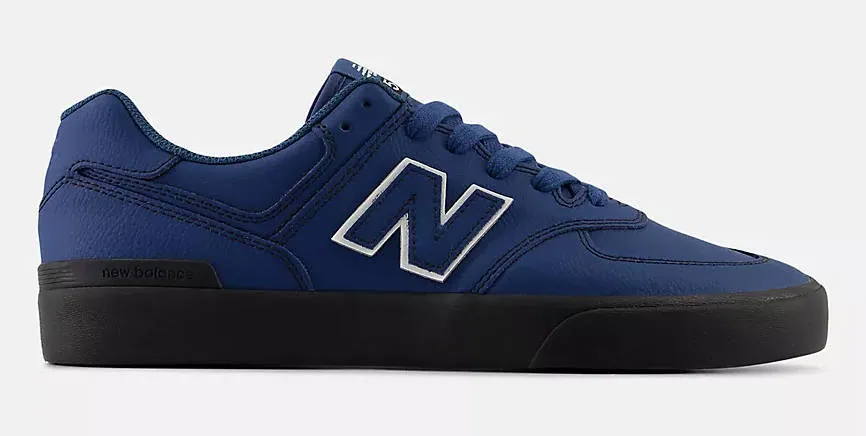
One of the easiest ways to identify a counterfeit New Balance 574 is by examining the overall shape.
Authentic pairs maintain a balanced silhouette that has remained largely consistent across generations. The toe box, midfoot, and heel should flow naturally without appearing overly chunky or awkward.
Many counterfeit factories focus heavily on logos while neglecting proportions.
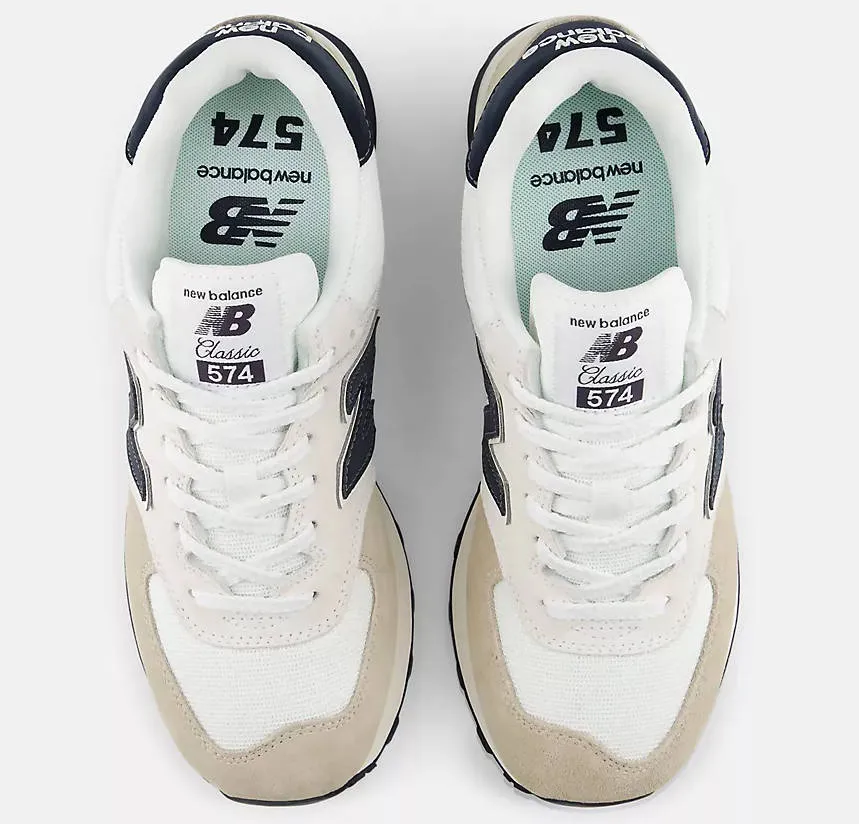
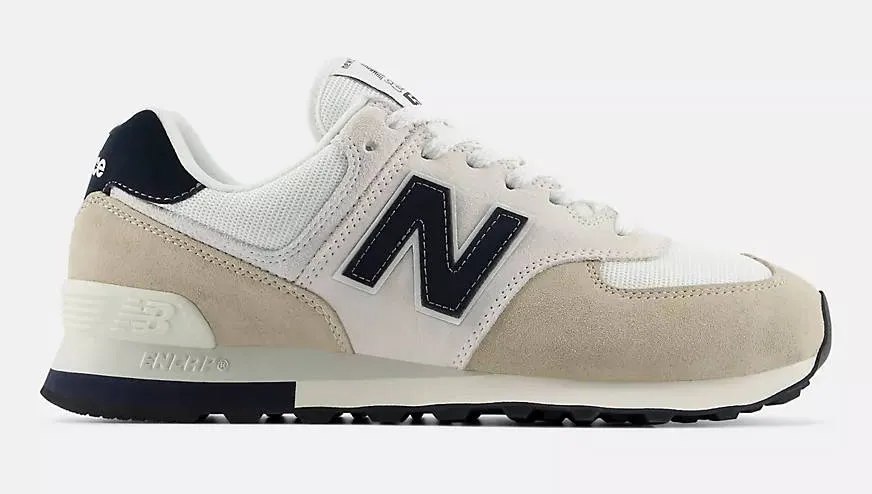
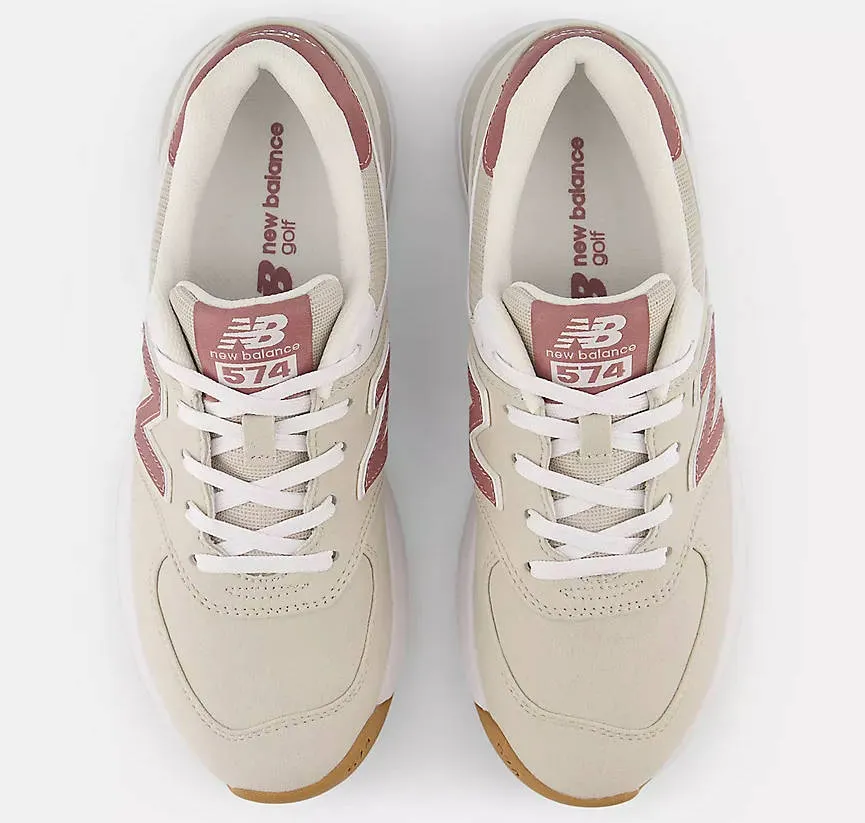
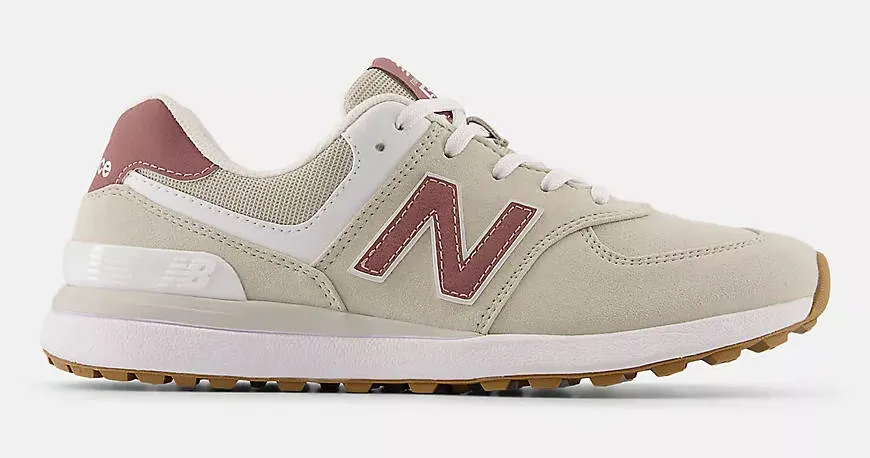
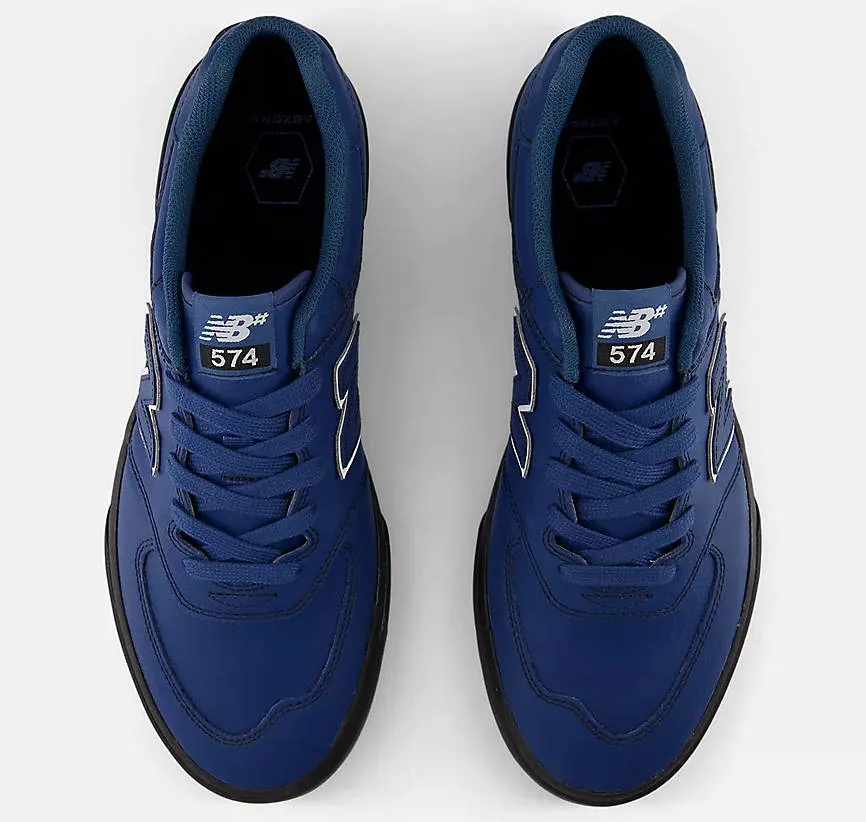
✔️ Real:
-
Balanced profile
-
Slightly tapered toe box
-
Smooth sidewall curves
-
Consistent shape between both shoes
-
Well-structured heel area
❌ Fake:
-
Bulky appearance
-
Flat or oversized toe box
-
Uneven proportions
-
Inconsistent left-right symmetry
-
Misshapen heel structure
2. Suede Material Quality
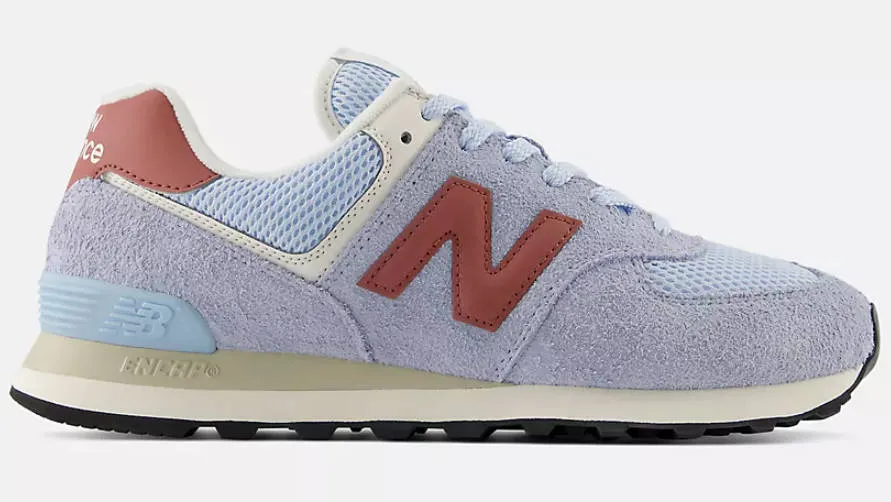
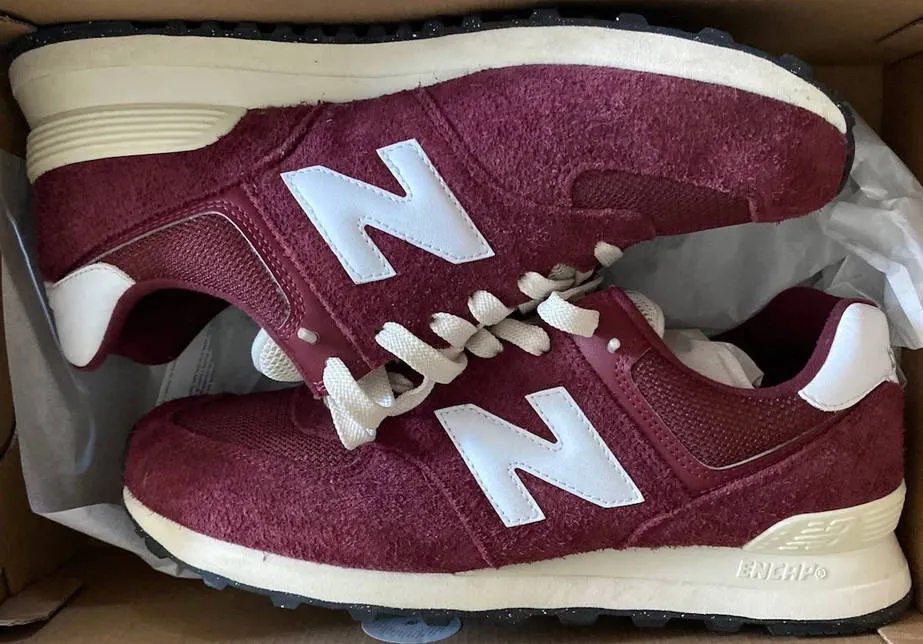
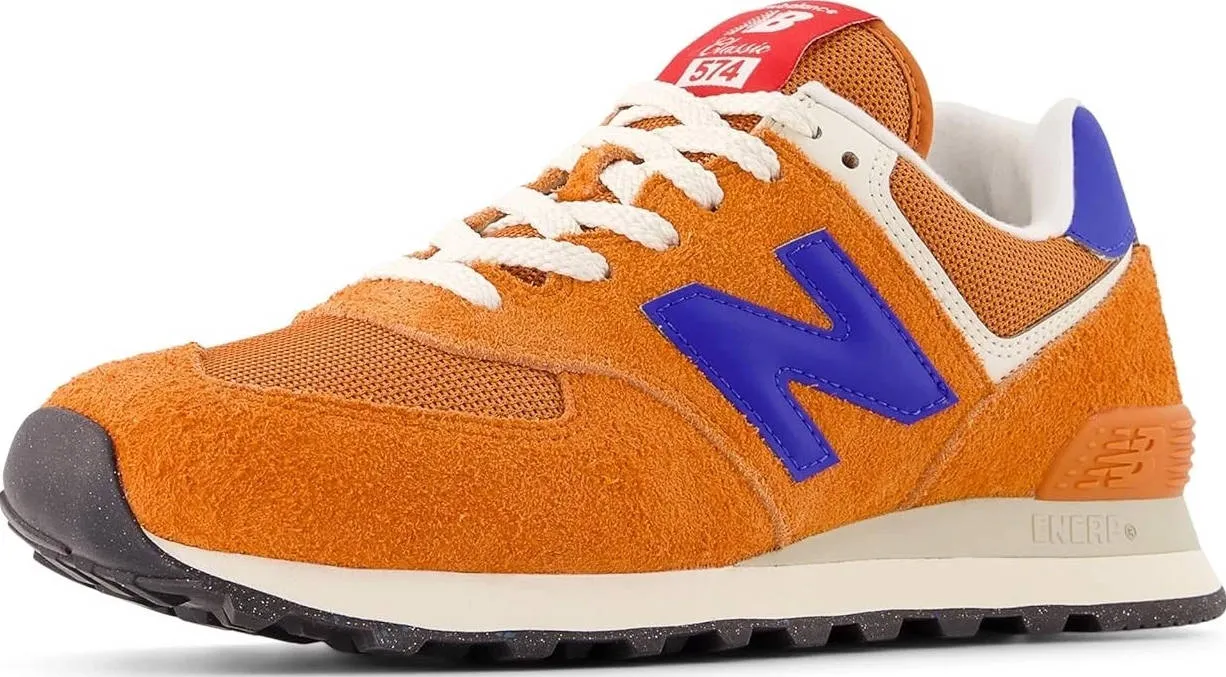
Suede is one of the defining characteristics of most New Balance 574 releases.
Authentic pairs typically use soft suede with visible texture changes when brushed in different directions.
Counterfeit manufacturers often substitute cheaper synthetic alternatives.
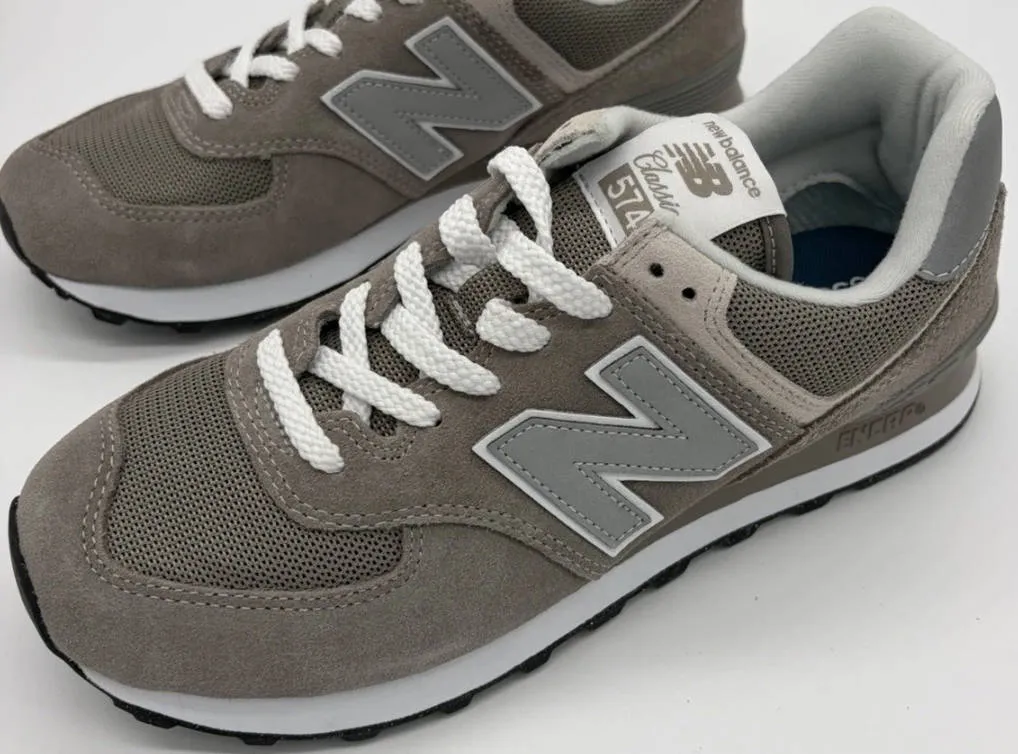
✔️ Real:
-
Soft and premium texture
-
Visible nap movement
-
Consistent color depth
-
Smooth panel edges
-
High-quality finish
❌ Fake:
-
Plastic-like feel
-
Flat texture
-
Inconsistent coloration
-
Rough panel cutting
-
Shiny synthetic appearance
Quick Test
Run your finger across the suede.
Authentic suede usually changes shade slightly when brushed.
Fake suede often remains unchanged.
💡 Keep in mind that suede quality can vary slightly between production years and special editions.
3. Mesh Panel Construction
Most New Balance 574 models feature breathable mesh sections around the toe box and collar.
This area often reveals manufacturing shortcuts.
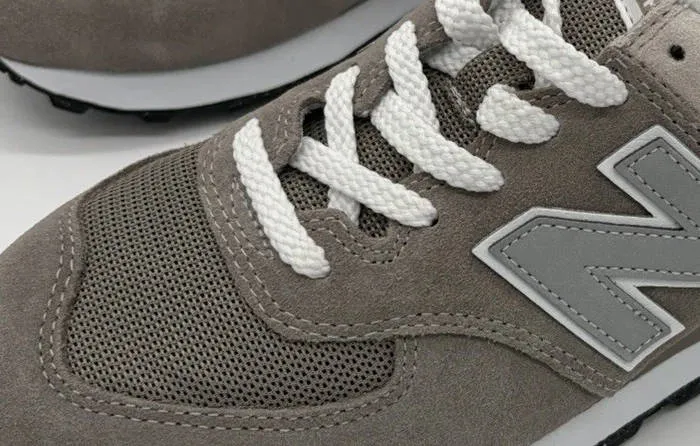
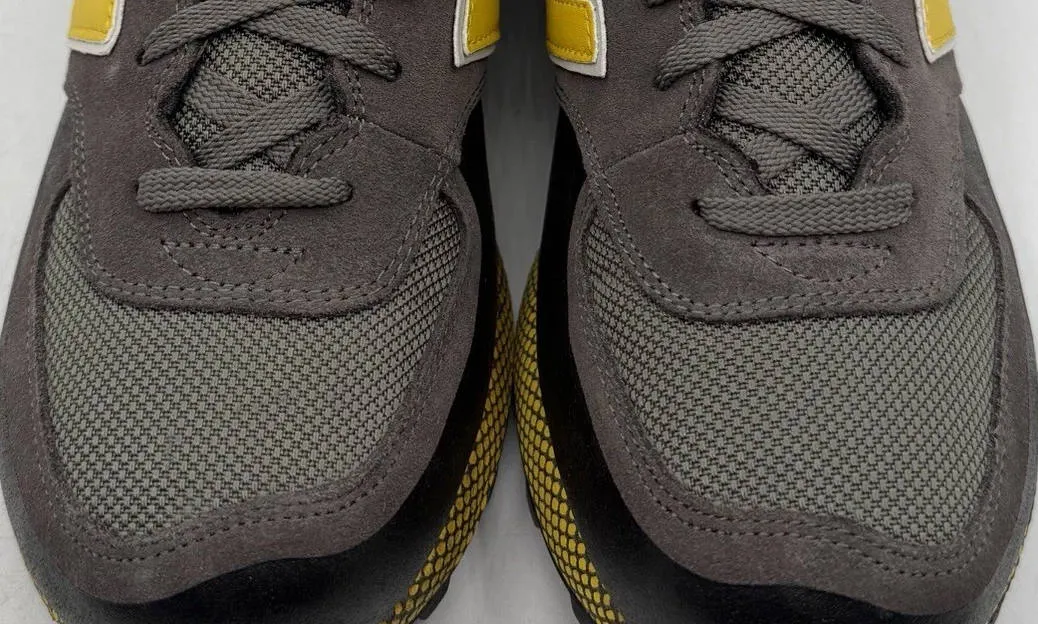
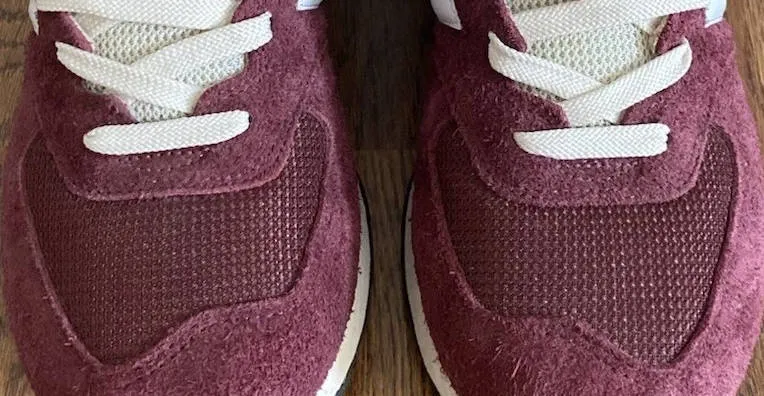
✔️ Real:
-
Uniform mesh pattern
-
Consistent perforations
-
Durable construction
-
Clean transitions to suede overlays
-
Breathable texture
❌ Fake:
-
Uneven mesh holes
-
Thin synthetic fabric
-
Loose fibers
-
Poor panel transitions
-
Inconsistent texture
The mesh should never feel fragile or resemble inexpensive athletic footwear.
Authentic New Balance sneakers are known for durability and comfort.
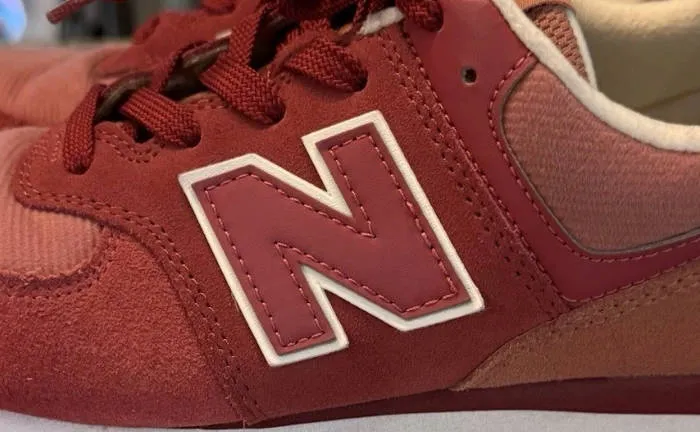
4. Side "N" Logo Details
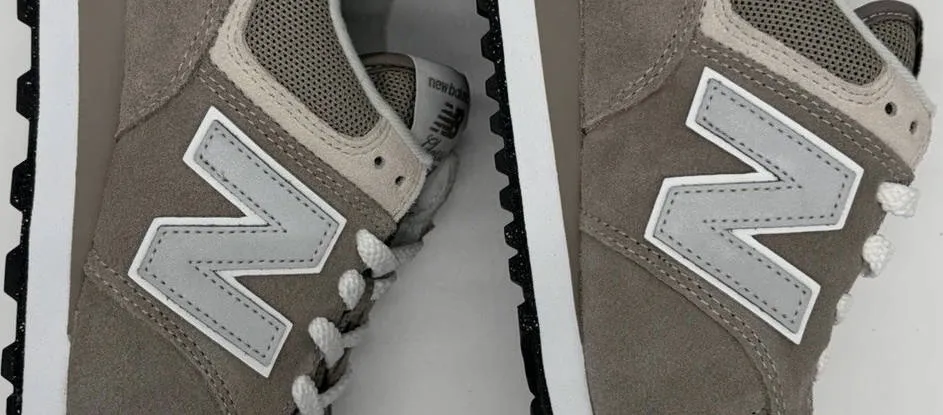
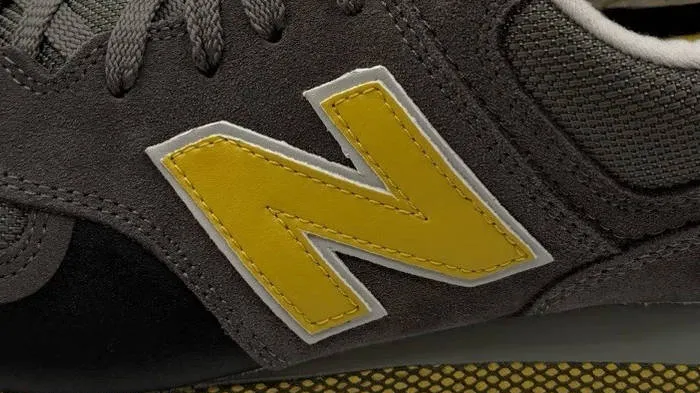
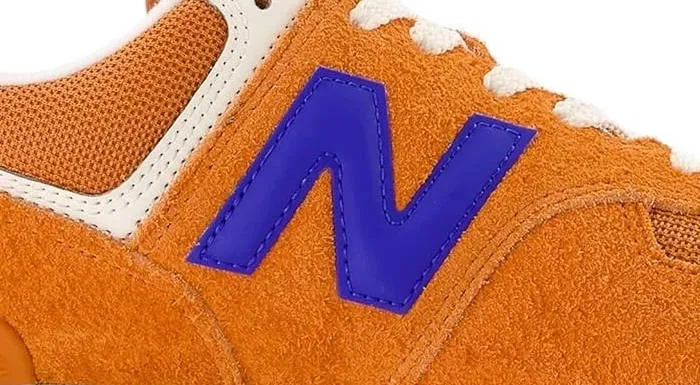
The iconic "N" logo is among the most important authentication checkpoints.
Because it is highly visible, counterfeit factories attempt to copy it carefully. However, mistakes remain common.
What to Inspect
Logo Shape
Authentic logos maintain precise proportions.
Stitching
The stitching around the logo should appear clean and evenly spaced.
Placement
The logo should sit consistently within the side panel.
✔️ Real:
-
Sharp logo shape
-
Correct proportions
-
Dense stitching
-
Symmetrical placement
-
Clean borders
❌ Fake:
-
Oversized logo
-
Crooked positioning
-
Uneven stitching
-
Distorted shape
-
Visible glue residue
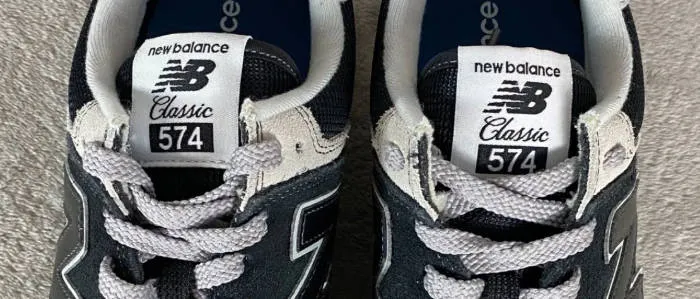
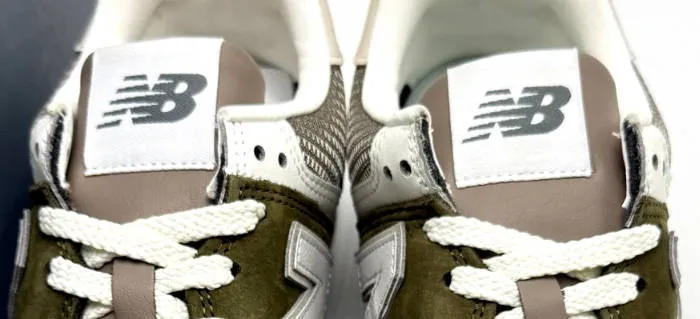
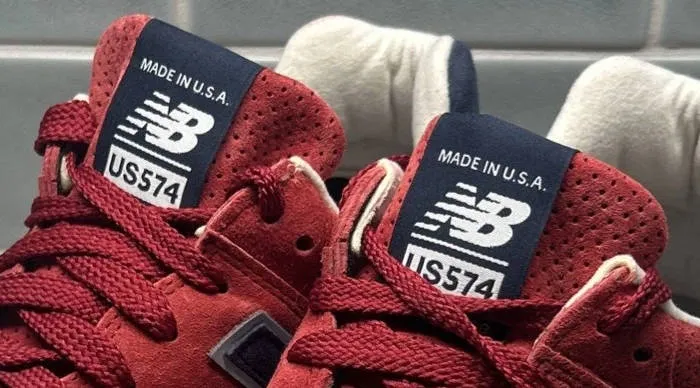
5. Tongue Label & Branding
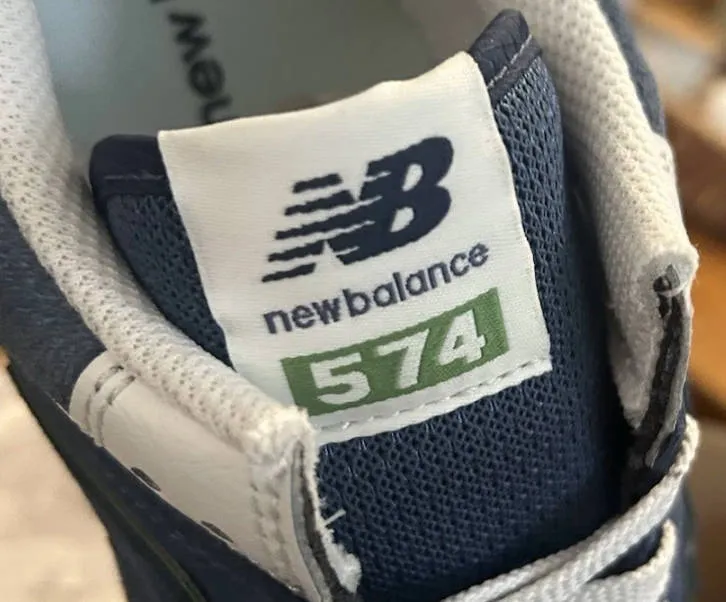
The tongue label contains several details that counterfeiters frequently overlook.
Inspect:
-
New Balance logo
-
Model information
-
Font consistency
-
Color accuracy
-
Label stitching
✔️ Real:
-
Sharp printing
-
Crisp edges
-
Correct logo proportions
-
Straight attachment
-
High-quality woven label
❌ Fake:
-
Blurry text
-
Incorrect fonts
-
Crooked label placement
-
Frayed edges
-
Low-resolution printing
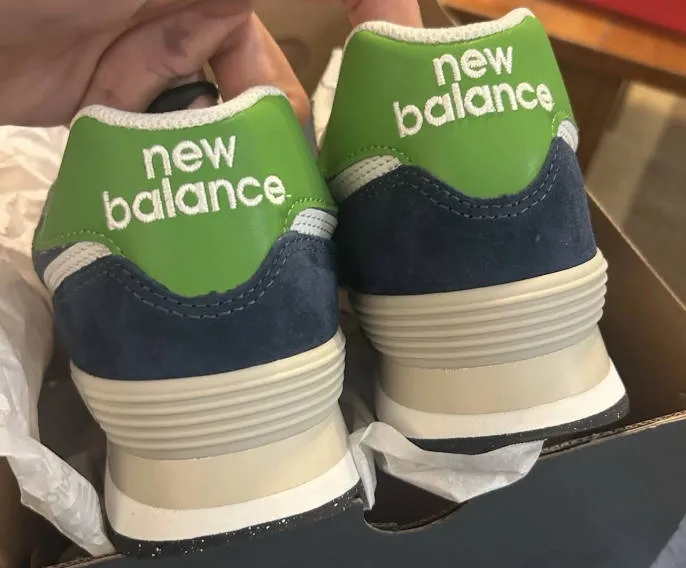
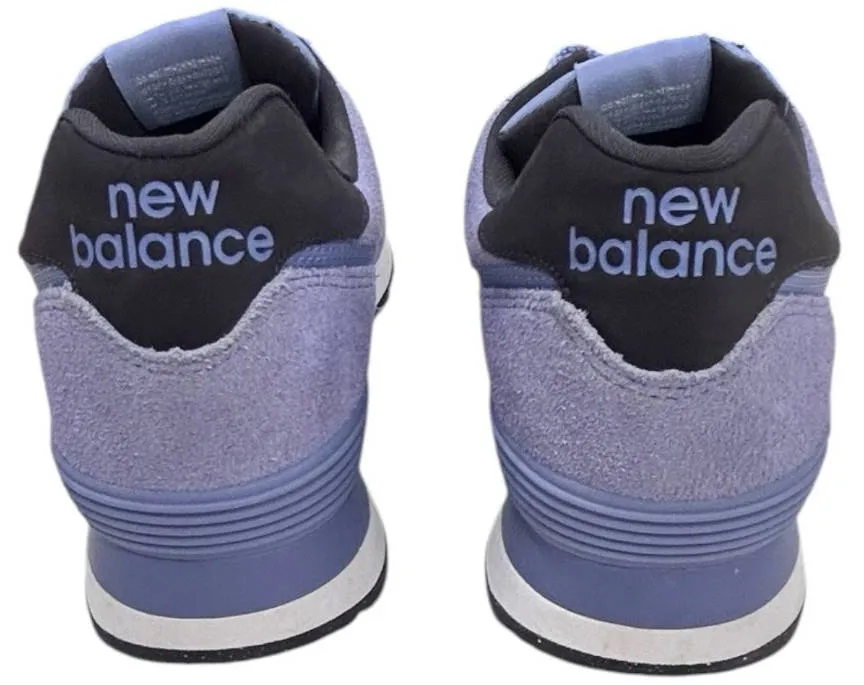
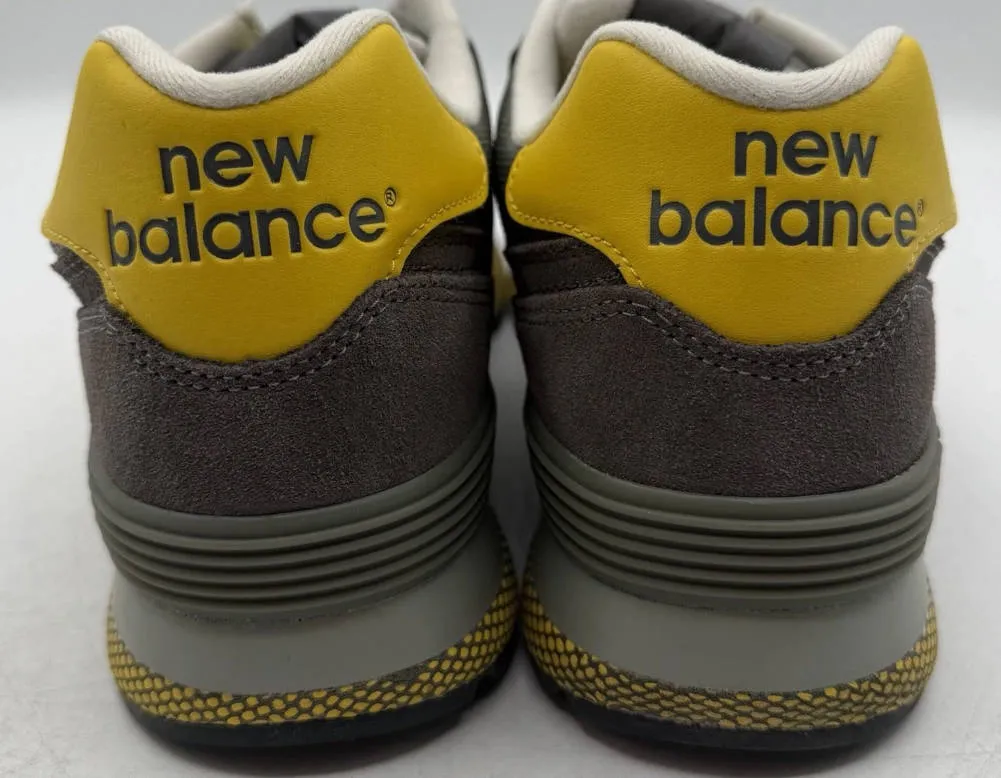
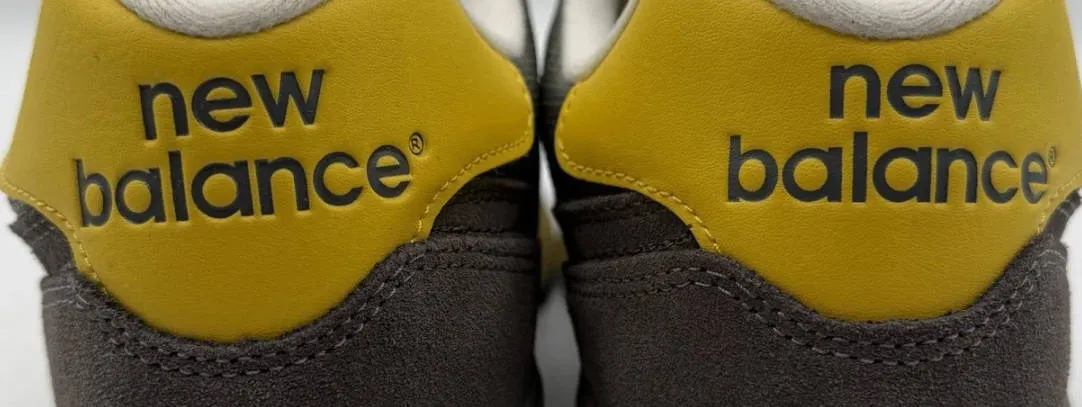
6. Heel Branding & Rear Construction
The heel area offers another reliable authentication point.
Most authentic 574 models feature precise rear branding with excellent alignment.
Areas to Examine
Heel Logo
Should appear centered and balanced.
Heel Counter
Must feel supportive and structured.
Stitching Lines
Should remain symmetrical.
✔️ Real:
-
Centered branding
-
Sharp lettering
-
Strong heel support
-
Clean stitching
-
Consistent construction
❌ Fake:
-
Off-center logos
-
Uneven spacing
-
Weak heel structure
-
Crooked seams
-
Poor finishing
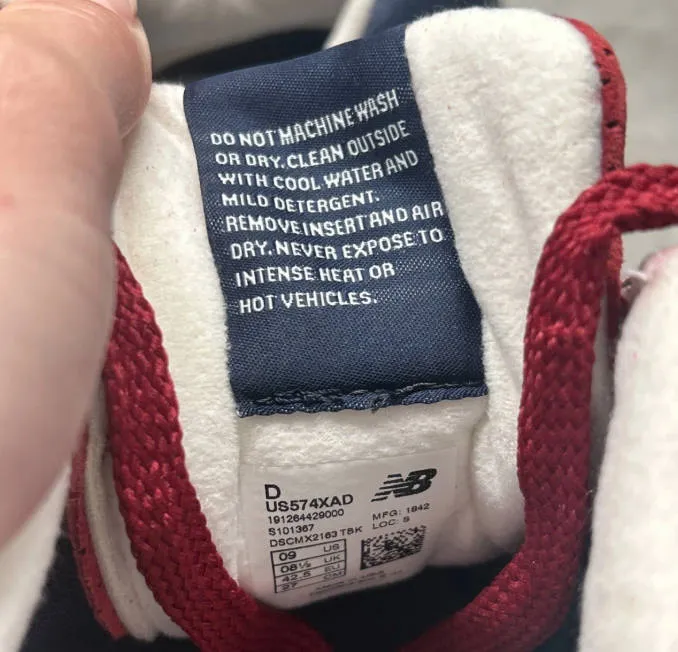
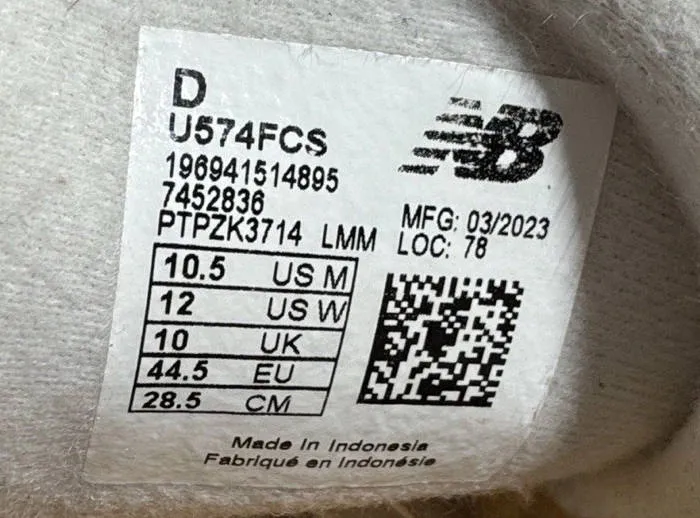
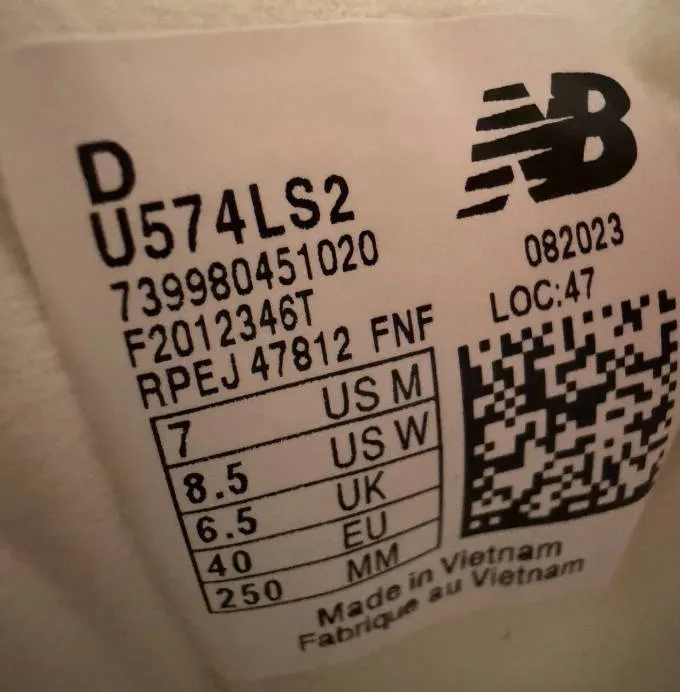
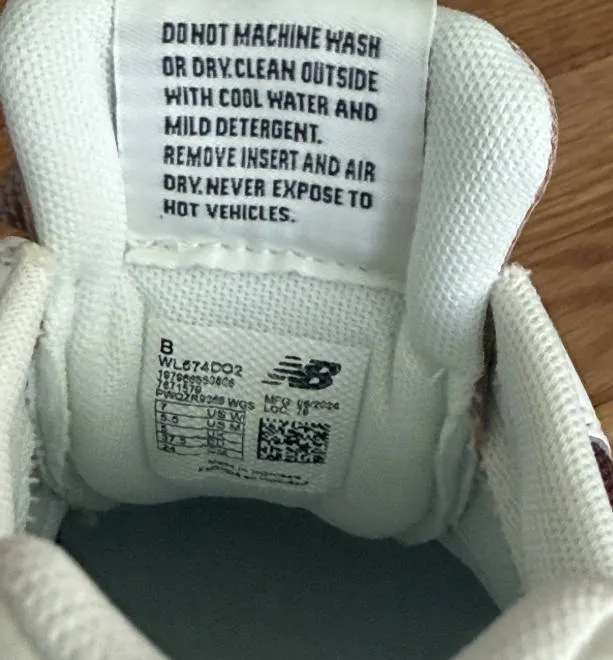
7. Interior Size Tag & Production Information
The interior size tag remains one of the most important authentication tools.
Many fake pairs fail to replicate tag formatting accurately.
Information Typically Found
-
Size conversions
-
Manufacturing date
-
Factory code
-
Model number
-
Country of manufacture
✔️ Real:
-
Crisp printing
-
Accurate spacing
-
Consistent font usage
-
Clear production codes
-
Durable tag material
❌ Fake:
-
Blurry text
-
Spelling errors
-
Incorrect formatting
-
Missing codes
-
Cheap label material
Common Warning Signs
-
Font thickness varies dramatically
-
Numbers appear misaligned
-
Size conversions look unusual
-
Printing fades easily
⚠️ Never authenticate solely from the size tag. Always combine multiple checkpoints.
8. Midsole & Outsole Quality
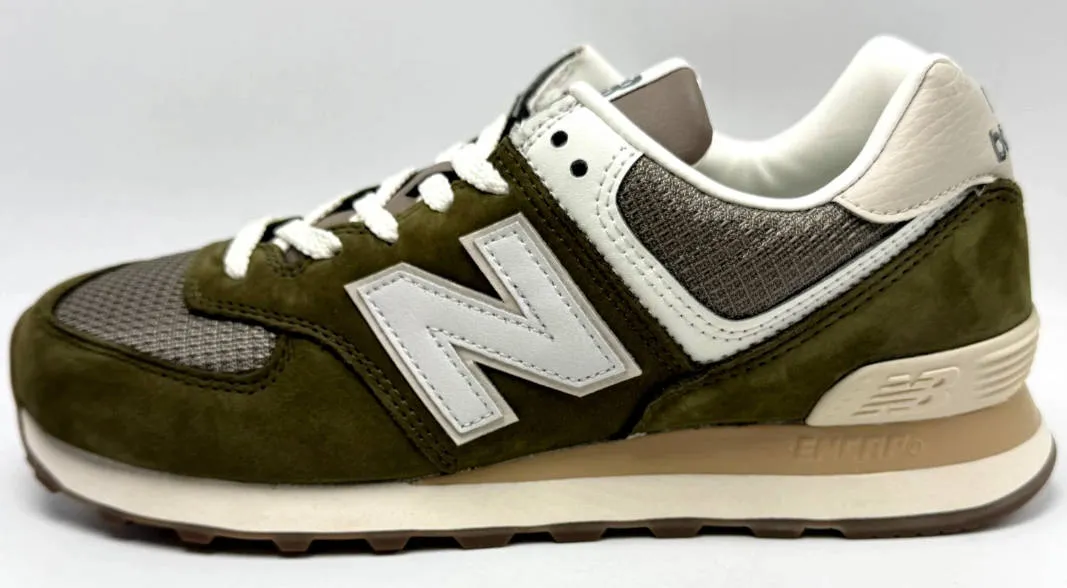
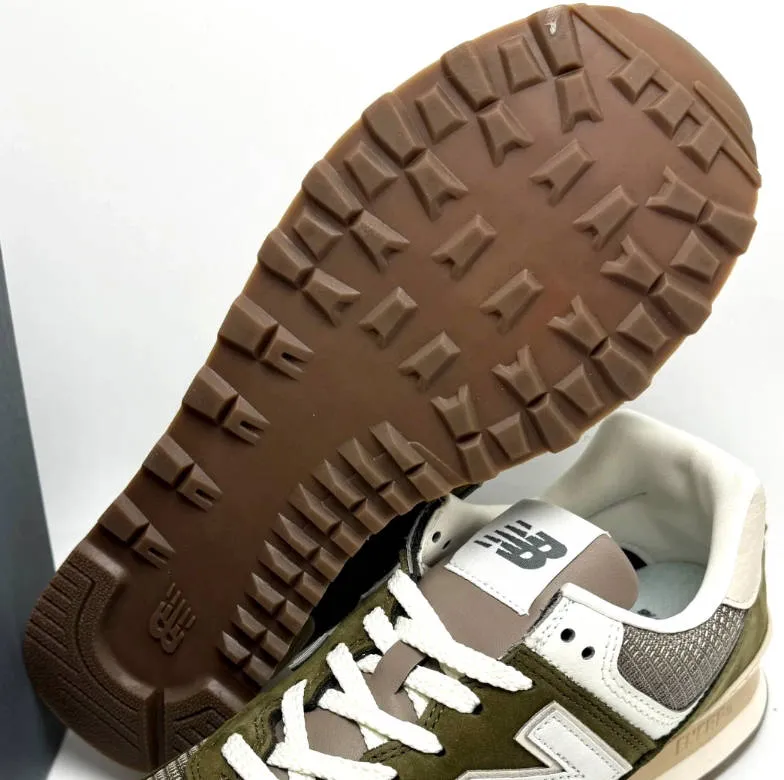
The 574 is designed for comfort, making the sole unit an important area to inspect.
Authentic midsoles display precise molding and clean finishing.
✔️ Real:
-
Smooth foam construction
-
Consistent texture
-
Clean mold lines
-
Durable rubber outsole
-
Proper cushioning feel
❌ Fake:
-
Rough edges
-
Excess glue
-
Uneven molding
-
Hard uncomfortable foam
-
Cheap rubber compound
Flex Test
Gently bend the shoe.
Authentic pairs flex naturally while maintaining structure.
Counterfeit versions often feel either too stiff or unusually flimsy.
💡 Sole quality is often one of the biggest differences between authentic and fake sneakers.
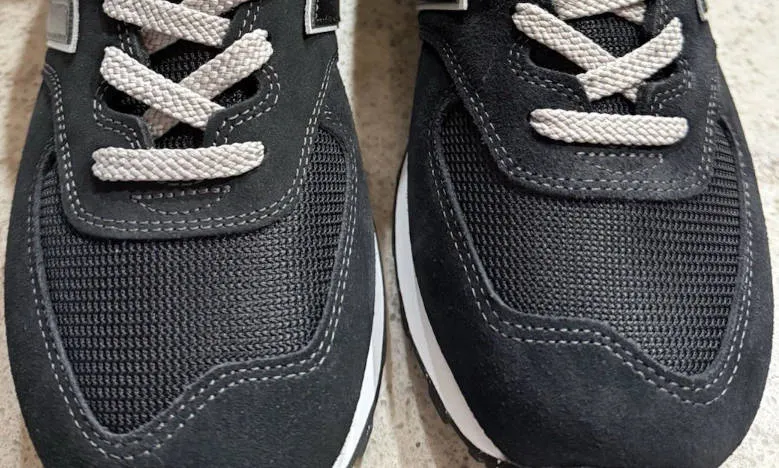
9. Stitching & Overall Craftsmanship
Construction quality remains one of the strongest indicators of authenticity.
New Balance has built its reputation on craftsmanship and quality control.
Areas to Check
-
Toe box stitching
-
Side panel stitching
-
Heel stitching
-
Collar construction
-
Interior finishing
✔️ Real:
-
Dense stitching
-
Straight stitch lines
-
Reinforced stress points
-
Minimal loose threads
-
Professional finishing
❌ Fake:
-
Uneven spacing
-
Loose threads
-
Crooked seams
-
Poor reinforcement
-
Messy interior construction
The Symmetry Test
Place both shoes together and compare:
-
Stitch spacing
-
Logo placement
-
Toe shape
-
Heel alignment
Authentic pairs should appear nearly identical.
🧠 Pro Tips for Buyers
When Shopping Online
Always:
-
Request close-up photos
-
Inspect the size tag
-
Compare logo placement
-
Ask for outsole photos
-
Review seller feedback
Avoid listings that:
-
Use only stock images
-
Hide interior labels
-
Blur important details
-
Refuse additional photographs
-
Offer unusually low prices
When Buying In Person
Check:
-
Suede texture
-
Mesh quality
-
Logo stitching
-
Sole construction
-
Heel support
Spend a few minutes inspecting both shoes carefully.
Most counterfeit pairs reveal flaws under close examination.
❓ FAQ: New Balance 574 Authentication
Q1. Are all New Balance 574 sneakers made in the USA?
No.
Many New Balance 574 models are produced in various countries depending on the release and production period. Manufacturing location alone does not determine authenticity.
Q2. Is the suede always genuine on authentic pairs?
Most authentic 574 models use genuine suede, though material specifications can vary by collection and special edition.
The overall quality and consistency matter more than any single material claim.
Q3. Can fake pairs have correct size tags?
Yes.
Some advanced replicas copy size tags surprisingly well.
This is why buyers should always examine materials, stitching, logos, and construction together.
Q4. Is the N logo the best authentication point?
It is one of the most useful checkpoints, but not the only one.
Counterfeiters sometimes copy the logo successfully while failing elsewhere.
Q5. Does the box guarantee authenticity?
No.
Boxes can also be replicated.
Always authenticate the shoes themselves rather than relying solely on packaging.
Q6. Are limited-edition 574 releases more likely to be faked?
Generally yes.
Rare collaborations and sought-after colorways tend to attract more counterfeit production due to higher resale demand.
Q7. Can authentic pairs have minor imperfections?
Yes.
Small manufacturing variations can occur.
However, major flaws in stitching, materials, logos, or construction are uncommon on authentic pairs.
📝 Final Thoughts
Authenticating a New Balance 574 is usually easier than many buyers expect once you know where to look.
While counterfeit manufacturers can imitate the general appearance of the sneaker, they often struggle to replicate the combination of premium materials, precise branding, and consistent craftsmanship that genuine pairs deliver.
If you remember just three things:
✔️ Examine the suede quality carefully
✔️ Inspect the N logo and stitching
✔️ Verify the interior size tag
—you will eliminate a large percentage of counterfeit pairs immediately.
For higher-value releases, limited editions, or purchases from resale marketplaces, always combine multiple authentication checkpoints rather than relying on a single detail. The more aspects you verify—materials, construction, labels, branding, and overall shape—the more difficult it becomes for counterfeit products to pass as authentic.
A careful inspection takes only a few minutes, but it can save you from purchasing a fake pair and help ensure that your New Balance 574 delivers the comfort, quality, and durability that made the model an enduring classic in the first place.