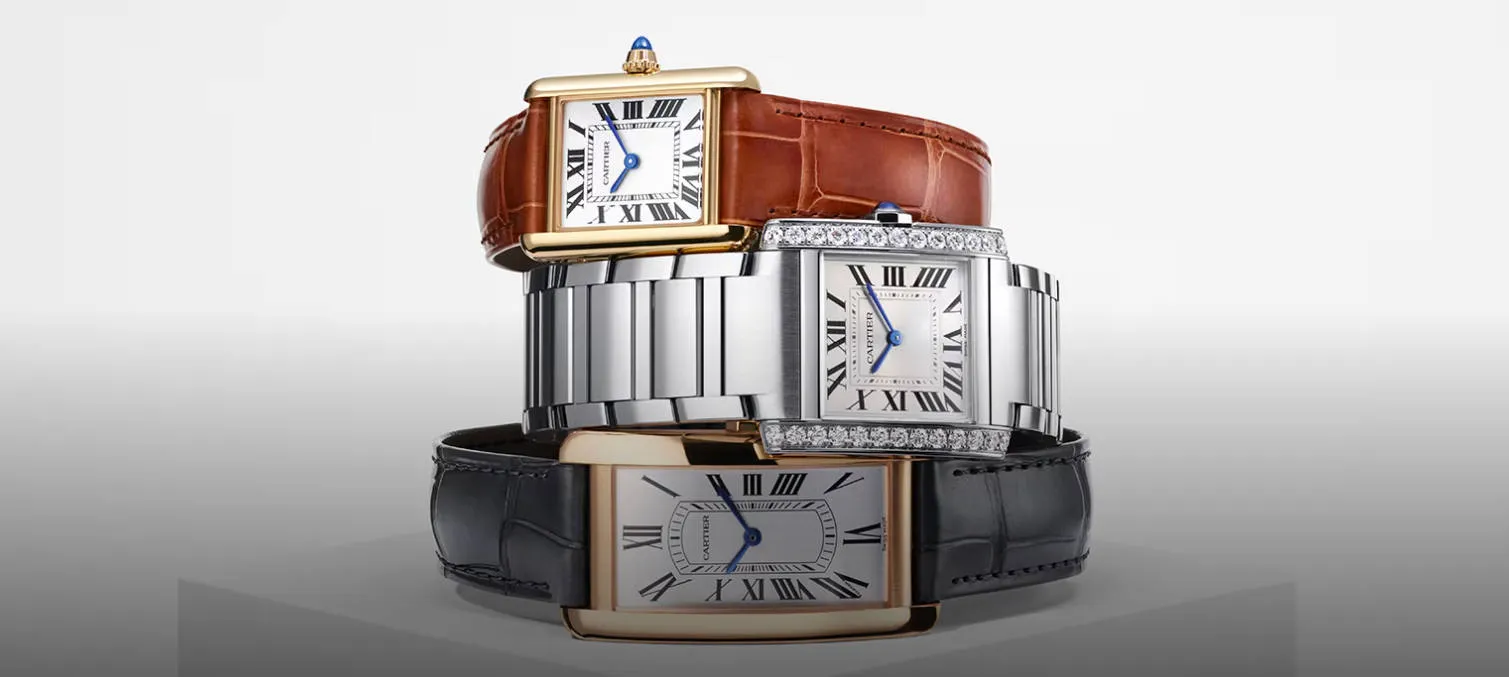
Few names evoke the same level of timeless glamour and prestige as Cartier. For decades, the "Jeweler of Kings" has crafted some of the world's most coveted wearable art, making its estate pieces a gold standard for collectors worldwide. However, navigating the secondary market for rare Panthère rings or mid-century Love bracelets requires more than just an eye for beauty—it demands expertise. Whether you are looking to acquire your very first heirloom or hoping to spot the subtle hallmarks of a genuine archival piece, this comprehensive handbook will navigate you through the intricacies of sourcing, verifying, and investing in historic Cartier treasures.
🧭 The Ultimate Vintage Cartier Jewelry Shopping Guide
Vintage Cartier jewelry sits at a rare intersection of heritage, craftsmanship, and long-term value. Unlike many contemporary luxury pieces, Cartier's archival designs continue to circulate through boutiques, auction houses, and resale platforms with strong global demand. From Parisian jewelry salons to digital marketplaces, the vintage Cartier ecosystem has evolved into a highly structured but still adventurous shopping landscape.
This guide explores how and where to buy vintage Cartier jewelry safely and intelligently, including boutique sourcing, auctions, resale platforms, authentication considerations, pricing logic, and online "treasure hunting" strategies.
1. Understanding the Vintage Cartier Market
Before diving into where to shop, it is important to understand what "vintage Cartier" actually means in the resale ecosystem.
What counts as vintage Cartier?
Generally, Cartier jewelry is considered:
-
Vintage: 20–100 years old
-
Neo-vintage: 10–20 years old
-
Contemporary resale: under 10 years old but discontinued
Popular vintage Cartier collections include:
-
LOVE Bracelet (older screw system versions)
-
Juste un Clou (early production runs)
-
Trinity Ring (classic 3-gold variations)
-
Panthère de Cartier motifs
-
Maillon Panthère chains
-
Vintage brooches and Art Deco pieces
Why vintage Cartier is so in demand
-
Strong brand heritage dating back to 1847
-
Timeless design language with minimal trend risk
-
Limited availability of discontinued models
-
High resale liquidity globally
-
Collectible appeal among jewelry investors and stylists
Vintage Cartier is not just jewelry—it is a structured global resale category with its own pricing logic.
2. Paris Boutiques: The Heritage Starting Point
Paris remains the emotional and historical center of Cartier collecting. Even though most vintage pieces are not sold in main flagship stores, Paris offers access to certified pre-owned channels, auctions, and specialist dealers.
Key Cartier retail presence in Paris
-
Place Vendôme flagship boutique
-
High jewelry salon presentations
-
Certified pre-owned partners
Cartier Boutique Paris Place Vendôme
This location represents Cartier's global identity hub and often serves as a reference point for authentication standards worldwide.
What you can actually buy in boutiques
It is important to be realistic:
✔️ New Cartier collections
✔️ Certified pre-owned select pieces
✔️ Occasionally serviced vintage pieces
❌ Rare archival vintage is usually not sold directly
Boutique shopping strategy
-
Ask for "certified pre-owned Cartier jewelry" availability
-
Inquire about trade-in or estate programs
-
Request service records for older pieces
-
Compare boutique pricing vs resale platforms
Pricing expectations
Boutique-certified vintage is usually:
-
10%–30% more expensive than resale
-
But comes with stronger authentication guarantee
-
Often includes service polish or refurbishment
3. Paris Auction Houses: The Collector's Gateway
Paris auction houses remain one of the most trusted entry points for acquiring authentic vintage Cartier jewelry. Unlike casual resale platforms, auctions operate with formal cataloging, condition grading, and provenance documentation, making them especially important for collectors seeking higher-value or historically significant pieces.
✦ Core Paris auction institutions
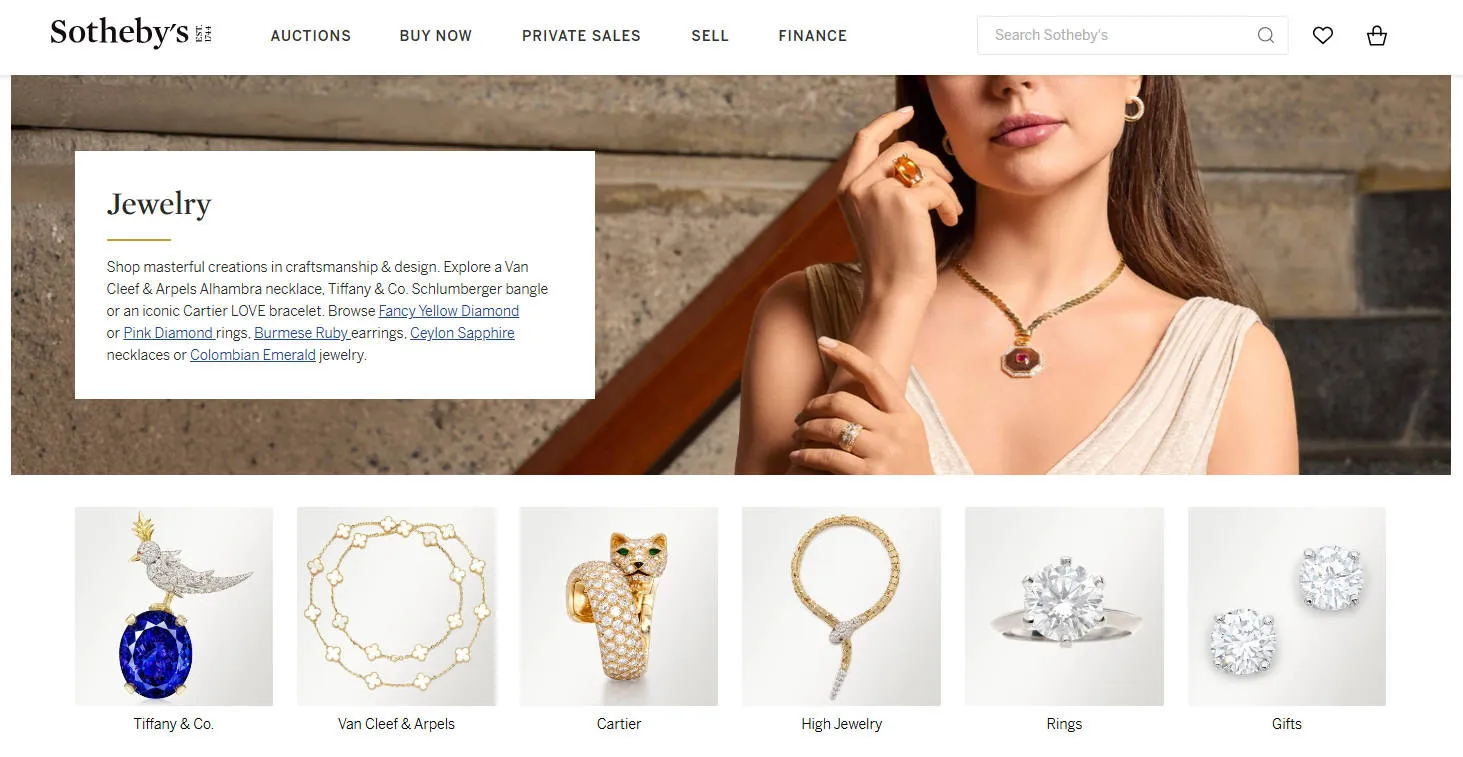
Sotheby's Paris is one of the most established luxury auction houses in the world. Cartier jewelry frequently appears in its Fine Jewelry & Watches sales.
-
Strong focus on high jewelry and estate collections
-
Detailed condition reports with gemological notes
-
Global buyer participation via online bidding
-
Often includes rare Cartier archival pieces from private estates
Typical Cartier lots:
-
Vintage LOVE bracelets (rare early production versions)
-
High jewelry diamond Cartier necklaces
-
Art Deco Cartier brooches from the 1920s–1950s
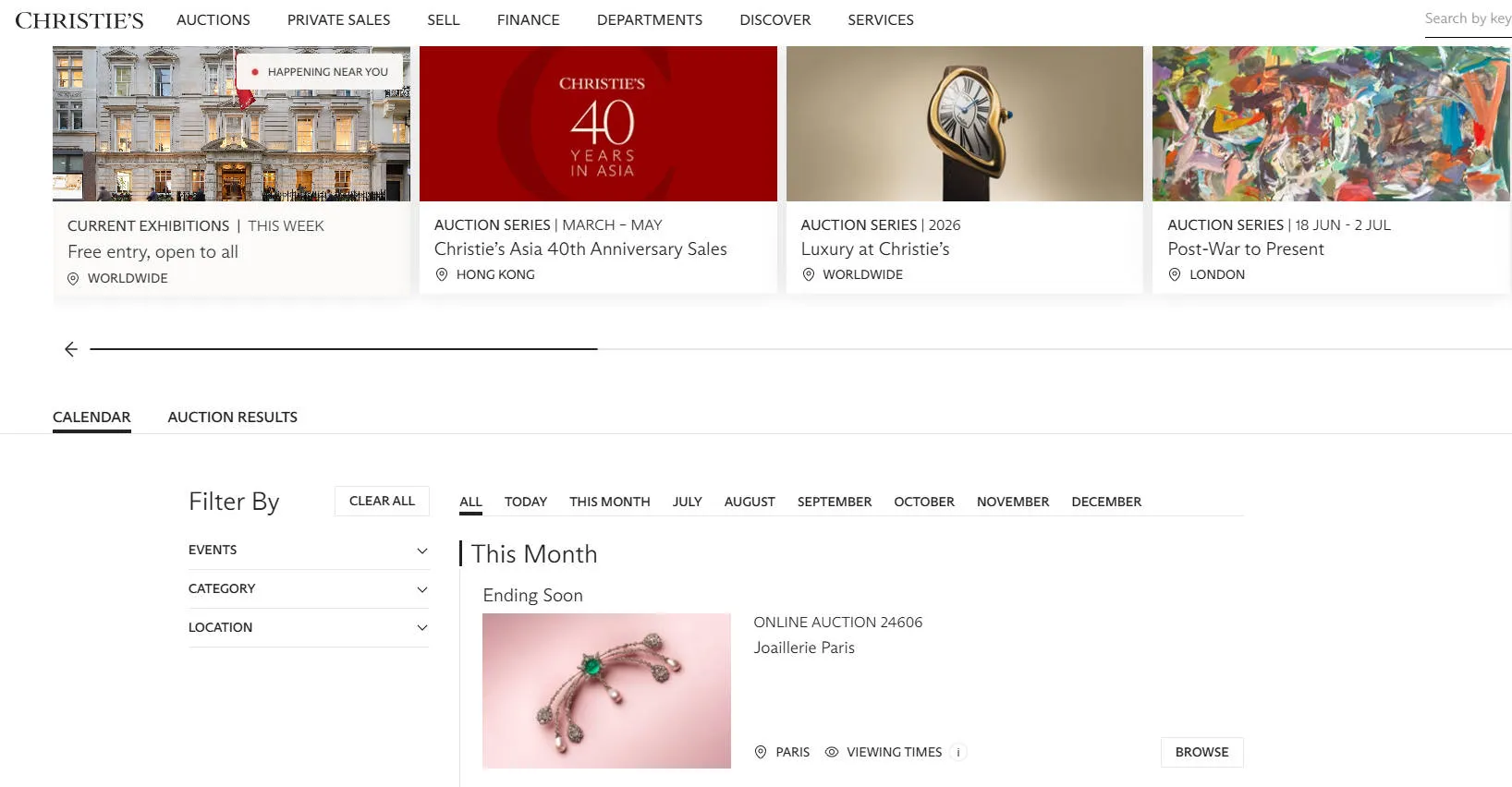
Christie's Paris is another leading destination for vintage Cartier collectors, often competing directly with Sotheby's for high-value consignments.
-
Strong emphasis on provenance and historical importance
-
More curated catalog selection compared to broader marketplaces
-
Frequently features museum-level Cartier pieces
-
Strong expertise in Art Deco and Belle Époque jewelry
What makes Christie’s particularly relevant for Cartier:
-
Detailed archival descriptions of design periods
-
Access to private European estate jewelry
-
Strong international bidding ecosystem
Drouot – The Historic Auction Hub
Drouot is one of the oldest auction centers in Paris and a key access point for mid-range vintage Cartier jewelry.
-
Multiple auction houses operate under one roof
-
More frequent listings than Sotheby's/Christie's
-
Wider price range (entry-level to mid-luxury Cartier pieces)
-
Strong turnover of estate jewelry collections
Common Cartier finds:
-
Trinity rings in various gold combinations
-
Vintage Cartier chains and bracelets
-
Smaller diamond-set Cartier accessories
Drouot is especially valuable for buyers seeking affordable vintage Cartier entry points without competing at global luxury bidding levels.
✦ How Paris auctions actually work (important for buyers)
-
Preview catalogs are released 7–14 days before auction
-
Condition reports are available upon request
-
Online bidding platforms allow global participation
-
Buyer's premium typically ranges 20%–30%
-
Payment must be completed within a short time window
✦ Strategy tip:
Experienced collectors often track Cartier lots across multiple auctions simultaneously and compare:
-
Estimate price vs final hammer price
-
Condition report detail level
-
Provenance strength
✦ Auction risks
-
Emotional bidding inflation is common for Cartier LOVE bracelets
-
Some lots may be heavily polished (affecting value perception)
-
Returns are almost never accepted
-
Condition grading can vary slightly between houses
4. Luxury Resale Platforms: The Global Marketplace Layer
Luxury resale platforms form the backbone of today's vintage Cartier ecosystem. Unlike auctions, these platforms offer continuous inventory, fixed pricing (or negotiated pricing), and structured authentication systems.
Below is a more comprehensive breakdown of key global platforms.
Vestiaire Collective – Europe's Largest Peer-to-Peer Luxury Network
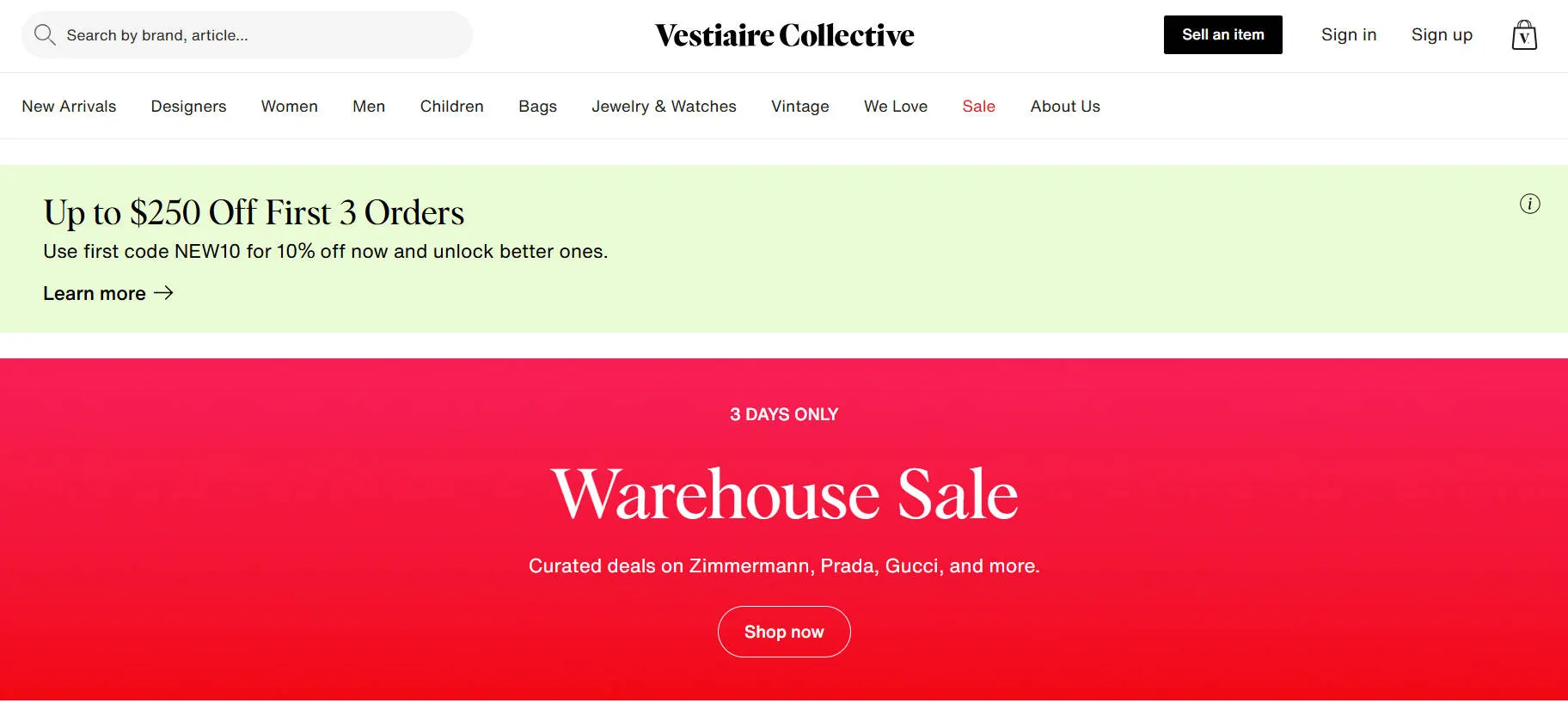
Vestiaire Collective is one of the most important global hubs for vintage Cartier jewelry.
Key features:
-
Massive international seller base (EU + US + Asia)
-
Community-driven listings with authentication checkpoints
-
Price negotiation system ("Make an Offer")
-
Strong presence of discontinued Cartier jewelry lines
Cartier-specific advantages:
-
Frequent listings of LOVE bracelets across decades
-
Wide range of Trinity ring variations
-
Competitive pricing compared to boutiques and auctions
Considerations:
-
Authentication is layered (seller + platform + optional expert check)
-
Item condition descriptions can vary in accuracy
The RealReal – Structured Authentication Model (US Focused)
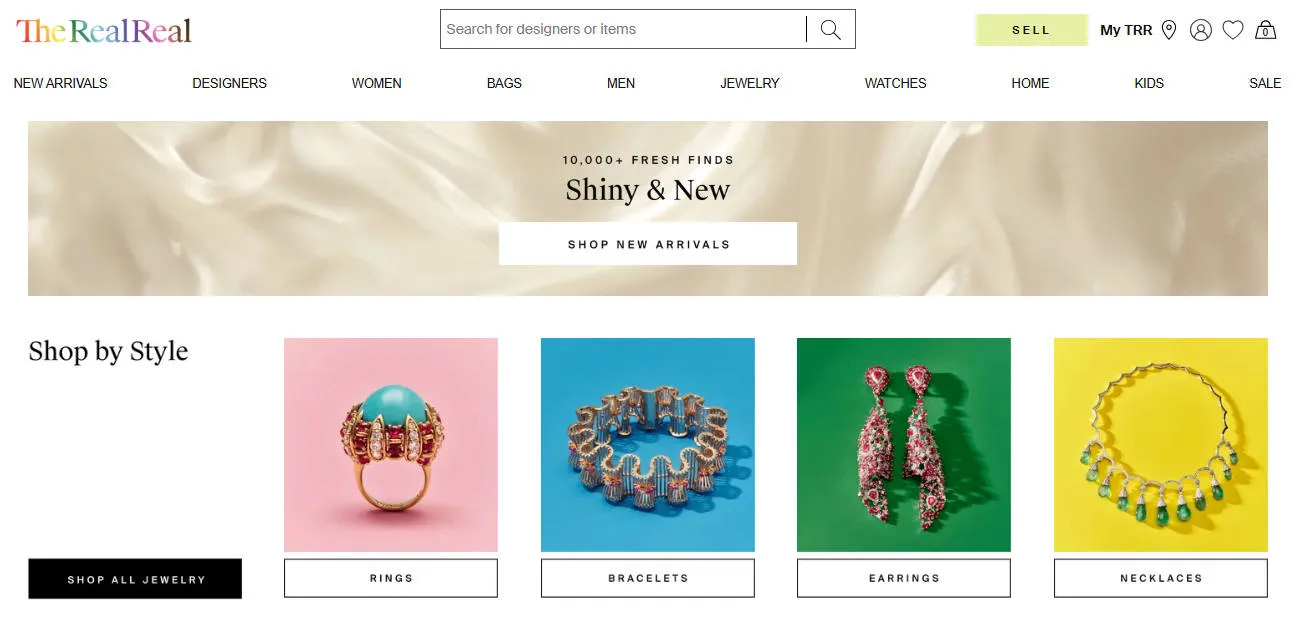
The RealReal is known for its in-house authentication system and curated luxury resale environment.
Key features:
-
Centralized authentication before listing approval
-
Professional photography and standardized grading
-
High turnover of Cartier jewelry inventory
-
Strong customer return policies (compared to auction houses)
Cartier market behavior:
-
Slightly higher pricing than peer-to-peer platforms
-
Strong availability of modern vintage (1990s–2010s Cartier)
-
Frequent restocks of LOVE bracelets and Juste un Clou pieces
Best for:
-
First-time Cartier buyers seeking safety and structure
Farfetch – Boutique-Connected Resale Ecosystem
Farfetch operates differently from traditional resale platforms. It connects boutiques, consignment stores, and selected luxury sellers into one ecosystem.
Key features:
-
Boutique-level curation rather than open marketplace chaos
-
Integration of authorized resellers
-
Strong quality control on listed items
-
Global shipping infrastructure
Cartier relevance:
-
Smaller but highly curated selection
-
Often includes premium-condition vintage jewelry
-
Better for buyers prioritizing condition over variety
Limitation:
-
Limited deep vintage inventory compared to Vestiaire Collective
Rebag – Transparent Pricing & Structured Resale Model
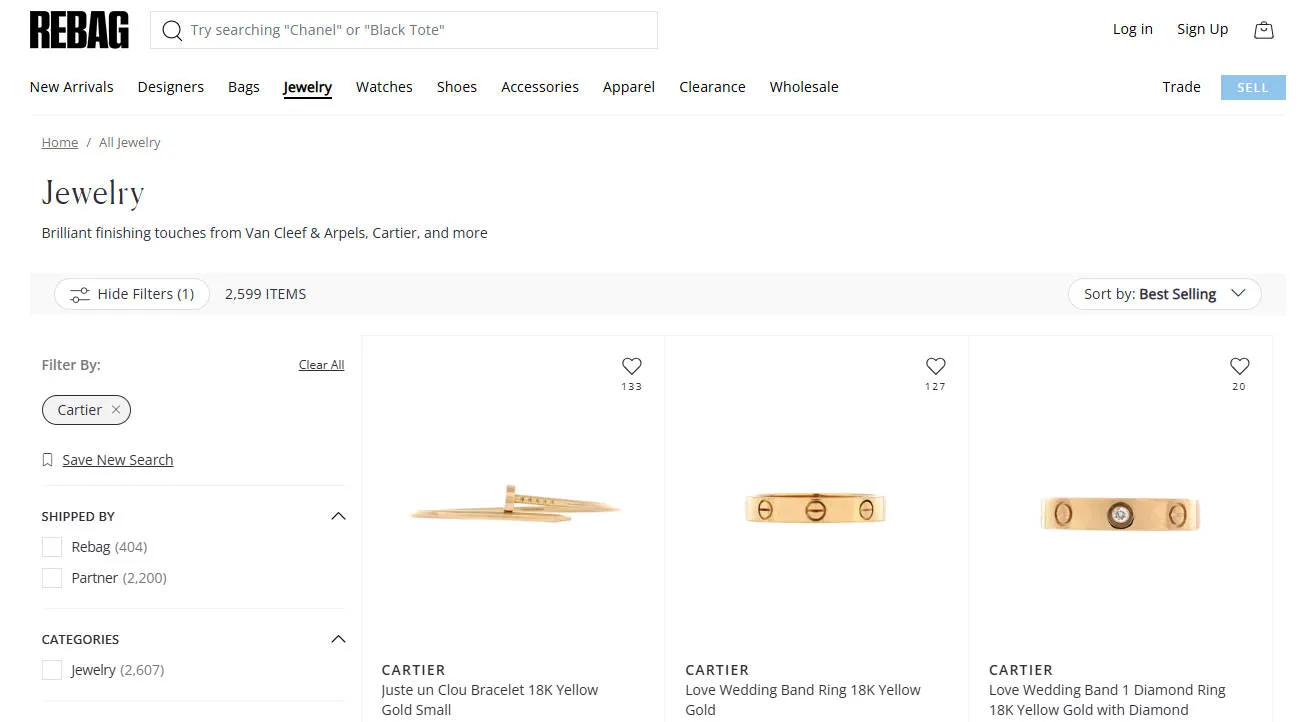
Rebag is known for its "buy-back" ecosystem and highly structured pricing system.
Key features:
-
Fixed pricing model (no bidding)
-
"Clair" pricing transparency system
-
Strong focus on luxury accessories and jewelry
-
Authentication completed before listing
Cartier advantages:
-
Clear price benchmarks for LOVE bracelets and rings
-
Easy entry for buyers who dislike negotiation
-
Consistent inventory rotation
Limitations:
-
Less rare archival Cartier pieces
-
More focused on commercial resale than collector-grade sourcing
5. Japan Market: The Hidden Cartier Treasure Vault
Japan is one of the most reliable sources for vintage Cartier due to strict quality standards and cultural emphasis on preservation.
Mercari Japan

-
Massive peer-to-peer marketplace
-
High volume of Cartier jewelry listings
-
Competitive pricing due to domestic resale culture
-
Requires careful seller evaluation
Yahoo! Auctions Japan
-
Auction-based marketplace similar to eBay
-
Strong availability of vintage Cartier estate pieces
-
Advanced filtering and bidding tools
-
Often includes rare discontinued Cartier designs
2nd STREET
-
Nationwide Japanese secondhand luxury chain
-
Physical stores + online catalog
-
Strong quality grading system
-
Excellent condition control for Cartier jewelry
Additional Japanese luxury resellers
-
Komehyo (high-end authenticated luxury reseller)
-
Brand Off (nationwide luxury consignment chain)
-
RAGTAG (fashion + jewelry resale hybrid platform)
Why Japan matters:
-
Extremely low wear-and-tear on jewelry
-
Conservative ownership culture
-
Strong internal authentication standards
-
High availability of early Cartier production pieces
6. Online Treasure Hunting Strategy (How Professionals Shop)
Finding vintage Cartier online is not random—it is structured browsing behavior.
Step 1: Define your target category
Examples:
-
LOVE Bracelet (classic / vintage screws)
-
Trinity Ring (tri-color variations)
-
Panthère bracelet or necklace
-
Vintage Cartier watches with jewelry aesthetics
Step 2: Use layered keyword searching
Instead of just "Cartier vintage," combine:
-
"Cartier 1990s LOVE bracelet 18K"
-
"Cartier Trinity ring vintage France"
-
"Cartier Panthère necklace yellow gold"
Step 3: Cross-platform checking
Always compare:
-
EU platforms (Vestiaire, Farfetch)
-
US platforms (RealReal, Rebag)
-
Japan listings (Mercari, Yahoo Auctions)
Step 4: Condition filtering logic
Focus on:
✔️ Original hallmarks
✔️ Screws / clasps integrity
✔️ Gold color consistency
✔️ Box and certificate presence
7. Authentication Fundamentals for Vintage Cartier
Authentication is the most important step in Cartier vintage shopping.
Core verification points
✔️ Engraving clarity (Cartier font consistency)
✔️ Serial number depth and placement
✔️ Hallmark stamps (gold purity indicators)
✔️ Screw alignment on LOVE bracelets
✔️ Weight consistency (gold density check)
Common red flags
❌ Blurry or shallow engravings
❌ Incorrect screw spacing
❌ Missing serial numbers
❌ Over-polished surfaces hiding wear patterns
❌ Inconsistent gold tone
Documentation hierarchy
Best to worst:
-
Original Cartier certificate
-
Boutique service records
-
Professional reseller authentication
-
Seller-only claims (least reliable)
8. Pricing Logic: How Vintage Cartier Is Valued
Vintage Cartier pricing is not random—it follows structured logic.
Main pricing drivers
-
Model popularity (LOVE > Trinity > niche lines)
-
Gold type (18K yellow gold premium)
-
Condition grading
-
Presence of box/papers
-
Market demand cycles
Typical price behavior
-
Iconic pieces rarely lose value
-
Limited editions appreciate faster
-
Heavily worn pieces drop significantly
-
Service-polished items sit mid-range
Collector insight
Cartier does not behave like fashion jewelry—it behaves more like “entry-level luxury assets” in resale markets.
9. Smart Buying Strategy for Beginners
If you are new to vintage Cartier shopping:
✔️ Start with safe entry pieces
-
Trinity rings
-
Classic LOVE bracelets (verified sellers only)
-
Simple Cartier chains
✔️ Avoid early mistakes
-
Do not chase "too cheap" listings
-
Avoid unclear seller histories
-
Do not skip authentication checks
✔️ Build confidence gradually
-
Start from platforms with strong authentication
-
Compare multiple listings before purchase
-
Track pricing over 2–3 weeks
10. Global Buying Map Summary
Paris
-
Best for heritage sourcing and auction houses
-
Strongest cultural connection to Cartier
New York / US resale platforms
Best for structured online shopping and returns
Japan
Best for condition quality and hidden inventory
Online global platforms
Best for convenience and comparison shopping
11. Shipping, Taxes & Cross-Border Buying
When buying vintage Cartier internationally:
Additional costs to expect
-
Import duties (varies by country)
-
Insurance shipping fees
-
Platform service charges
-
Currency conversion spreads
Shipping safety essentials
-
Insured shipping only
-
Signature confirmation required
-
Tracking from dispatch to delivery
-
Secure packaging with tamper seals
12. FAQ: Vintage Cartier Shopping
Q1: Is vintage Cartier a good investment?
It depends on the model. Iconic pieces like LOVE bracelets and Trinity rings tend to hold value well due to global demand.
Q2: Where is the safest place to buy vintage Cartier?
Platforms with built-in authentication such as The RealReal and Rebag are generally safer for beginners.
Q3: Are older Cartier pieces better quality?
Not necessarily better, but often heavier and more traditional in craftsmanship style.
Q4: What is the most counterfeited Cartier jewelry?
LOVE bracelets are among the most frequently counterfeited due to high demand.
Q5: Should I buy Cartier vintage without box and papers?
Yes, but only if authentication is strong and seller reputation is reliable.
📝 Final Thoughts
Vintage Cartier jewelry shopping is a multi-layered process combining heritage boutiques, auction ecosystems, resale platforms, and global online markets. Unlike fast fashion resale categories, Cartier operates within a structured luxury framework where authentication, condition, and provenance matter more than speed.
Whether sourcing from Paris salons, Japanese resale networks, or global digital marketplaces, the key is consistency in verification and patience in selection. Over time, collectors develop not just a sense of value—but a sense of Cartier's evolving design language across decades.