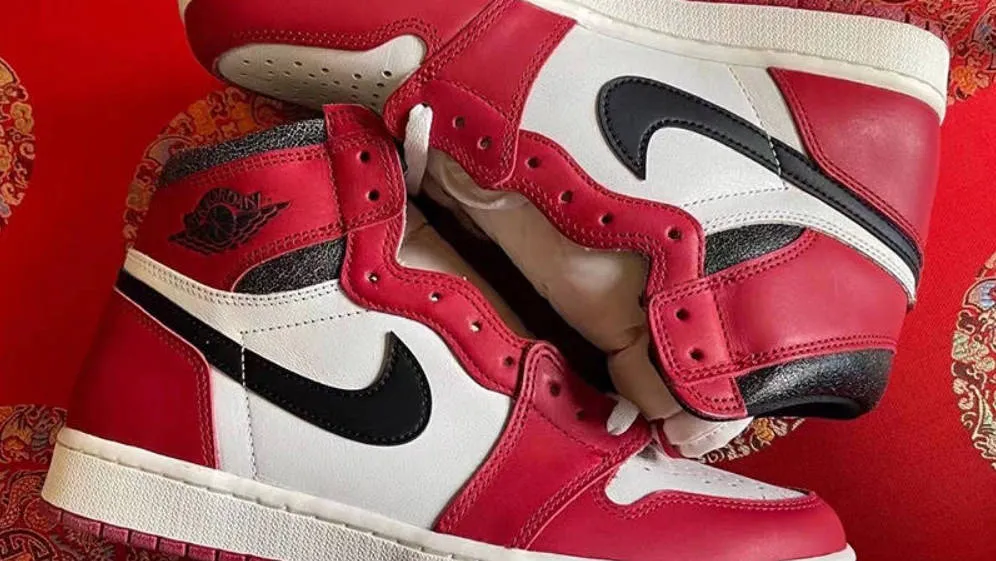
The Air Jordan 1 is more than just a shoe; it's a cultural icon that revolutionized sneaker design and basketball fashion, offering both historical significance and enduring style. The Air Jordan 1 was first introduced in 1985 as a signature model for Michael Jordan, then a rising basketball superstar. It was designed by Peter Moore, who was inspired by Michael Jordan's love for luxury Italian sports cars and his own passion for aviation, leading to the shoe's sleek and aerodynamic design. However, with the popularity of sneakers, the risk of counterfeit products has also increased. The market is flooded with fake Jordan 1 sneakers, making it difficult to spot the real from the fake. In this guide, we'll show you how to spot fake Jordan 1 sneakers so you can avoid being scammed.
👟 About Jordan 1 Sneakers
The Air Jordan 1 is a line of basketball and sportswear shoes produced by Nike, Inc., and marked the first signature sneaker for NBA player Michael Jordan. Originally designed by Peter Moore, it debuted in 1985 and has since become a global icon that revolutionized sneaker culture.
History
-
A risky partnership: In 1984, before his rookie NBA season, Nike signed Michael Jordan to a five-year contract for $2.5 million. This was a huge gamble for Nike, which was struggling at the time, and Jordan initially preferred brands like Adidas or Converse.
-
The "banned" myth: The infamous story of the NBA banning the Air Jordan 1 wasn't entirely accurate. In 1984, the NBA banned the black and red Nike Air Ship—a shoe Jordan wore before the AJ1—for violating the league's uniform rules, which required shoes to be mostly white. Nike capitalized on this controversy with a "Banned" advertising campaign that made the Air Jordan 1 a symbol of rebellion, paying the potential $5,000 fine for each game.
-
Explosive success: The marketing campaign helped generate immense interest in the shoe, which was released to the public in April 1985. While Nike expected to sell 100,000 pairs in the first year, they sold 1.5 million pairs in the first six weeks and made over $126 million in sales in the first year.
Models and Features
Over time, the Air Jordan 1 has been released in multiple forms, from the original high-top to modern variations.
-
High: This is the original 1985 silhouette, known for its ankle support and premium materials. Highs are the most coveted by collectors and often feature the "Nike Air" logo on the tongue.
-
Mid: This is a more accessible mid-cut version of the AJ1, with a lower collar that offers greater ankle flexibility. Mids typically feature the Jumpman logo on the tongue instead of the "Nike Air" text.
-
Low: The low-top version is a casual, everyday shoe. It has several variations, including the OG Low, which has a "Nike Air" logo, and the Retro Low, which has a Jumpman logo.
Key Colorways
Hundreds of colorways have been released, but some have reached legendary status due to their history and demand.
-
Chicago: The white, black, and varsity red colorway is perhaps the most famous, worn by Michael Jordan during his rookie season with the Chicago Bulls.
-
Bred: This black and varsity red colorway was the one famously associated with the "banned" marketing campaign and remains one of the most iconic.
-
Royal: This 1985 colorway features a black and royal blue design.
-
Shattered Backboard: The original 2015 "Shattered Backboard" colorway, featuring black, white, and orange, was inspired by a moment in 1985 when Michael Jordan famously shattered a backboard during an exhibition game in Italy.
🧭 The Jordan 1 Real vs. Fake Guide
Quick Summary Check Checklist:
| Checkpoint | What to Confirm | Red Flag |
| Style Code | Matches box + Nike official site | Wrong or missing code |
| Shape | Hourglass heel, slim toe | Boxy / thick toe |
| Stitching | Clean, even, no glue | Loose threads, messy |
| Wings Logo | Deep, crisp embossing | Printed or shallow |
| Swoosh | Correct length & stitch | Misplaced, crooked |
| Tongue Tag | Clear “NIKE AIR” font | Blurry / misaligned |
| Box | High-quality print, correct code | Flimsy or faded |
| Smell | Mild leather scent | Strong glue odor |
| Price | Within normal resale range | Too cheap to be true |
| Seller | Verified or has feedback | Unknown / shady |
1. Check the Label and Style Code
What to look for:
-
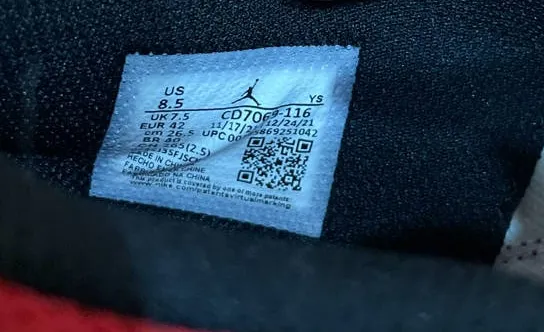
Inside the tongue or inner side label, you'll find the style code (e.g., 555088-610).
-
This must exactly match the code printed on the shoebox label and the official code on Nike's website for that colorway.
-
Fonts on the label should be crisp, sharp, and evenly aligned — fakes often have smudged or bolded text.
-
Manufacturing dates should look reasonable (e.g., not 2019 for a 2024 release).
The different AJ1 model codes
| Model | Typical Style Code Prefix | Example |
| Air Jordan 1 High OG | 555088 | 555088-610 “Heritage” |
| Air Jordan 1 Mid | 554724 | 554724-092 “Shadow” |
| Air Jordan 1 Low | 553558 | 553558-136 “University Blue” |
| Women's AJ1 High OG | FD4810 / DZ2523 | DZ2523-001 “Washed Black” |
| Collabs (e.g., Travis Scott, Union LA) | Special codes | Example: CD4487-100 (Travis Scott AJ1 Mocha) |
🔔 Community tip:
Sneakerheads often compare tag photos in r/Sneakers QC threads. Mismatched or missing style codes are one of the most obvious red flags.
2. Inspect the Shape and Silhouette
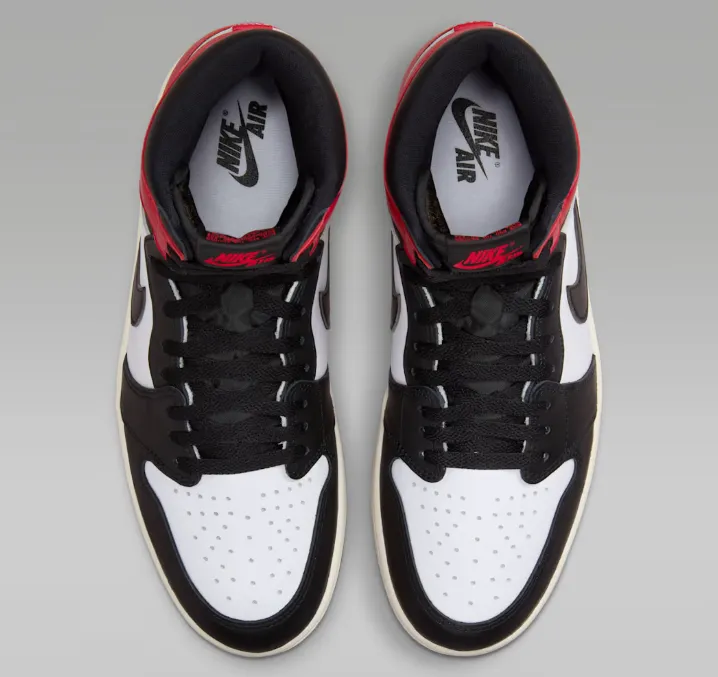
What to look for:
-
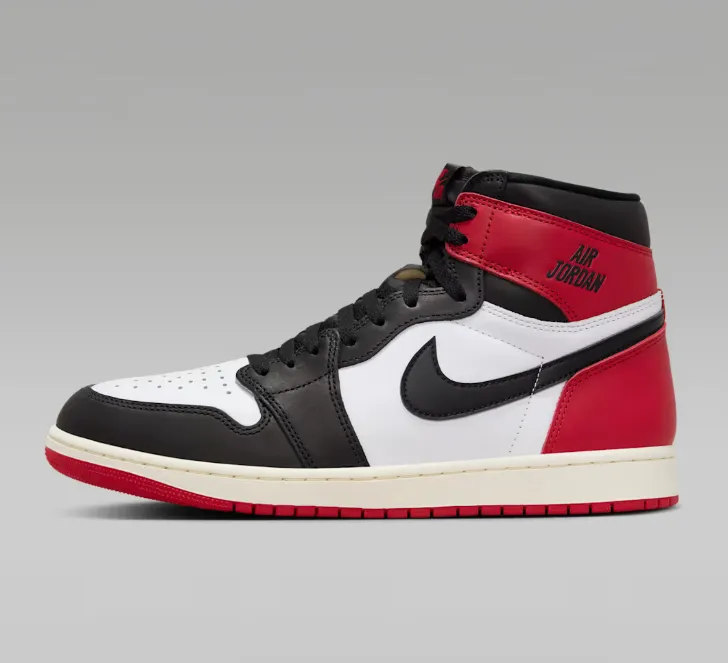
Heel shape: Authentic Jordan 1s have a subtle "hourglass" curve — fakes often look straight or chunky.
-
Toe box: Real pairs have a slightly slim, elegant toe shape. Fakes are often boxy or puffed up.
-
Side profile: Compare your pair’s medial curve (the curve under the Swoosh) to official Nike photos or reputable YouTube reviews.
🔔 Community tip:
Many legit-check creators emphasize silhouette first — it's the hardest detail for factories to replicate perfectly.
3. Examine the Materials and Stitching
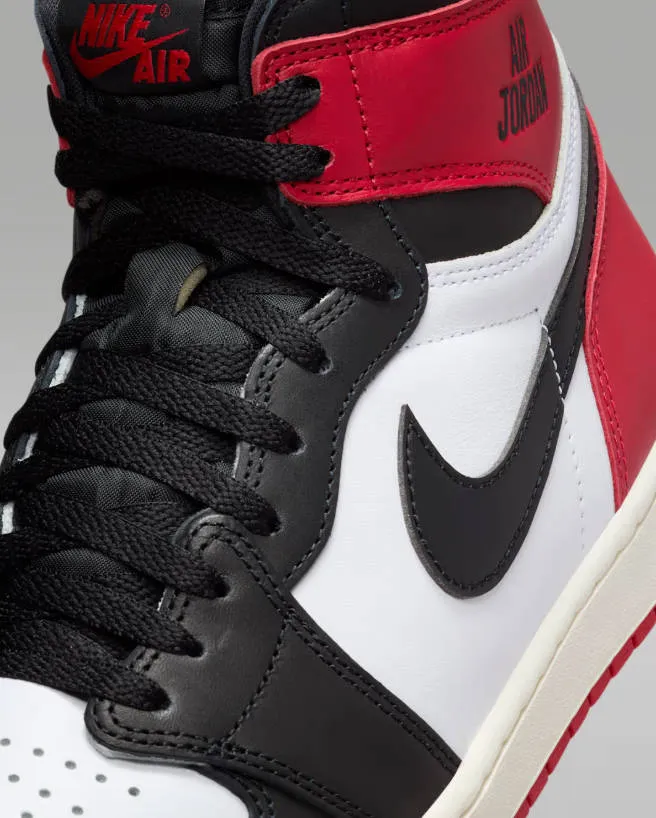
What to look for:
-
Leather quality: Genuine pairs use soft, high-grade leather (smooth or tumbled depending on model). Fakes often feel stiff, shiny, or plasticky.
-
Stitching: Check that it's tight, even, and consistent — especially around the Swoosh, toe box, eyestay, and heel.
-
No glue marks or loose threads.
🔔 Community tip:
Collectors suggest lightly pressing the leather — authentic leather wrinkles naturally; fake leather often just dents.
4. Look Closely at Branding Details
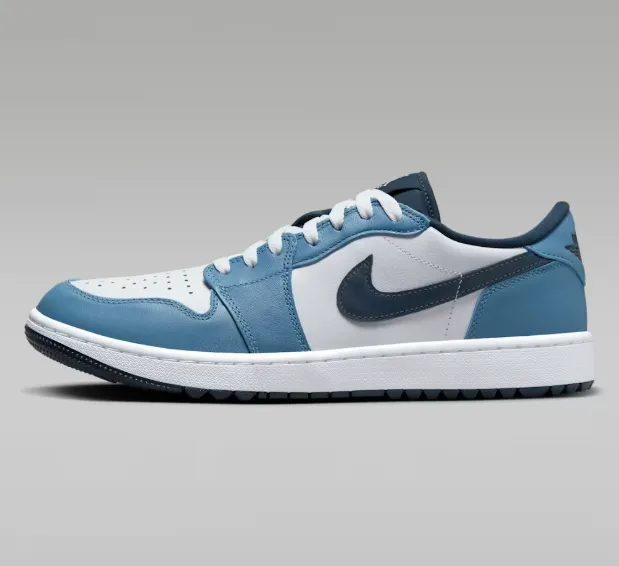
What to look for:
-
Wings Logo: Should be deeply embossed and sharp, not printed or shallow. The letters must be perfectly spaced.
-
Swoosh: Correct length, placement, and stitch line. Many fakes have slightly off Swoosh angles.
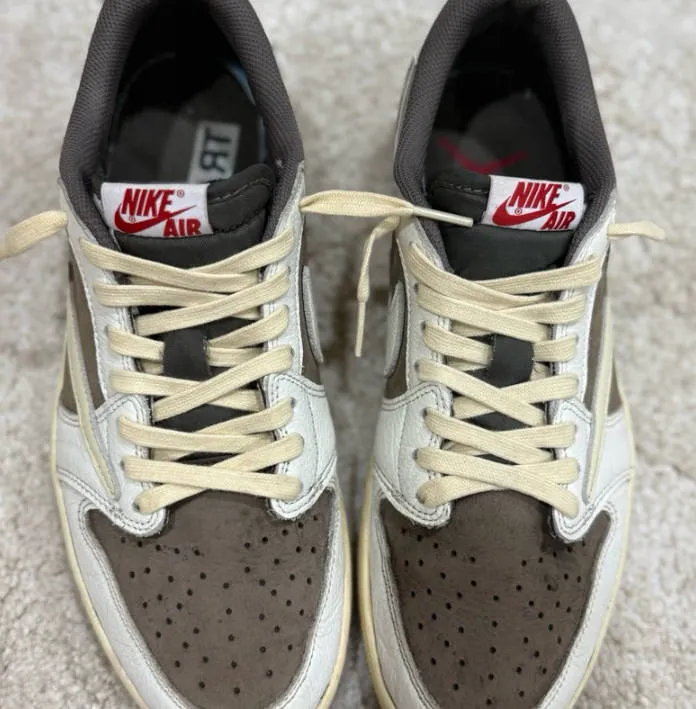
-
Tongue Tag: Font should be sharp, "NIKE AIR" aligned and clean.
-
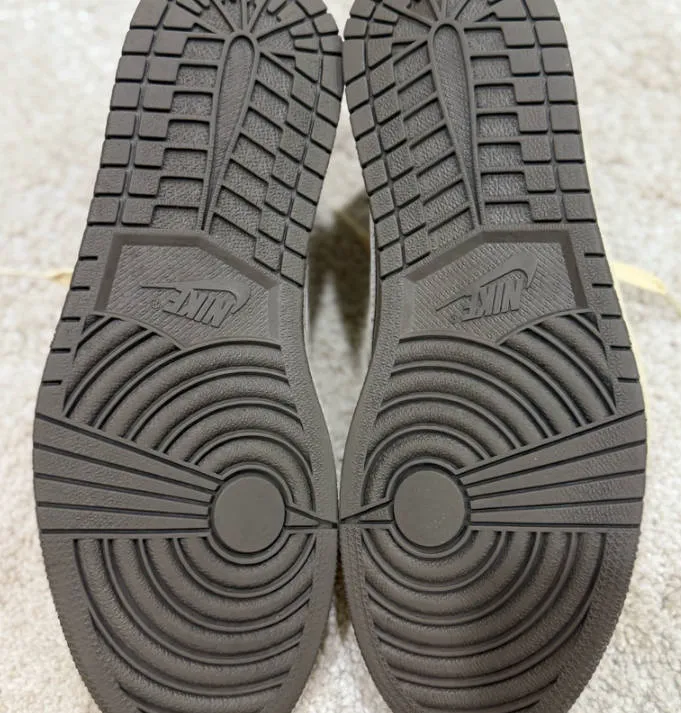
Outsole Logo: Check "NIKE" text — real pairs have balanced and evenly spaced letters.
🔔 Community tip:
Side-by-side comparisons of the Wings logo embossing and Swoosh placement are among the top ways people catch high-quality replicas.
5. Outsole and Insole Details
Outsole:
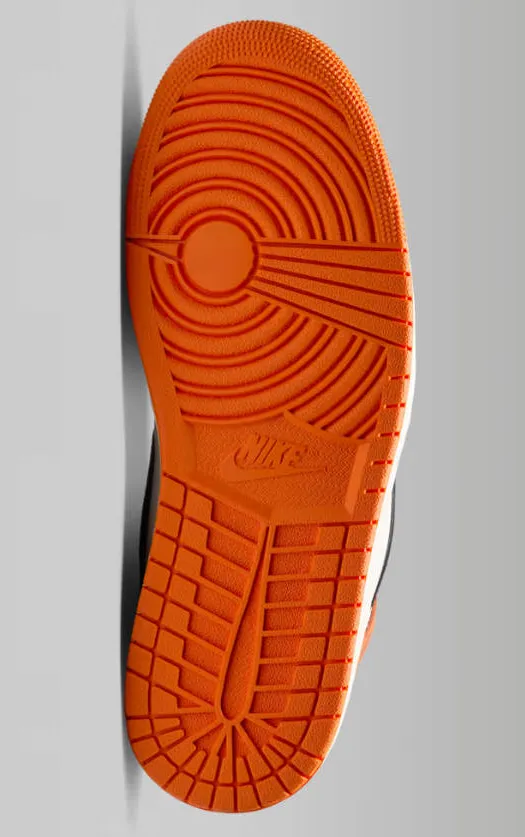
-
The tread pattern on authentic AJ1s is deep and crisp, with circular pivot points perfectly formed.
-
The rubber feels sturdy, not overly soft or glossy.
Insole:
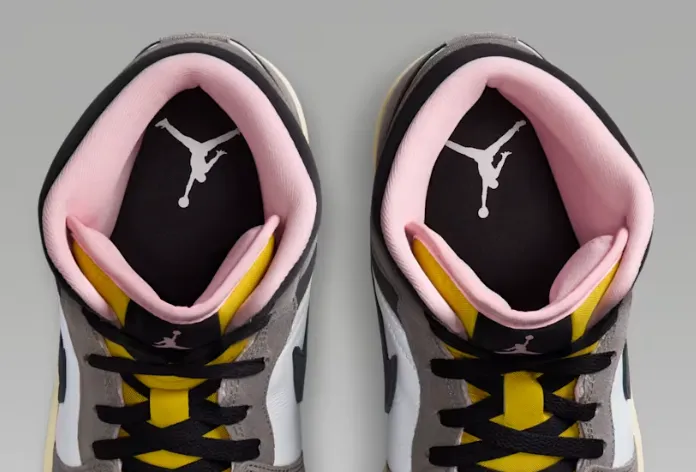
-
The insole logo print should be clean and centered — fake pairs often fade quickly or have dull ink.
🔔 Community tip:
Reviewers often peel out the insole to show differences in foam density and logo quality — if you can, check both.
6. Packaging and Box Details
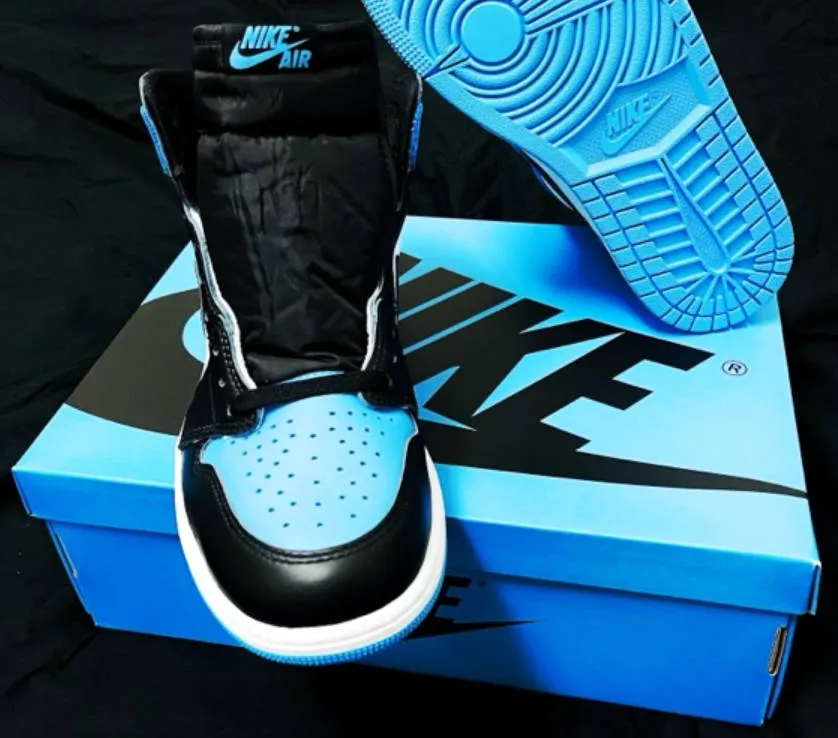
What to look for:
-
Authentic pairs come in sturdy boxes with high-quality print and the correct label font.
-
The box label's code and colorway name must match the tag inside the shoe.
-
Paper wrapping should have a premium texture and even pattern.
-
Some new releases include quality control (QC) stickers or color stamps — but their absence alone doesn't mean fake.
🔔 Community tip:
Always ask sellers to photograph the box label and shoes together in one frame. Real sellers rarely refuse.
7. Smell and Feel Test
What to check:
-
Real Jordans have a mild leather smell.
-
Fakes often have a strong chemical or glue odor due to poor materials.
🔔 Community tip:
Collectors say you can often "smell the fake" before you even wear them — genuine pairs never smell overly synthetic.
8. Seller and Price Check
Be cautious if:
-
The price is much lower than current resale value.
-
The seller avoids showing detailed photos or box labels.
-
Payment methods are non-traceable (e.g., direct bank transfer, no platform protection).
🔔 Community tip:
Buy from verified marketplaces (Nike SNKRS, GOAT, StockX, eBay Authenticity Guaranteed). For secondhand pairs, use legit-check groups before paying.
9. Popular Fake "Batches"
What Reddit & YouTube users often mention:
-
Replica batches ("PK batch," "OG batch," "LJR batch," etc.) target specific high-demand colorways — like Travis Scott, Union LA, Lost & Found, and Dior AJ1s.
-
Even high-end fakes still get small details wrong: incorrect toe-box curve, wrong Wings embossing depth, or off-color panels.
🔔 Best approach:
Compare your pair directly with retail unboxing videos or official Nike site images — side-by-side.
10. Final Verification Options
If you're still uncertain:
-
Post a Legit Check (LC) request on r/Sneakers, r/Repsneakers QC, or Facebook AJ1 groups with clear photos (tag, heel, Swoosh, outsole, insole).
-
Use third-party authentication services such as Legit App, CheckCheck, or GOAT/StockX in-house authentication.
🎯 Pro Buying Tips
-
Always cross-check style code + colorway name on Nike's official site.
-
Ask for original box, invoice, and photos of all sides before paying.
-
Buy from authorized retailers or well-rated resellers only.
-
Use legit-check apps for expensive pairs.
-
Keep box and receipt for future resale or proof.
💡 Closing Thoughts
Across global sneaker communities, authenticity checks for Air Jordan 1 focus on precision, consistency, and seller trust. Replicas keep improving — but careful inspection of stitching, logo embossing, size-tag formatting, and shape still reveals the truth.