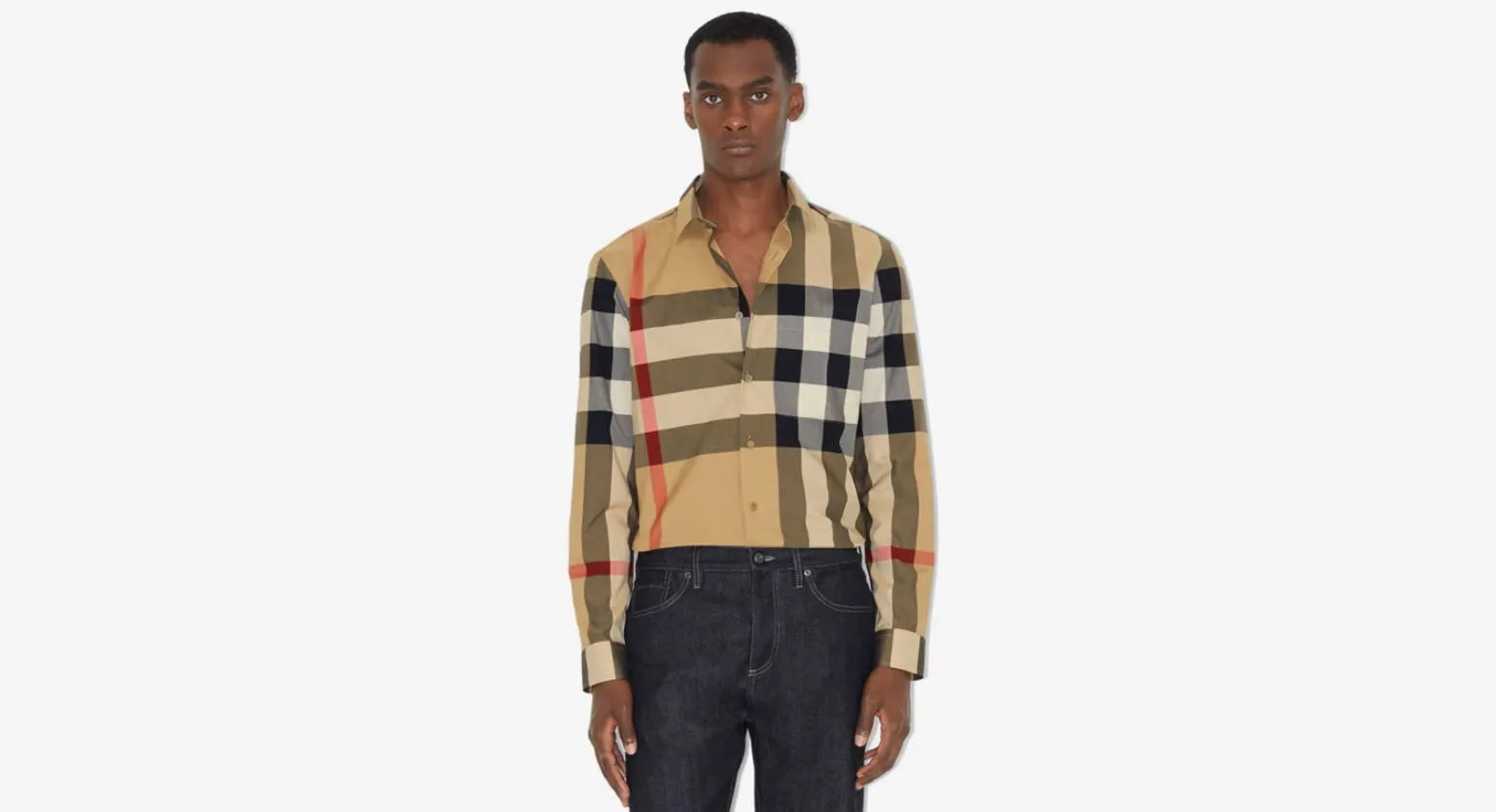
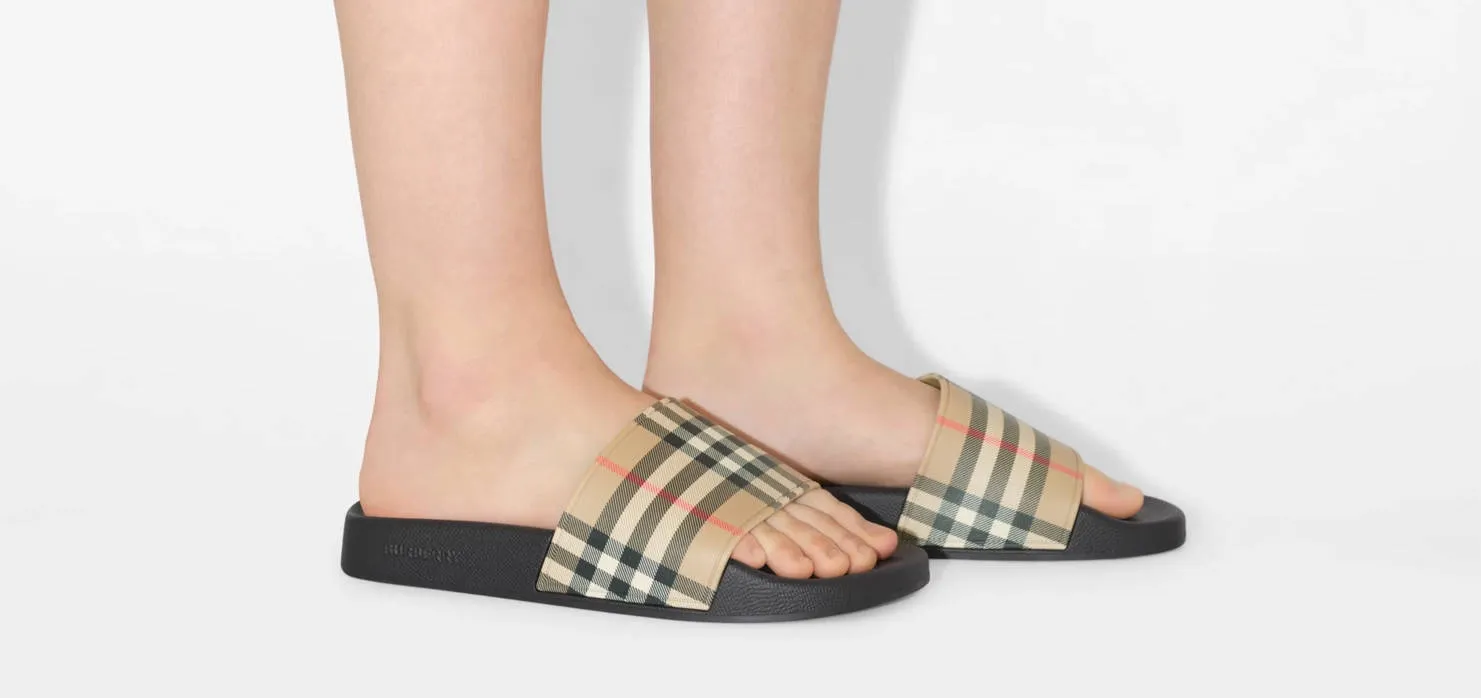
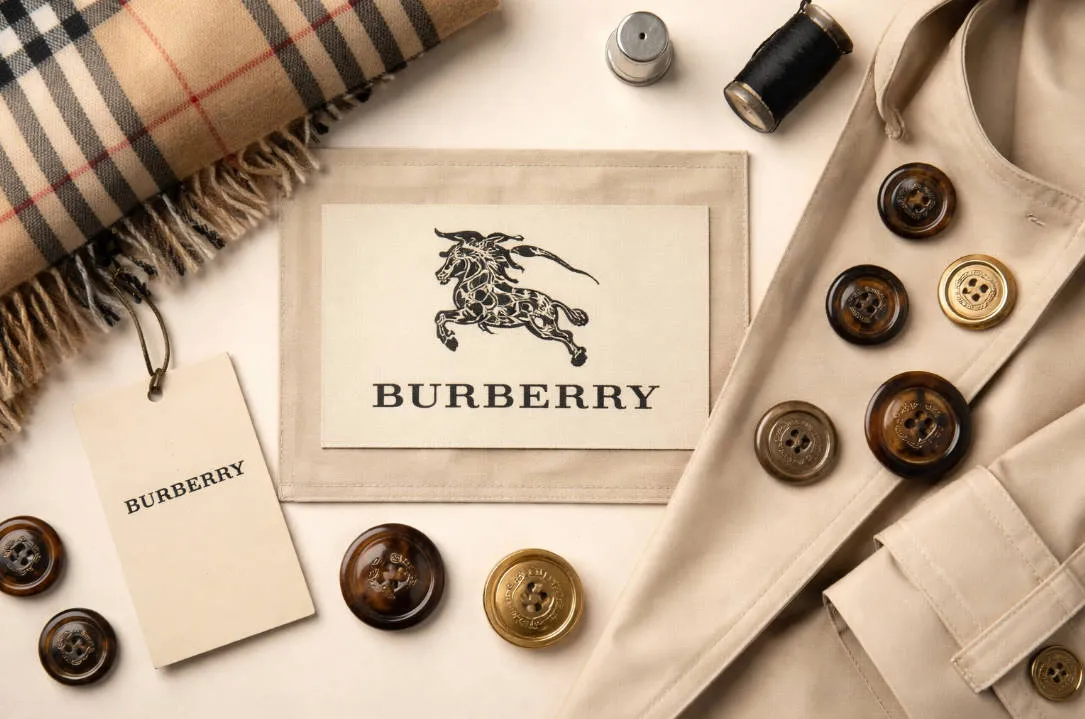
The moment you wrap an original Burberry check accessory around your neck, you feel the difference that decades of British craftsmanship makes. Yet, with the ubiquity of high-quality fakes, telling a genuine designer item from a cleverly produced copy can be a challenge for even the savviest shopper. Whether you are buying pre-owned or checking a gift, possessing expert knowledge is key. We have meticulously broken down the minute details—from the specific feel of the fabric to the stitching pattern on the care label—into nine critical signs that will empower you to quickly and accurately verify the authenticity of your luxury Burberry piece.
🧣 About Burberry Scarf
Burberry scarves are luxury accessories known for their iconic check pattern, craftsmanship, and use of high-quality materials like cashmere, wool, and silk. They are handmade in Scotland, a process that involves over 30 steps and finishes with brushing the fabric with teasels to create a soft, lustrous feel. These scarves are considered an investment piece due to their enduring style and durability, and the brand offers customization services like embroidery.
Key Features
-
Iconic check pattern: The classic Burberry Check is a signature design, though the brand also offers scarves in other colors and styles. The traditional check is known as the Archive Beige.
-
High-quality materials: Scarves are made from premium materials such as 100% cashmere, wool, and silk.
-
Craftsmanship: They are woven on traditional looms at a historic Scottish mill, a process that takes over 30 steps.
-
Unique finishing process: The fabric is washed in natural spring water and then brushed with teasels to create a soft, high-quality finish.
-
Customization: Burberry offers complimentary personalization, such as adding embroidered initials or symbols to selected scarves.
Investment and Perception
-
Timeless design: Due to their classic nature, Burberry scarves are considered timeless investment pieces that can be worn for decades.
-
Durability: The high-quality construction contributes to the scarf's longevity and value.
-
Brand recognition: The brand's long history and luxury status mean the name itself is a significant part of the product's value.
🧭 The Burberry Scarf Real vs. Fake Guide
Quick Authenticity Checklist:
| Feature | Authentic | Fake |
|---|---|---|
| Material | Soft, warm, fine cashmere | Rough, synthetic or mixed |
| Pattern | Symmetrical, crisp lines | Blurry, misaligned |
| Tag Font | Even, clear, clean edges | Irregular, bold, blurry |
| Tag Stitch | Matching thread, straight | Crooked, wrong thread |
| Tassels | Even, dense, soft | Thin, uneven, loose |
| Packaging | Embossed logo, solid box | Printed flat, flimsy |
| Origin | Made in Scotland | Wrong country or none |
| Price & Source | Normal retail price, official | Unusually cheap, unverified |
1. Fabric & Texture
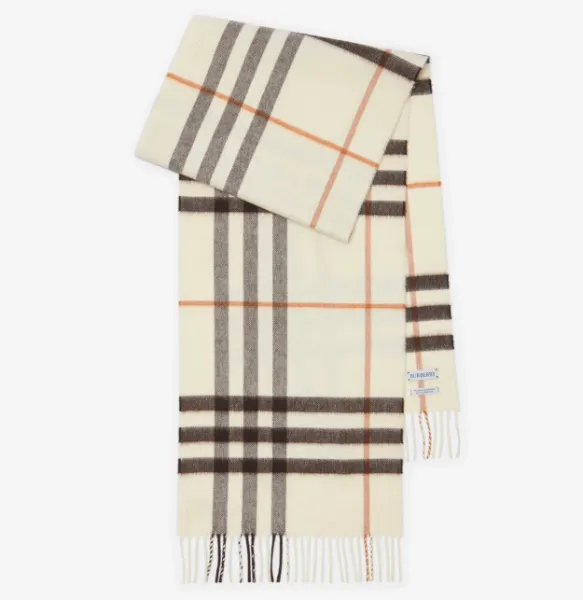
Authentic:
-
Made from 100% cashmere, usually from Scotland.
-
The texture feels soft, smooth, and slightly fluffy with a natural sheen.
-
Fibers are fine and uniform, not overly fuzzy or rough.
-
When you hold or drape it, it falls naturally and feels lightweight but warm.
Fake:
-
Feels coarse, stiff, or overly silky (synthetic).
-
Often made from wool, acrylic, or mixed fibers pretending to be cashmere.
-
May feel flat or lack the plush texture of genuine cashmere.
💡 Practical tip: Rub the fabric gently — authentic cashmere warms quickly in your hand, while synthetic fibers remain cool.
2. Pattern & Color
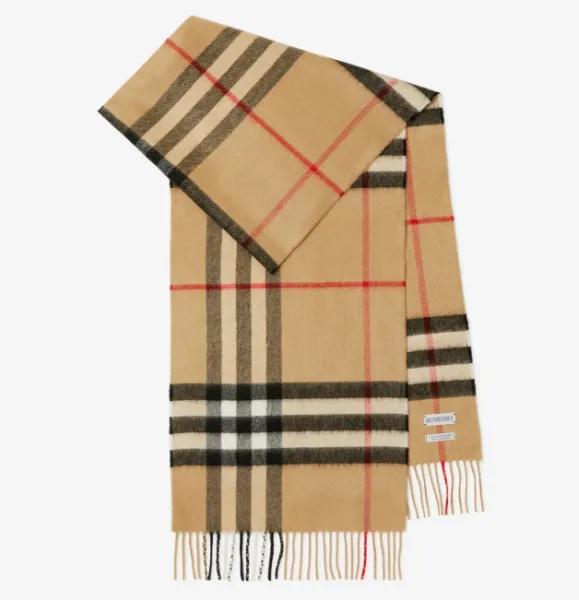
Authentic:
-
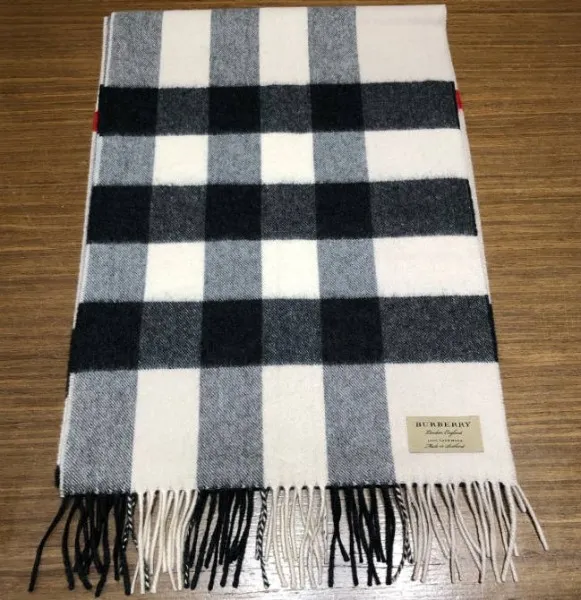
The iconic Burberry check pattern (camel, beige, black, red) is crisp and symmetrical.
-
Lines are evenly spaced, with clean intersections and no blurring.
-
The weave is dense, giving the scarf a clear and balanced look.
Fake:
-
Lines may look off-center, uneven, or slightly blurred.
-
Colors are often dull, overly saturated, or slightly “off tone.”
-
The check may not align from one end to the other.
💡 Expert advice: Misaligned checks are one of the easiest visual signs of a replica.
3. Label & Font
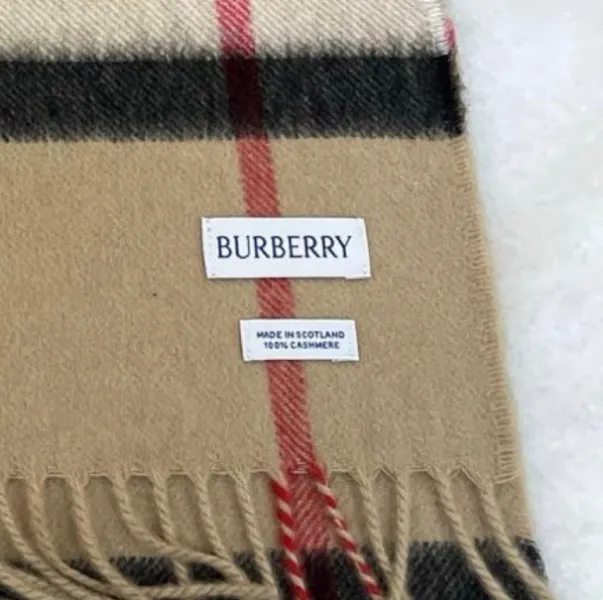
Authentic:
-
Features a woven or stitched fabric tag with "BURBERRY" in uppercase sans-serif font.
-
Letter spacing is even, and edges are sharp.
-
Tag content usually includes:
✧ "100% CASHMERE"
✧ "MADE IN SCOTLAND"
-
Some newer versions contain an RFID or NFC tag for verification.
Fake:
-
Fonts are slightly different — spacing inconsistent, letters too thick or thin.
-
Printing or weaving looks blurry or uneven.
-
Tag material may feel rough or shiny.
-
Often missing country of origin or care information.
💡 Community tip: Always inspect the back side of the tag — counterfeit versions often use clear or mismatched stitching.
4. Stitching & Tassels
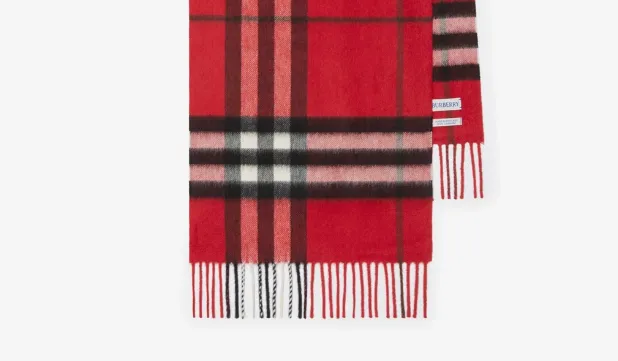
Authentic:
-
Tassels (fringes) are evenly spaced, thick, and soft.
-
Each tassel is twisted tightly and of consistent length.
-
Edge stitching is neat, no loose threads or fraying.
Fake:
-
Tassels may be thin, uneven, or stiff.
-
Some may appear glued rather than woven.
-
The scarf edges often have visible stitching flaws.
5. Packaging
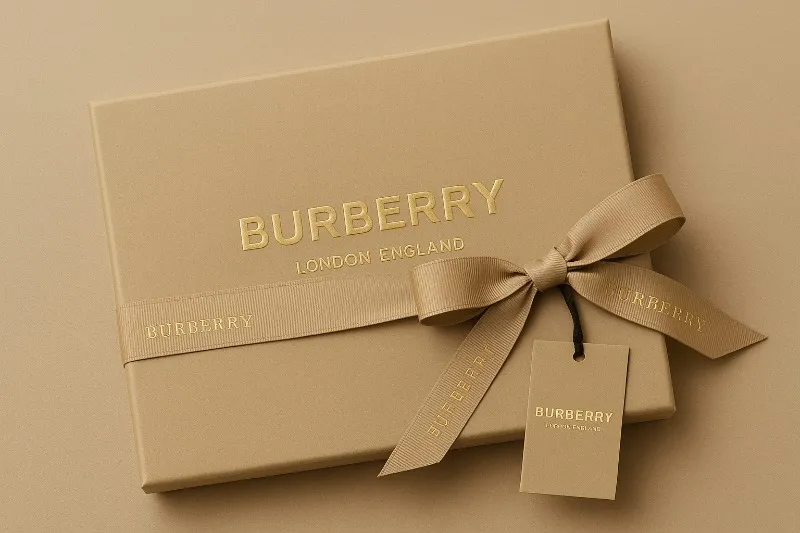
Authentic:
-
Comes in a sturdy beige or camel-colored box with embossed gold Burberry logo.
-
Includes tissue paper, ribbon, and sometimes an authentication card or NFC sticker.
-
The printing and embossing are precise with no smudges.
Fake:
-
Box color is off (too yellow or grayish).
-
Logo printing is rough, not embossed, or misaligned.
-
Inside wrapping paper feels thin or cheap.
💡 Note: Packaging alone is not proof — many high-grade replicas mimic real boxes.
6. Origin & Code
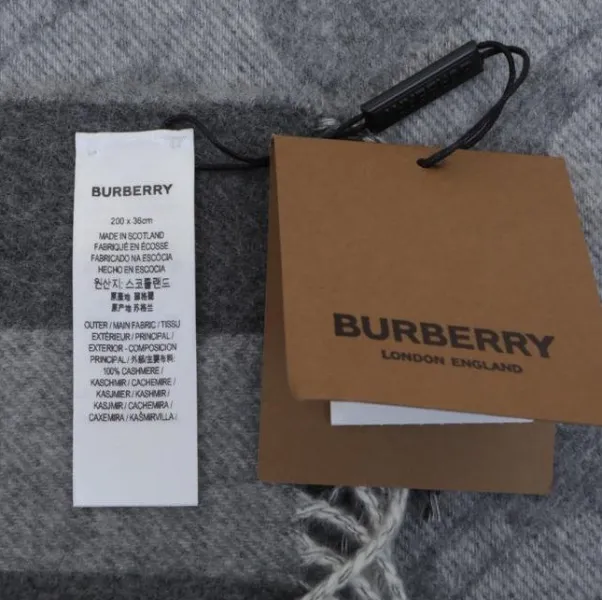
Authentic:
-
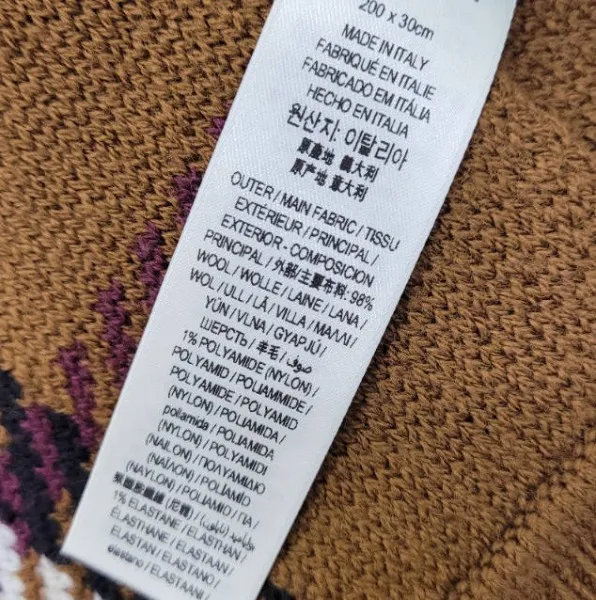
Most genuine cashmere scarves are Made in Scotland, with some limited editions from England or Italy.
-
Some models include QR/NFC tracking codes linked to Burberry's official system.
Fake:
-
Incorrect country names (e.g., "Made in London" or "Made in UK").
-
No serial or verification label at all.
7. Stitching on Label
Authentic:
-
Label stitched with matching thread color, fine and even.
-
The tag sits flat and symmetrical.
Fake:
-
Uses transparent nylon thread or thread color that doesn’t match.
-
Stitching may be crooked, loose, or uneven.
💡 Pro tip: Turn over the tag — this is where most counterfeits reveal themselves.
8. Year & Logo Variation
Authentic:
-
Older scarves may show "Burberrys" (with an s) — that's from pre-1999 collections.
-
Modern pieces use "BURBERRY" only.
-
Fonts, tag textures, and logo placement may differ slightly across production years, so always compare within the same era.
Fake:
-
Often mix old and new design elements (for example: "Burberrys" logo with a new-style box).
9. Common Counterfeit Tricks
-
Sellers may attach a real Burberry tag to a fake scarf.
-
Counterfeits often mimic the check pattern but fail in details like texture and tassel work.
-
Some sellers show partial photos or hide tag stitches — always ask for full, clear images of:
✧ Label front and back
✧ Care tag
✧ Tassels and edges
✧ Entire scarf flat view
10. Purchase Channel
Safe sources:
-
Official Burberry boutiques or website.
-
Authorized luxury retailers (Farfetch, SSENSE, MyTheresa).
-
Certified resale platforms (TheRealReal, Vestiaire Collective, Entrupy, LegitCheck).
Risky sources:
-
Unverified resellers or online shops offering deep discounts.
-
Sellers refusing to show clear tag and stitching photos.
🔔 Final Tip
To be 100% sure, compare your scarf's details (tag stitching, texture, tassels, font spacing) with verified official product photos or have it checked by a professional authentication service.
When in doubt — trust the craftsmanship and consistency, not the packaging.