🧭 Japan Vintage Luxury Guide
Japan has become one of the world's most trusted destinations for buying vintage luxury fashion and second-hand designer goods.
From Tokyo archive boutiques to Osaka resale chains and online Japanese marketplaces, buyers worldwide often turn to Japan for:
-
Better authenticity standards
-
Cleaner item conditions
-
Rare archive pieces
-
Transparent grading systems
Unlike many resale markets where condition descriptions can feel inconsistent, Japan's luxury resale industry is heavily structured around detailed ranking systems. Understanding these condition grades is one of the most important parts of buying successfully.
A "Rank A" bag in Japan may look almost new.
A "Rank C" item may still be wearable but require repairs.
And pricing can vary dramatically depending on these grades.
This guide explains:
-
How Japanese second-hand luxury grading works
-
What each condition rank actually means
-
Typical pricing tiers
-
Where to buy
-
How to avoid mistakes
-
How international buyers can shop more confidently
The focus is practical rather than hype-driven, making this useful for:
-
First-time vintage buyers
-
Luxury collectors
-
Archive fashion enthusiasts
-
Resellers
-
Travelers shopping in Japan
1. Why Japan Became a Global Vintage Luxury Hub
Japan's second-hand luxury industry did not appear overnight.
Several cultural and economic factors helped create one of the most respected resale ecosystems in the world.
✨ Strong Luxury Consumption Culture
Japan has long been one of the largest luxury markets globally.
Brands like:
-
CHANEL
-
Louis Vuitton
-
Hermès
-
Gucci
-
Prada
have historically performed extremely well in Japan.
Because of this, the domestic resale supply became enormous over time.
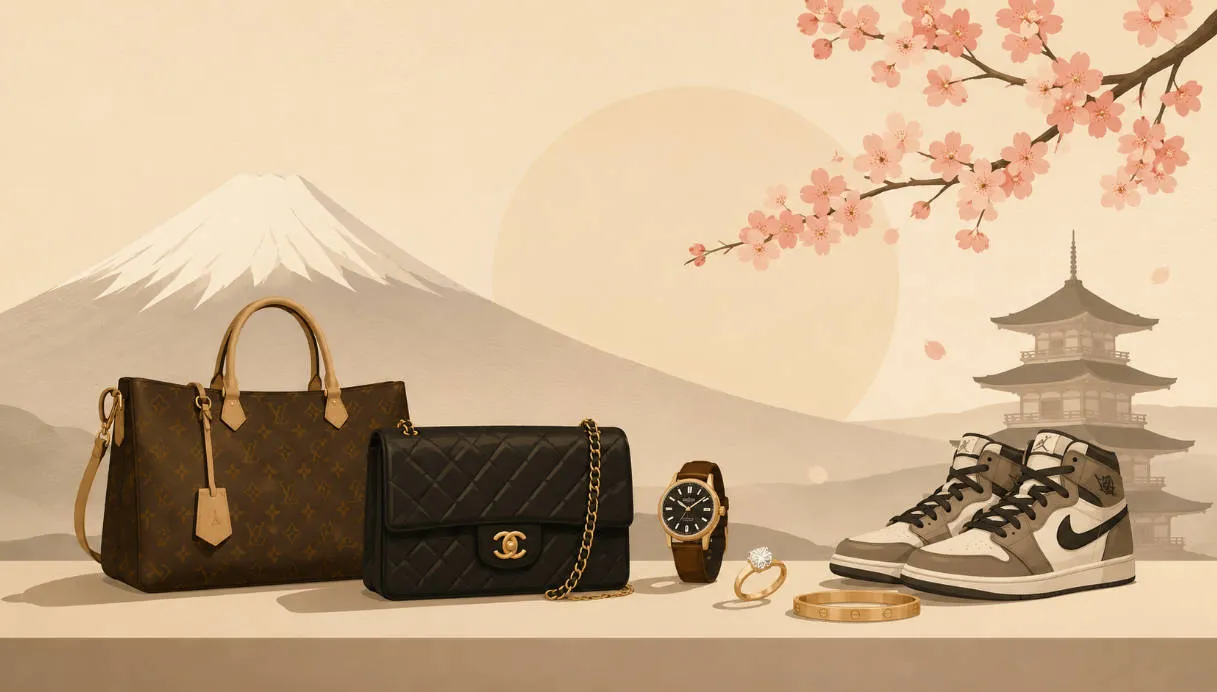
Today, Japan's vintage market includes:
-
Classic handbags
-
Archive runway pieces
-
Jewelry
-
Watches
-
Sneakers
-
Collectible accessories
✨ Strict Anti-Counterfeit Laws
Japan operates under relatively strict resale regulations.
Professional second-hand dealers usually require:
-
Resale licenses
-
Authentication procedures
-
Inventory documentation
-
Supplier verification
This does not mean every item is automatically authentic, but compared to many global marketplaces, counterfeit circulation is significantly lower.
That reputation is one reason international buyers trust Japanese sellers.
✨ Japanese Consumer Care Habits
Another reason Japanese vintage goods are popular:
many owners maintain products extremely carefully.
Even older items often include:
-
Original dust bags
-
Receipts
-
Boxes
-
Care cards
-
Well-preserved interiors
It is common to find 10–20-year-old luxury bags in surprisingly clean condition.
✨ Understanding Japan's Vintage Luxury Condition Ranking System
Condition ranking is the core of Japanese second-hand luxury shopping.
Most Japanese stores use letter-based grading systems.
However, there is no universal standard.
A Rank A item at one store might equal Rank AB elsewhere.
Still, the overall framework remains fairly consistent across Japan.
2. Common Japanese Condition Ranks Explained
✦ Rank N — New
This typically means:
-
Completely unused
-
Store-fresh condition
-
Original packaging included
-
No visible wear
Items may still be older releases or discontinued models, but they remain effectively new.
Typical Pricing
Usually:
-
85–100% of original retail
-
Sometimes above retail for rare or discontinued pieces
Common Examples
-
Unworn luxury watches
-
Deadstock handbags
-
Limited-edition accessories
-
Collectible jewelry
✦ Rank NS / S — Like New
This is one of the most desirable categories in Japan resale.
Typically indicates:
-
Extremely minimal wear
-
Near-pristine condition
-
Tiny storage marks possible
-
Almost no corner wear
-
Clean interior
Some stores distinguish:
-
NS = Never used but stored
-
S = Used once or twice
Others combine them.
Typical Pricing
Usually:
-
70–95% of retail
-
Higher for strong-demand brands
Highly sought-after pieces may still exceed original retail.
✦ Rank SA — Excellent
SA usually means:
-
Very light signs of use
-
Slight hardware scratches
-
Faint leather softening
-
Minimal interior wear
At this level, items still photograph beautifully and often appear almost new from a distance.
Typical Pricing
Usually:
-
60–85% of retail
This is often considered one of the best-value categories for many buyers.
✦ Rank A — Very Good
One of the most common categories in Japanese vintage stores.
Typical characteristics include:
-
Moderate but clean wear
-
Visible corner rubbing
-
Small scratches
-
Mild shape relaxation
-
Light discoloration
Importantly, damage should not significantly affect functionality.
Typical Pricing
Usually:
-
45–75% of retail
For many luxury bags, this tier represents a balance between affordability and presentation.
✦ Rank AB — Good Used Condition
AB is where visible wear becomes more obvious.
Possible issues include:
-
Stronger corner wear
-
Tarnished hardware
-
Interior stains
-
Strap creasing
-
Softened structure
-
Storage odor
-
Moderate scratches
The item remains usable, but no longer appears close to new.
Typical Pricing
Usually:
-
30–60% of retail
Many budget-conscious buyers target AB items because Japanese standards are often stricter than Western resale grading.
✦ Rank B — Noticeable Wear
B-ranked items show clear signs of long-term use.
Common issues:
-
Heavy rubbing
-
Cracking
-
Fading
-
Tarnish
-
Peeling
-
Stains
-
Interior wear
-
Repairs
-
Shape collapse
However, the item is still generally functional.
Typical Pricing
Usually:
-
15–40% of retail
This category attracts:
-
Collectors
-
Restoration enthusiasts
-
DIY refurbishers
-
Buyers seeking rare archival pieces
✦ Rank BC / C — Heavy Wear
These items may have:
-
Structural issues
-
Broken hardware
-
Tears
-
Severe stains
-
Stickiness
-
Odor
-
Peeling linings
-
Missing parts
Sometimes sold as restoration projects.
Typical Pricing
Usually:
-
Under 25% of retail
For collectible vintage pieces, prices may still remain relatively high despite poor condition.
✦ Rank Junk
"Junk" in Japanese resale does not always mean counterfeit.
It usually means:
-
No guarantee of condition
-
Non-functional components
-
Severe damage
-
Incomplete authentication certainty
-
Repair-only value
These items are often sold:
-
Cheaply
-
As-is
-
With no returns
📊 Quick Japan Vintage Condition Comparison Table
| Rank | Typical Condition | Best For | Approximate Price Level |
| N | Brand new / completely unused | Collectors, gift buyers | 85–100%+ retail |
| NS / S | Like new with minimal or almost no wear | Premium buyers, near-new seekers | 70–95% retail |
| SA | Excellent condition with very light wear | Best-value luxury buyers | 60–85% retail |
| A | Very good used condition with moderate but clean wear | Most everyday buyers | 45–75% retail |
| AB | Noticeable but acceptable wear | Value-focused shoppers | 30–60% retail |
| B | Heavy visible wear but functional | Budget buyers, collectors | 15–40% retail |
| BC / C | Significant damage or structural issues | Restoration projects | Under 25% retail |
| Junk | Severe damage / sold as-is | Repair specialists, parts sourcing | Very low / project pricing |
3. Brand-Specific Pricing Differences
Condition grades alone do not determine value.
Different luxury brands depreciate differently.
🔷 CHANEL Vintage Pricing Trends
CHANEL vintage pricing remains unusually strong.
Classic Flap bags in Japan often retain value due to:
-
Repeated retail price increases
-
Collector demand
-
Rarity of older craftsmanship
Typical observations:
-
Rank A Classic Flaps may still cost thousands above original historical retail
-
Lambskin versions usually grade lower faster because leather is delicate
-
Caviar leather tends to maintain value better
🔷 Louis Vuitton Vintage Pricing Trends
Louis Vuitton has one of the widest pricing ranges.
Older monogram canvas pieces are common in Japan because the brand historically sold extremely well domestically.
Pricing depends heavily on:
-
Vachetta condition
-
Odor
-
Stickiness
-
Cracking
-
Hardware oxidation
Common Market Examples
-
Rank A Speedy bags can remain relatively affordable
-
Rank B Neverfull bags often sell at major discounts
-
Rare collaborations can command collector pricing
🔷 Hermès Pricing Dynamics
Hermès behaves differently from most luxury brands.
Even heavily used items may remain expensive.
Factors affecting Japanese resale pricing include:
-
Leather type
-
Hardware color
-
Stamp year
-
Exotic materials
-
Color rarity
For Birkin and Kelly bags:
-
Rank B may still exceed retail pricing internationally
-
Neutral colors usually retain strongest value
-
Rare seasonal colors fluctuate dramatically
🔷 Archive Fashion & Streetwear in Japan
Japan is also a major archive fashion market.
Brands frequently found include:
-
Comme des Garçons
-
Yohji Yamamoto
-
Issey Miyake
-
Undercover
-
Number (N)ine
Condition grading in archive fashion tends to be slightly looser than handbag grading.
Small flaws are often tolerated because:
-
Garments are older
-
Fabrics age naturally
-
Rarity matters more than perfection
4. Best Types of Vintage Luxury Stores in Japan
Japan's second-hand market includes several store categories.
Each serves different buyers.
Major Luxury Resale Chains
Large chains usually provide:
-
Standardized grading
-
Authentication teams
-
Broad inventory
-
Tax-free shopping for tourists
Popular examples include:
-
KOMEHYO
-
Brand Off
-
Daikokuya
-
2nd STREET
These are often safest for first-time international buyers.
Curated Archive Boutiques
Smaller boutiques may focus on:
-
Runway archive fashion
-
Collectible designer pieces
-
Avant-garde brands
-
Rare jewelry
Prices can be higher because curation matters.
Condition descriptions may also become more subjective.
5. Flea Markets & Independent Vintage Shops
These offer more unpredictability.
Possible Advantages
-
Lower prices
-
Unique discoveries
-
Rare one-off items
Possible Downsides
-
Inconsistent authentication
-
Fewer return protections
-
Weaker grading systems
These environments reward experienced buyers more than beginners.
6. Buying Japanese Vintage Luxury Online
International buyers increasingly shop through Japanese online platforms.
📱 Popular Japanese Online Platforms
① Mercari Japan
Mercari is one of Japan's largest peer-to-peer marketplaces.
Advantages
-
Huge inventory
-
Competitive pricing
-
Fast-moving listings
Risks
-
Individual seller quality varies
-
Returns may be difficult internationally
-
Condition interpretation can differ
② Yahoo Auctions Japan
Yahoo! Japan Auctions remains important for collectors.
Especially strong for:
-
Archive fashion
-
Vintage luxury
-
Discontinued items
-
Niche collectibles
Auction listings sometimes produce excellent deals, but competition can be intense.
③ Rakuten Rakuma
Rakuten Rakuma blends marketplace and resale features.
Often considered slightly more structured than fully open auction environments.
7. Using Proxy Services
Many Japanese sellers do not ship internationally.
This is where proxy services become important.
A proxy service:
-
Buys the item domestically
-
Receives it in Japan
-
Forwards it internationally
Common Services
-
Buyee
-
FromJapan
-
ZenMarket
-
Neokyo
Proxy Fees Typically Include
-
Service charge
-
Domestic shipping
-
International shipping
-
Customs declarations
8. Buying Vintage Luxury in Japan as a Tourist
Shopping in person remains one of the best experiences.
🗼 Tokyo Shopping Areas
① Shibuya
Known for:
-
Youth fashion
-
Streetwear
-
Archive boutiques
-
Sneaker culture
② Ginza
Luxury-focused district with:
-
Premium resale stores
-
High-end watch dealers
-
Polished shopping environments
Best for buyers seeking:
-
Pristine condition
-
Premium brands
-
Luxury service
③ Harajuku
Strong mix of:
-
Vintage Americana
-
Designer archive fashion
-
Collectible streetwear
🛍️ Osaka Vintage Shopping
Osaka often feels:
-
Slightly cheaper
-
Less tourist-driven
-
More relaxed than Tokyo
Areas like Amerikamura are popular for:
-
Vintage fashion
-
Sneakers
-
Youth-oriented resale culture
9. Tax-Free Shopping in Japan
Many larger resale stores offer tax-free shopping for tourists.
Requirements usually include:
-
Passport presentation
-
Minimum purchase threshold
-
Temporary visitor status
Tax-free savings can significantly improve value on luxury purchases.
10. How to Evaluate Condition Beyond the Rank
Never rely only on the letter grade.
Two Rank A bags can look very different.
Always inspect:
-
Corners
-
Handles
-
Hardware
-
Interior lining
-
Odor notes
-
Stitching
-
Glazing
-
Shape retention
Odor Is Extremely Important in Japan
Japanese listings often mention odor carefully.
Possible descriptions include:
-
Perfume smell
-
Smoke odor
-
Storage smell
-
Mold smell
International buyers sometimes underestimate this issue.
Strong odors can be difficult to remove from vintage leather goods.
11. Common Vintage Luxury Problems to Watch For
⚠️ Sticky Interiors
Especially common in older:
-
Louis Vuitton
-
Dior
-
Gucci
bags from certain eras.
Humidity can degrade lining materials.
⚠️ Peeling Pockets
Vintage interiors sometimes deteriorate over time even when exterior condition looks good.
⚠️ Dry Leather
Older leather may become fragile.
Watch for:
-
Cracking
-
Stiffness
-
Flaking edges
⚠️ Repainted Corners
Some bags undergo cosmetic restoration.
This is not always bad, but heavy repainting should be disclosed.
12. Understanding Japan's Luxury Buyer Psychology
Japanese resale culture often values condition heavily.
Because of this:
-
Minor flaws can reduce prices substantially
-
Excellent-condition pieces command strong premiums
-
Collectors aggressively pursue pristine examples
This creates opportunities for international buyers who are comfortable with moderate wear.
A tiny scratch that bothers one collector may not matter to another.
13. Smart Buying Strategies
✅ Compare Multiple Stores
The same item can vary dramatically in price between stores.
Factors include:
-
Condition interpretation
-
Inventory turnover speed
-
Tourist demand
-
Store positioning
✅ Focus on Structural Condition
Surface scratches are easier to fix than:
-
Broken handles
-
Collapsed structure
-
Severe interior damage
✅ Prioritize Photos Over Descriptions
Even Japanese grading systems remain subjective.
High-resolution photos matter more than rank letters alone.
✅ Research Specific Eras
Different production years may affect:
-
Leather quality
-
Hardware durability
-
Collectibility
-
Resale value
14. Understanding Depreciation by Category
Not all luxury categories hold value equally.
👜 Bags
Usually strongest resale category.
Especially:
-
Classic flap bags
-
Iconic monogram pieces
-
Structured leather handbags
⌚ Watches
Japanese watch resale is extremely mature.
Condition grading can be even stricter than handbags.
👠 Shoes
Often depreciate faster due to hygiene concerns and wear visibility.
👕 Clothing
Archive runway pieces may appreciate, but general luxury clothing often depreciates heavily.
15. Is Japan Still the Best Place to Buy Vintage Luxury?
Japan remains one of the strongest global markets for second-hand luxury.
However, international demand has increased significantly.
As a result:
-
Prices have risen
-
competition has intensified
-
Rare items disappear quickly
Still, Japan continues to offer advantages including:
-
Relatively trustworthy grading
-
Broad inventory selection
-
Careful product preservation
-
Deep vintage fashion culture
For many buyers, especially those seeking:
-
Archival fashion
-
Classic handbags
-
Collectible jewelry
-
High-quality used luxury
Japan remains one of the most attractive vintage luxury destinations in the world.
📝 Final Thoughts
Japan remains one of the most influential destinations in the world for vintage luxury shopping.
What makes the market appealing is not simply lower pricing.
It is the combination of:
-
Detailed grading systems
-
Strong resale infrastructure
-
Wide inventory
-
Careful product preservation
Understanding Japanese condition ranks is essential because these grades directly affect:
-
Pricing
-
Collectibility
-
Usability
-
Long-term value
For many buyers:
-
Rank S and A provide near-luxury-retail experiences
-
Rank AB offers some of the strongest value opportunities
-
Rank B or C can become restoration or archive projects
The smartest purchases usually come from balancing:
-
Condition
-
Rarity
-
Price
-
Personal tolerance for wear
Whether shopping in Tokyo boutiques, Osaka resale chains, or Japanese online marketplaces, buyers who understand the grading culture are far more likely to make confident decisions.
Japan's vintage luxury market is no longer just a niche collector scene.
It has become one of the global centers of second-hand designer fashion — influencing how luxury resale is bought, sold, valued, and collected worldwide.