The haute couture of the fragrance industry, Le Labos beguiling range of perfume, home fragrance and botanical body care has become iconic for its unconventional yet luxurious handmade olfactory offerings. Le Labo Santal 33 is one of the most popular and classic perfumes. Perfumer Frank Voelk, who works closely with the Le Labo perfume empire, created this masterpiece in early 2011. It is simple and elegant at the same time. This perfume evokes unique feelings in each person, but men and women agree that it is a fiery scent. It's chock-full of sandalwood and cedar for that fresh chopped wood scent, but it's also blended with warm amber and spicy cardamom that help it smell a bit more perfume-y than legit wood. However, with the popularity of this fragrance, there are also many fake versions of this product available in the market. And it can be challenging to differentiate between a real and fake Le Labo Santal 33. Therefore, it's imperative to understand the key differences between the two to ensure that the money spent on this fragrance is worth it.
About Le Labo Santal 33 Eau De Parfum
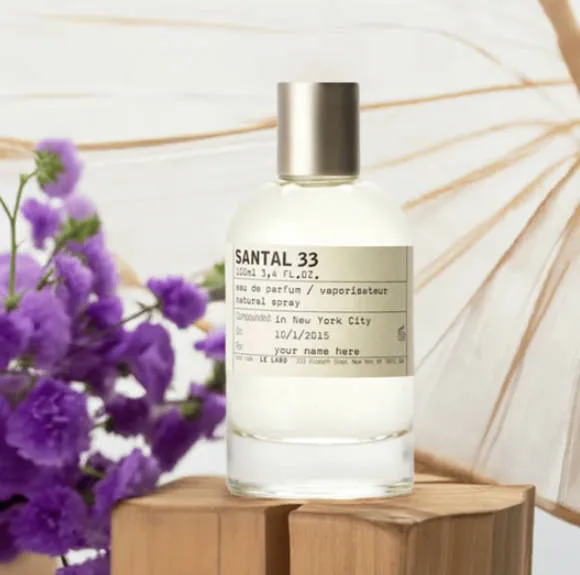
Scent Type: Woody Aromatic
Top Notes: Violet Accord, Cardamom
Middle Notes: Iris, Ambrox
Base Note: Cedarwood, Leather, Sandalwood
Immerse yourself in the captivating allure of Le Labo's Santal 33, a fragrance that boldly transcends traditional gender boundaries, offering a unique aromatic journey for anyone who dares to defy the ordinary. Launched in the year 2011, this unisex EDP spray has quickly risen to cult status, enchanting wearers with its intricate blend of natural scents, ready to accompany you on all life's adventures.
At the heart of Santal 33 lies a sophisticated harmony of violet accord and cardamom, creating a vibrant opening that captivates the senses from the first spritz. As the fragrance unfolds, a rich and powdery iris merges with the enigmatic ambrox, crafting a heart that is both commanding and comforting. The journey concludes on a warm, sensuous base of cedarwood, leather, and sandalwood, weaving together a lasting impression that is both refined and profoundly memorable.
Santal 33 has a remarkable diffusion and tenacity, and over time, it loses its cowboy bravado and settles into a smoky leather note, underscored by dry cedarwood. The creamy sandalwood character becomes apparent in the late drydown, though the dry, sharp amber notes also become more prominent.
When buying Le Labo Santal 33, you can ensure its authenticity by carefully examining the bottle's physical details and understanding its unique scent profile. Counterfeit versions are common, but the differences are often obvious upon close inspection.
Here is a quick summary of the key differences between an authentic and a fake bottle of Le Labo Santal 33:
The Santal 33 EDP Original vs. Fake Guide
Le Labo's minimalist design makes counterfeiting easy, as there are no intricate caps or engravings to replicate. Authentication relies heavily on inspecting the subtle details of the label, packaging quality, and, ultimately, the scent itself.
1. The Packaging and Box
Le Labo boxes are simple, sturdy, and typically made of brown cardboard.
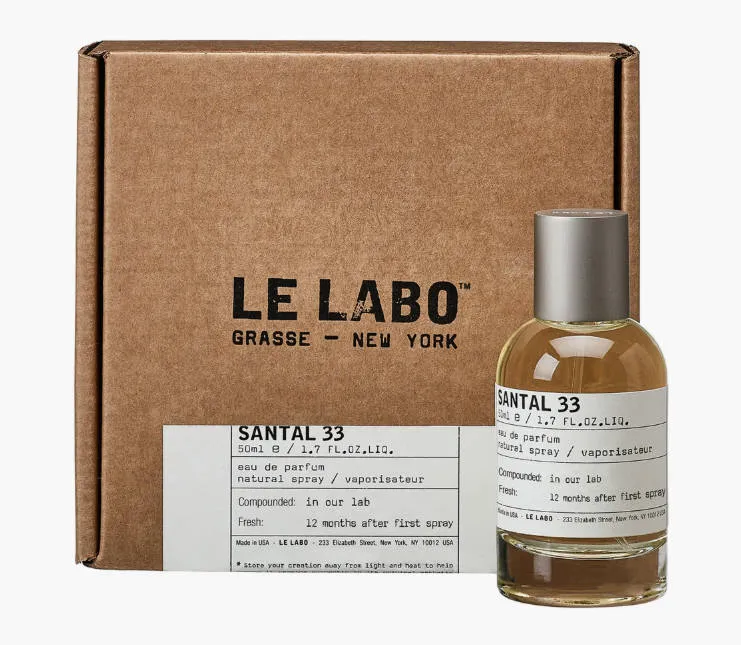
A. Cellophane Wrapping
Authentic: The packaging is known for its rustic and understated aesthetic, with a hand-stamped, paper label, a woven fiber tape closure, and cream-printed labels, which further support the idea that cellophane wrapping is not part of the official packaging. The authentic Santal 33 never wrapped in cellophane. Le Labo does not seal its boxes in plastic film.
Fake Warning: If the box is tightly wrapped in plastic/cellophane, it is almost certainly a fake.
B. Inner Box Lining
Authentic: The inner lining of the box is often black or dark colored, securely holding the bottle in place.
Fake Warning: Fakes may have cheap, thin, or poorly cut cardboard inserts that don't fit snugly.
C. Label Placement
Authentic: The label on the box should align perfectly with the box edges and be applied neatly.
Fake Warning: Misaligned, crooked, or bubbling labels are signs of forgery.
D. The Paper Label Texture
Authentic: The paper used for the label (both on the box and the bottle) has a distinct rough, coarse, or grainy texture, reminiscent of recycled or kraft paper.
Fake Warning: Smooth, shiny, or glossy labels indicate a low-quality counterfeit.
E. Handwritten Details
Authentic:Many of the identifying marks on Le Labo boxes are handwritten. The product information and the "labeled on" date are often written by hand.
Fake Warning: Fake ones, in contrast, may use printed fonts that lack this personalized, human touch.
F. Imperfect Period Marks
Authentic: On the label, the periods in "FL. OZ." are known to be slightly oblong and imperfect, not perfectly round.
Fake Warning: The fake labels often miss this detail and have perfect, circular periods.
2. The Bottle and Atomizer
Le Labo bottles are simple, clear glass. The cap is often a key indicator of quality.
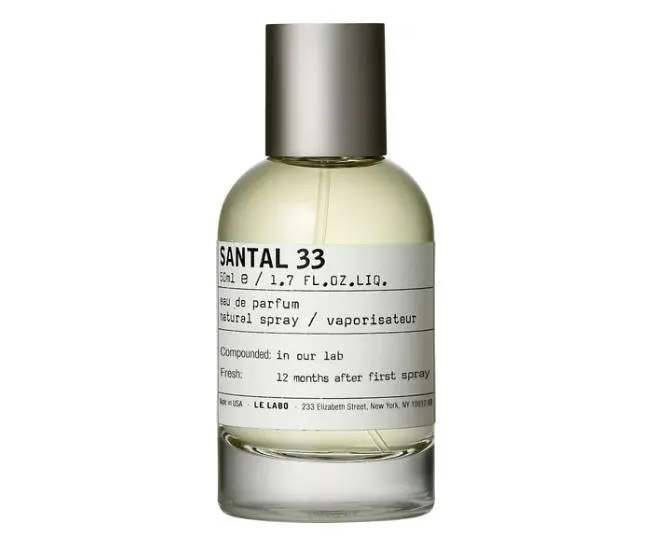
A. Cap/Sprayer Quality
Authentic: The silver metal cap and sprayer mechanism should feel heavy and solid. The cap fits securely.
Fake Warning: A light, cheap-feeling plastic cap, or a cap that spins loosely, is suspicious.
B. Atomizer/Spray
Authentic: The spray mechanism delivers a wide, consistent, fine mist with adequate pressure.
Fake Warning: Fake sprayers often deliver a weak stream, a short squirt, or feel stiff when pressed.
C. Tube (Straw)
Authentic: The dip tube (the plastic straw inside) should be nearly invisible or cut perfectly to the bottom of the bottle.
Fake Warning: Dip tubes that are noticeably too long, bent awkwardly, or thick may indicate a fake.
3. The Label Typography
Because every bottle is personalized, the print quality and specific character shapes are paramount.
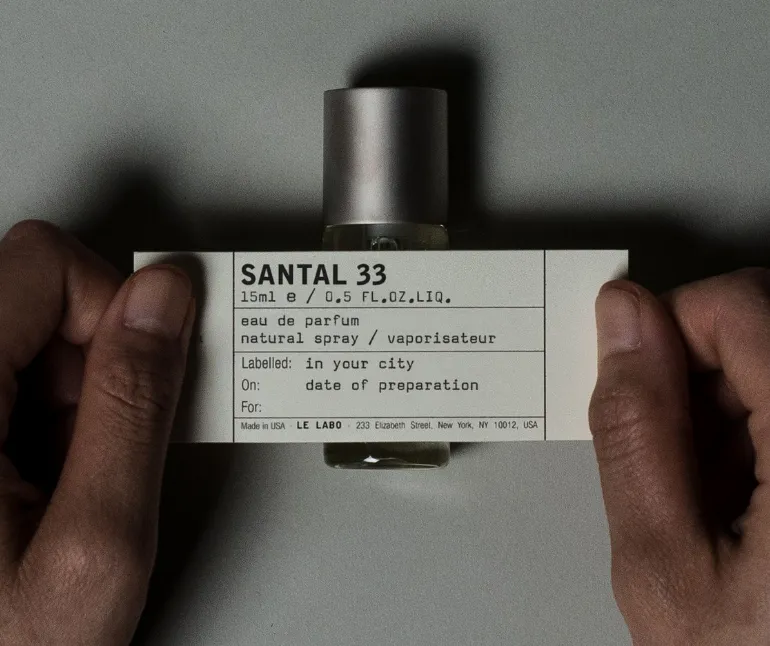
A. Label and Text
Authentic: Paper texture: Authentic labels have a rough, matte, granular texture.
Fake Warning: Fakes often have smooth or shiny paper.
B. The Periods/Dots
Authentic: The periods/dots used on the labels (e.g., in "FL. OZ.") are typically oblong (oval-shaped), not perfectly round circles.
Fake Warning: Perfect, small, circular dots are a strong indicator of a mass-produced fake label.
C. Text Alignment and Quality
Authentic: The text should be perfectly aligned, crisp, and clear.
Fake Warning: Look for misspellings, sloppiness, or text that is slightly off-center.
D. Personalized Text
Authentic: The label will feature personalized text (Name, Date, Location) and should typically state "Compounded: In Our Lab / Fresh: 12 months after first spray." (Unless personalized)
Fake Warning: A pre-printed location like "Labelled in Moscow" or a generic foreign city is a significant red flag for a fake.
E. Batch Code
Authentic: There should be a subtle batch code (usually a few letters/numbers) stamped or laser-etched somewhere on the bottle, often near the bottom edge.
Fake Warning: The absence of a batch code, or one that looks crudely printed or easily rubbed off, suggests a fake.
4. The Scent and Longevity
This is the final, and most definitive, test. Since the scent can vary slightly between batches, focus on its character and performance.
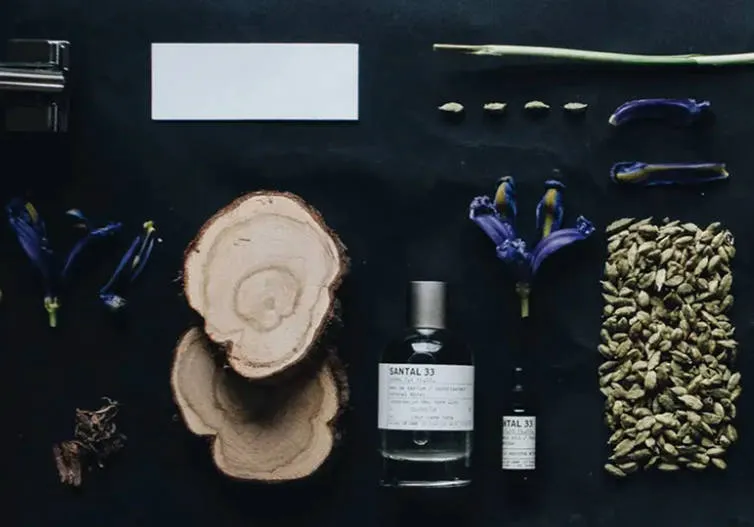
A. Scent Profile
Authentic: Santal 33 is a unique blend: creamy sandalwood, smoky cedar, spicy cardamom, and a distinct, dry leather accord, with powdery violet/iris florals. It often has a clean, almost "pickle-like" note in the opening for some people, due to the high concentration of the sandalwood and cedar molecules.
Fake Warning: A simple, flat woody smell. Overly synthetic, chemical, or harsh alcohol opening. Missing the creamy sandalwood or the distinctive leather/cardamom complexity.
B. Sillage/Projection
Authentic: Moderate to heavy in the beginning. It is known as a strong, projecting fragrance that fills a room initially.
Fake Warning: Very weak projection from the start, smelling faint or watery.
C. Longevity
Authentic: Excellent. The authentic scent should last for 8+ hours on the skin and days on clothing.
Fake Warning: Fades within 1-2 hours, acting more like a body spray.
D. Liquid Color
Authentic: The liquid is typically clear and pure.
Fake Warning: Oddly colored, cloudy, or murky liquid.
5. Purchasing Precaution
The single best way to guarantee authenticity is to buy from an authorized retailer:
-
Le Labo's official website or boutiques.
-
High-end department stores (e.g., Nordstrom, Saks, Neiman Marcus).
-
Sephora (authorized retailer).
If buying from an unauthorized seller (eBay, Mercari, etc.), assume the risk is high. If the price is significantly lower than retail, be extremely suspicious.
Conclusion
It is important to remember that when purchasing Le Labo Santal 33 you should be wary of counterfeit products. These fake perfumes are not only a health hazard but also mean a loss of investment. To ensure authenticity, consumers must purchase from authorized dealers and reputable stores. Therefore, it is important to remain vigilant and take necessary precautions to avoid falling victim to the fake market.