🧭 The Ultimate Kyoto Vintage Guide
1. Overall Features of Kyoto's Vintage
Compared to other cities, Kyoto's vintage and antique markets have several distinctive traits:
-
Traditional and classic aesthetics: High proportion of kimonos, tea ceremony utensils, and Showa-era household items.
-
Well-preserved items: Kyoto residents tend to take great care of their belongings.
-
Wide price range: From small items costing a few hundred yen to antiques priced in the hundreds of thousands.
-
Leisurely pace: Browsing and shopping is slow and relaxed; it's not about rushing in and out.
If you appreciate items with cultural backgrounds, historical stories, and long-term collectible value, Kyoto is an ideal destination.
2. Key Vintage & Antique Areas in Kyoto
1️⃣ Kawaramachi / Shijo
-
Features: The commercial hub with a concentration of vintage clothing and branded second-hand stores.
-
Ideal for: First-time visitors to Kyoto’s vintage scene or those with limited time.
2️⃣ Teramachi / Shinkyogoku
-
Features: Traditional covered shopping arcades mixing vintage clothing, second-hand accessories, and small antique shops.
-
Ideal for: Shoppers who enjoy taking their time comparing styles and prices.
3️⃣ Okazaki / Higashiyama
-
Features: Near temples and parks; often hosts flea and antique markets.
-
Ideal for: Those interested in antiques, crafts, and everyday items.
4️⃣ Western Temple Area (To-ji / Kitano)
-
Features: Location of large monthly markets with numerous stalls.
-
Ideal for: Visitors looking to browse extensively and experience a traditional market atmosphere.
3. Kyoto Antique & Flea Markets
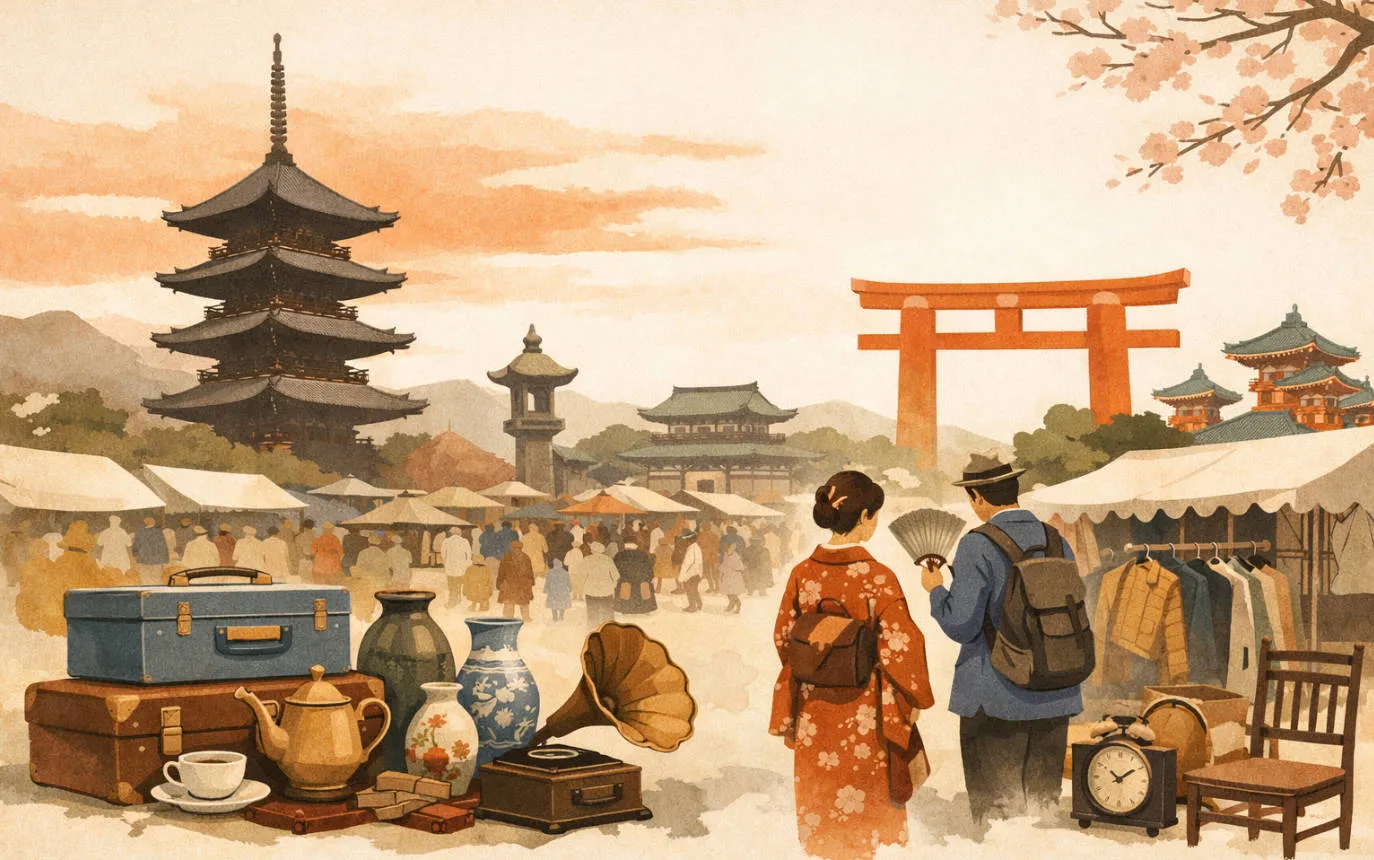
Most flea markets in Kyoto are held at temples and shrines, creating a strong traditional atmosphere. They offer both collectible antiques and a cultural experience.
📌 To-ji "Kobo Market"
-
Date: 21st of each month
-
Location: South area of To-ji Temple
-
Hours: ~7:00–16:00
-
Features: One of Kyoto's largest antique markets. Find old furniture, books, tea sets, crafts, etc. Cash is the primary payment method. Great for bargaining.
-
Access: ~10 min by bus from Kyoto Station; walking is also possible.
📌 Kitano Tenmangu "Tenjin Market"
-
Date: 25th of each month
-
Location: Kitano Tenmangu Shrine
-
Features: Rich in antiques and retro items, including old clothing, fabrics, bonsai, ceramics. Classic and elegant ambiance.
-
Access: Bus routes 50, 101, 203.
📌 Heian Flea Market
-
Date: Around the 10th of each month (check official website as dates vary)
-
Location: Heian Shrine / Okazaki Park
-
Features: Focused on handicrafts and daily goods, with occasional antiques and unique collectibles.
-
Access: Subway or bus to Higashiyama / Shrine-mae Station, then a short walk.
📌 Smaller Specialty Markets
-
Omoshiro-ichi: Toyokuni Shrine, 8th/18th/28th of each month
-
Chion-ji Handicraft Market: Focused on handmade goods, sometimes includes retro items
- Tip: Markets are mostly outdoors, so rainy days may lead to cancellations or shortened hours.
3. Must-Visit Vintage & Second-hand Shops in Kyoto
Unlike flea markets, these stores operate year-round and are ideal for finding specific items. They can be divided into vintage clothing stores and antique/craft shops.
1). Vintage & Second-hand Clothing Stores
🔹 Kindal Kyoto
-
Highlights: Large chain store offering a full range of items from high-street to designer vintage.
-
Products: Men's and women's apparel, shoes, accessories.
-
Price range: Mid-to-high; good condition.
-
Experience: Spacious, well-organized, credit cards accepted, great for long browsing sessions.
🔹 Achuu Kyoto Vintage
-
Highlights: Curated vintage streetwear and Japanese retro fashion.
-
Products: Jackets, denim, printed shirts.
-
Price range: Mid-level.
-
Experience: Small but carefully selected, perfect for young shoppers seeking unique pieces.
🔹 BRING Kyoto Kawaramachi
-
Highlights: Popular vintage spot in Kawaramachi with a comfortable atmosphere.
-
Products: Men's and women's clothing, shoes, accessories.
-
Price range: Mid-level.
-
Experience: Regularly updated with seasonal themed sections.
🔹 SHIRO VINTAGE KYOTO
-
Highlights: Boutique vintage clothing and accessories, minimalist and slightly androgynous style.
-
Products: Tops, dresses, leather goods.
-
Price range: Mid-to-high.
-
Experience: Bright, pleasant store layout, ideal for quality-focused shoppers.
🔹 LOWECO by JAM Kyoto
-
Highlights: Japanese vintage streetwear and imported second-hand clothing.
-
Products: Denim, jackets, hats, shoes.
-
Price range: Mid-level.
-
Experience: Friendly staff offering styling advice.
🔹 GUGU Kyoto Vintage Clothing
-
Highlights: Curated collection of distinctive vintage pieces.
-
Products: Men;s and women;s clothing, accessories.
-
Price range: Mid-level.
-
Experience: Small and specialized, ideal for "treasure hunting" style browsing.
🔹 Harajuku Chicago Kyoto Store
-
Highlights: Chain store from Tokyo’s Harajuku, combining streetwear and vintage fashion.
-
Products: Diverse range, including street style and retro clothing.
-
Price range: Low-to-mid.
-
Experience: High popularity and fast stock rotation, great for young shoppers.
2). Antique & Craft Stores
🔹 Kyoto Antiques Center
-
Highlights: Specializes in traditional antiques, old furniture, ceramics, tea sets, and Japanese-style decor.
-
Price range: Mid-to-high.
-
Experience: Elegant atmosphere, ideal for collectors; staff knowledgeable about item history.
🔹 Furugiya KINJI / JAM Kyotoshijoten
-
Highlights: Vintage clothing + accessories, with some retro furniture and small items.
-
Price range: Mid-level.
-
Experience: Well-organized store, easy to locate popular items.
🔹 ROGER'S Kyoto
-
Highlights: Boutique vintage shop covering furniture, home goods, and decorative arts.
-
Price range: Mid-to-high.
-
Experience: Quiet, comfortable environment; perfect for leisurely browsing and high-quality purchases.
🔹 SALAMANCA VINTAGE KYOTO SHIJO
-
Highlights: Specializes in antique bags and accessories.
-
Price range: Mid-to-high.
-
Experience: Medium-sized store, carefully curated, suitable for collectors seeking premium bags or small items.
💡 Tip:
-
Vintage clothing stores are mostly in Kawaramachi / Teramachi / Shinkyogoku, and you can walk between multiple shops.
-
High-quality antique shops tend toward mid-to-high price ranges but offer authenticity and uniqueness.
5. Transportation & Itinerary Suggestions
🚆 City Transport
-
Subway + bus is the most practical combination.
-
Kawaramachi area is walkable for hopping between shops.
💡 Market Day Tips
-
Arrive early (7–9 AM) for the best selection.
-
On rainy days, there may be fewer stalls.
-
Combine market visits with nearby temples for efficiency.
6. Payment Methods & Tax Refunds
💴 Market Payments
-
Cash preferred: Most stalls accept cash only (especially small vendors). Prepare ¥5,000–¥10,000 in cash.
-
Bargaining: Small discounts may be offered for cash payments.
💳 Store Payments
-
Most vintage/second-hand stores accept major credit cards (Visa, Master, JCB, AmEx) and electronic payments.
-
Some small stores may still accept cash only; check signage before entering.
🧾 Tax Refunds
-
Japan's tax-free requirement: single purchase ¥5,000+ with passport.
-
Not all second-hand stores offer tax-free services; look for in-store tax-free signs.
-
Tax-free items are usually sealed and cannot be opened before departure.
-
Certain antique/used goods may not qualify for standard tax-free rules; check with staff.
7. Tips for Successful Vintage & Antique Hunting
① Visit early: Large markets like Kobo, Tenjin, and Heian start getting busy from 7–9 AM. Early birds have the best choice of items.
② Observe before buying: Compare similar items across stalls to avoid impulse purchases. Ask about history and condition for valuable or fragile antiques.
③ Bargain politely: Bargaining is common, but always be courteous. Start by asking about item features, then negotiate gradually.
④ Check item condition: Inspect antiques for damage, missing parts, or signs of insect damage. For mechanical antiques, confirm if returns or repairs are possible.
⑤ Follow event schedules: Large antique fairs like Kyoto Antique Fair / Pulse Plaza Antiques Grand Fair happen a few times a year. Large vintage events like "Kyoto Vintage Festival" are also worth attending.
8. Conclusion
Kyoto's vintage shops and antique markets are more than shopping destinations—they are a way to engage with history. From Showa-era household items to well-preserved retro clothing, each piece tells a story. With thoughtful planning, you can not only find unique treasures but also gain a deeper understanding of the city's cultural charm.
If your itinerary allows half a day to a full day, dedicating it to vintage and antique hunting often leads to unexpected discoveries.