The legendary allure of the Hermès Kelly lies not just in its iconic shape, but in the near-mythical standard of craftsmanship employed in its creation. Every stitch, every piece of hardware, and every cut of the exquisite leather quality is a testament to the atelier's centuries-old tradition. It is precisely this meticulous level of detail that counterfeiters strive, yet ultimately fail, to reproduce. When attempting to differentiate the genuine article from an inferior copy, a microscopic focus on these subtle distinctions is your most reliable tool. This article offers a definitive comparison, moving beyond surface-level observations to perform a critical hardware analysis and detailed inspection of construction methods. By thoroughly exploring these complex yet crucial elements, we provide the ultimate resource for replica identification. Prepare to examine the Hermès Kelly like an expert and safeguard your investment with an unmatched understanding of its true, defining characteristics.
👜 About Hermès Kelly Bag
History and naming
-
Originally created in 1935 by Robert Dumas as the "Sac à Dépêches," it was made famous by Grace Kelly.
-
Kelly was frequently photographed carrying the bag, including to conceal her pregnancy, which led to it being affectionately called the "Grace Kelly bag".
-
Hermès officially renamed it the "Kelly bag" in 1977 in her honor.
Key design features
-
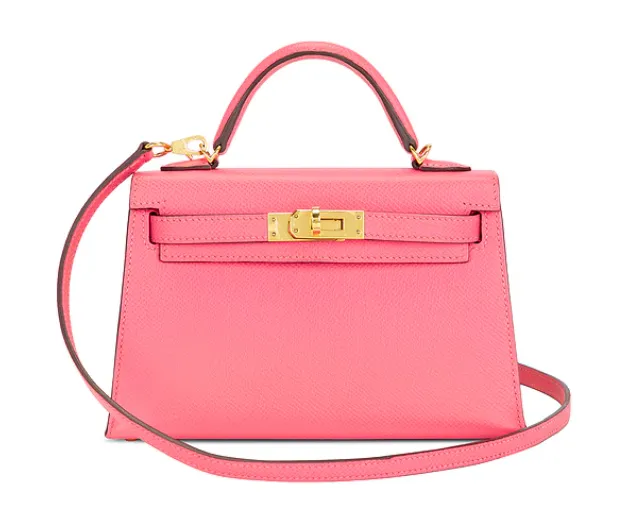
Shape: A classic trapezoid with a structured silhouette.
-
Closure: Features a flap, two side straps, and a metal clasp closure with an iconic padlock (Cadena) and key holder (Clochette).
-
Handles: Has a single top handle and an optional, versatile shoulder strap.
-
Base: Includes bottom studs to protect the base from wear and tear.
Craftsmanship and construction
-
Each bag is handcrafted by a single artisan.
-
It is made from approximately 36 pieces of leather and uses around 680 hand stitches.
-
Two signature constructions exist: the more structured "Sellier" and the softer, more casual "Retourne".
Modern variations
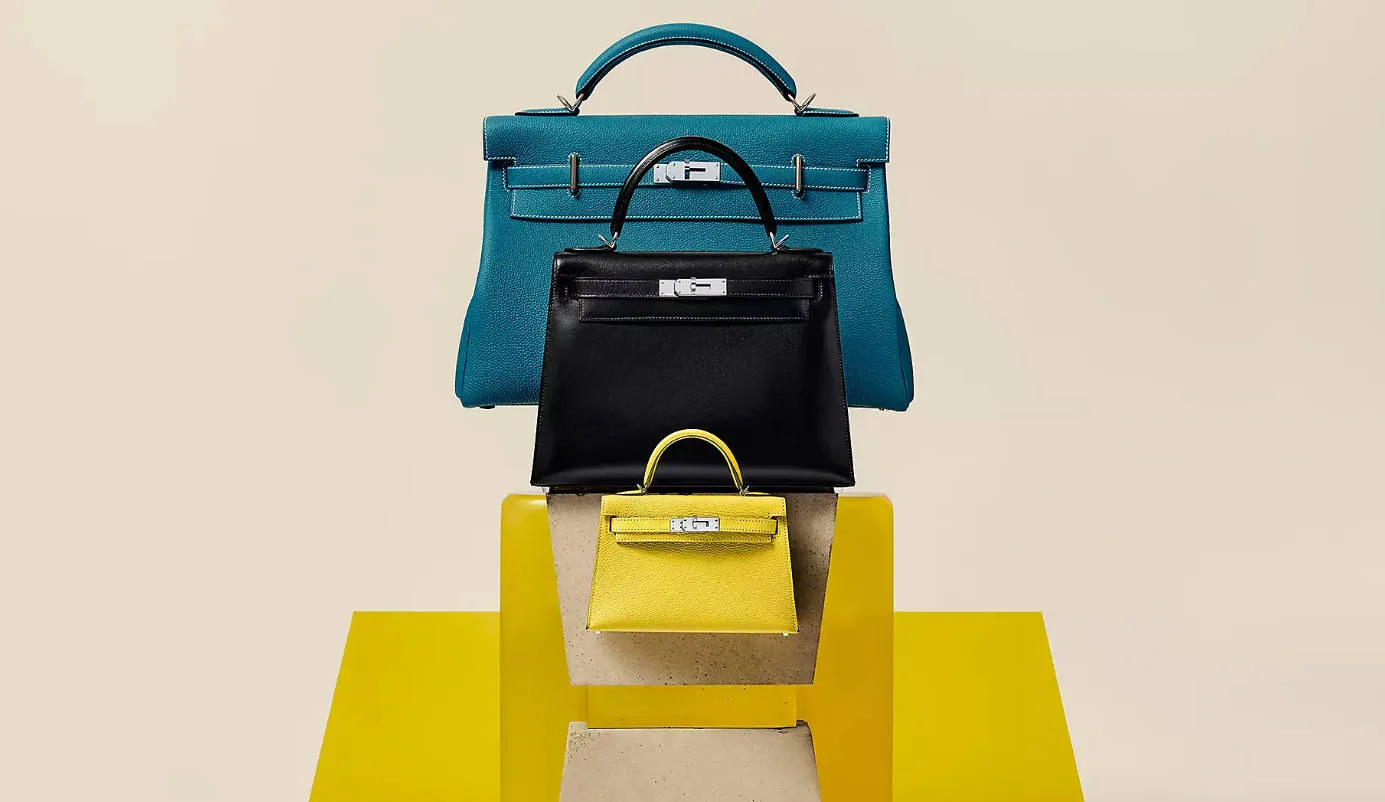
- Sizes: Kelly bags are measured by the width of their base in centimeters (cm). They are available in a wide range, from the tiny Kelly 15 to the large travel Kelly 50, but the most sought-after sizes for daily use are:
|
Size (cm) |
Typical Use Case |
Dimensions (Approx. W x H x D) |
|
Mini Kelly (20) |
Evening events, special occasions, collector's item. |
20 x 16 x 10 cm |
|
Kelly 25 |
Day-to-night; essential-only (phone, keys, wallet). |
25 x 19 x 9 cm |
|
Kelly 28 |
The versatile classic; perfect for everyday essentials. |
28 x 22 x 10 cm |
|
Kelly 32 |
Professional settings, holds significantly more items. |
32 x 23 x 10.5 cm |
-
Materials: Produced in a wide range of leathers and exotic skins, such as crocodile, which are marked with specific symbols indicating their type.
-
Customization: Special orders can feature unique stamps, such as a horseshoe stamp, which signifies a custom creation.
-
Collection: The design has inspired a range of accessories, including wallets, belts, and watches.
Below is a clear and practical English guide on how to authenticate an Hermès Kelly bag, including the key details you should always check.
🧭 Hermès Kelly Bag Real vs. Fake Guide
Quick Authenticity Checklist
| Category | What to Look For | Red Flags |
| Leather | Natural grain, high-quality feel, real leather scent | Plastic-like texture, chemical smell |
| Stitching | Hand-stitched, angled, even, no loose threads | Machine-straight, uneven, messy corners |
| Hardware | Heavy, smooth, sharp engravings, flathead screws | Light weight, dull metal, Phillips screws |
| Logo Stamp | Crisp, deeply pressed, centered and consistent | Shallow, blurry, uneven letters |
| Blind/Date Stamp | Correct letter code, clean placement | Wrong code, sloppy stamping |
| Structure | Symmetrical shape, firm handle | Floppy or misshaped silhouette |
| Interior | Leather lining, clean seams, smooth zippers | Rough edges, glue marks, synthetic lining |
| Accessories | High-quality dust bag, proper box | Fake authenticity cards, poor packaging |
1. Leather Quality & Texture
Hermès is known for using premium, hand-selected leathers such as Togo, Epsom, Clemence, Swift, and Box.
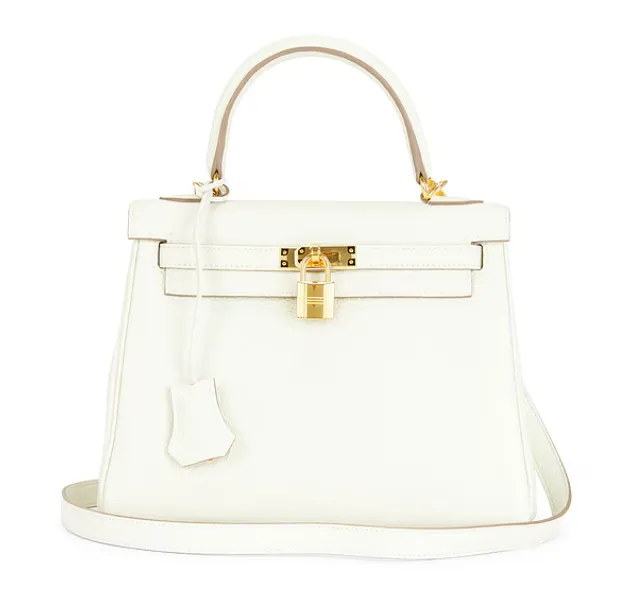
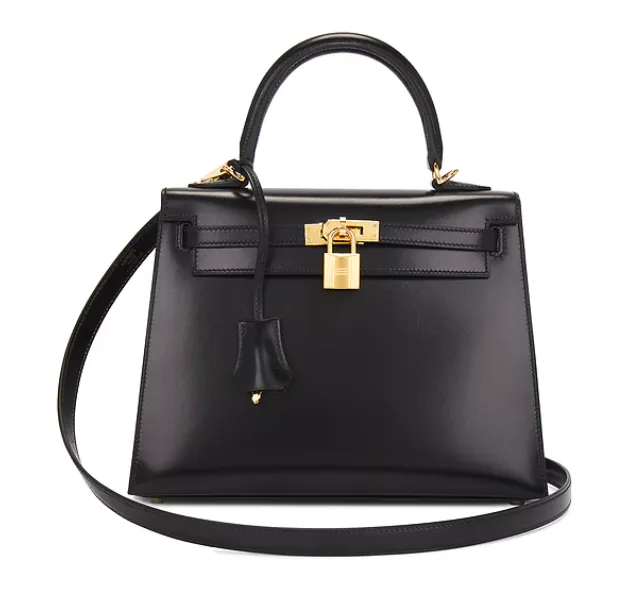
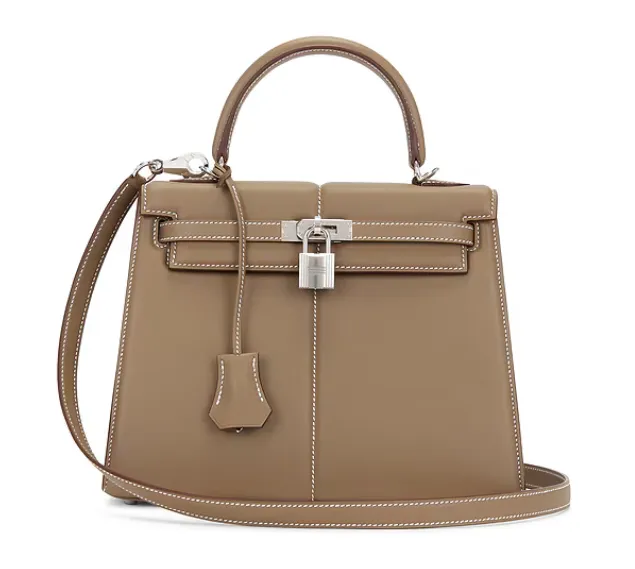
Real:
-
Natural grain with depth and slight irregularity.
-
Luxurious, refined texture.
-
A genuine leather scent (never chemical or plastic).
Fake:
-
Overly uniform or embossed-looking grain.
-
Plastic-like feel or shiny synthetic surfaces.
-
Chemical smell.
2. Stitching & Handcraftsmanship
Each Hermès Kelly is hand-stitched using the saddle-stitch technique, a signature of the brand's craftsmanship.
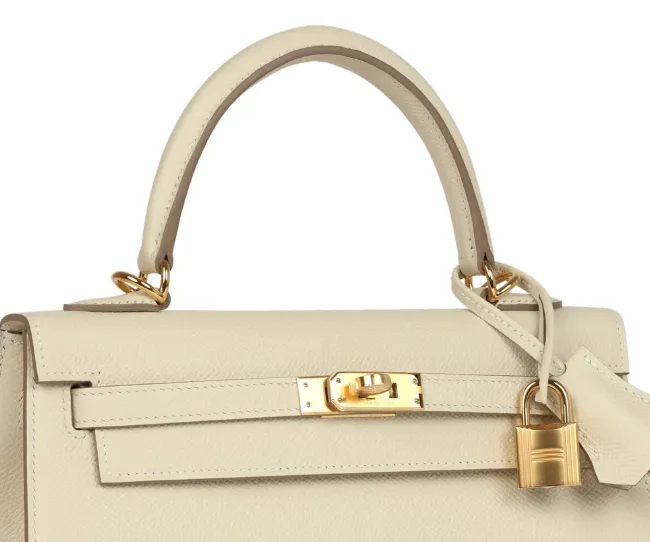
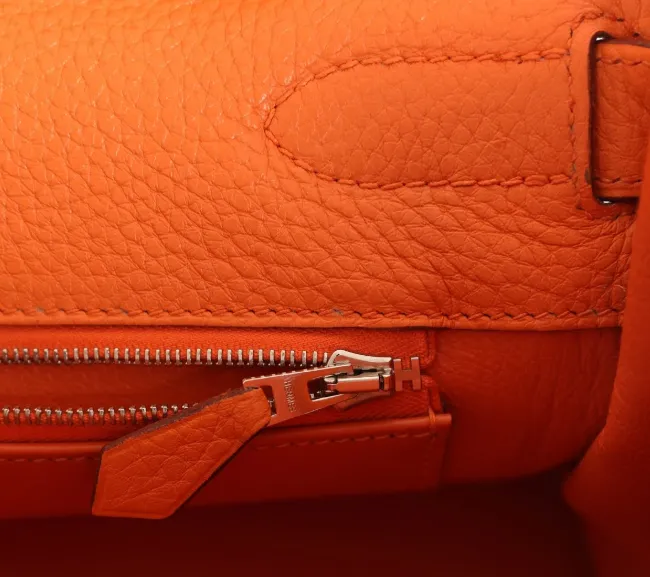
Real:
-
Even spacing with a slight diagonal angle.
-
No loose threads, glue marks, or irregularities.
-
Neatly finished stitch ends.
Fake:
-
Machine-straight stitches that look too perfect.
-
Uneven spacing or threads sticking out.
-
Messy corners or rough edges.
3. Hardware Quality & Engraving
Hardware is one of the most reliable authenticity indicators.
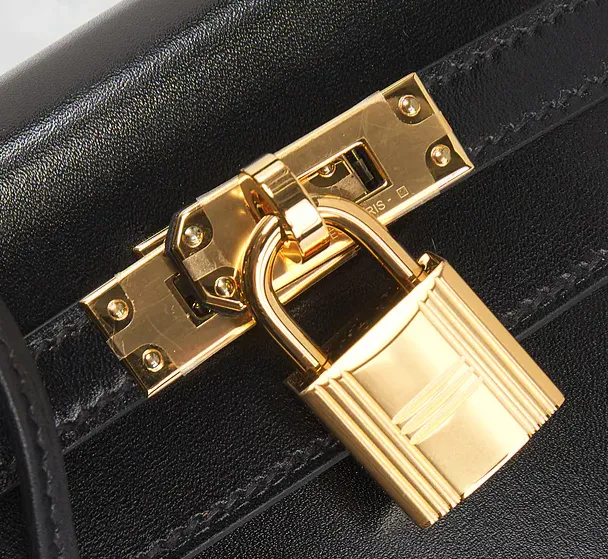
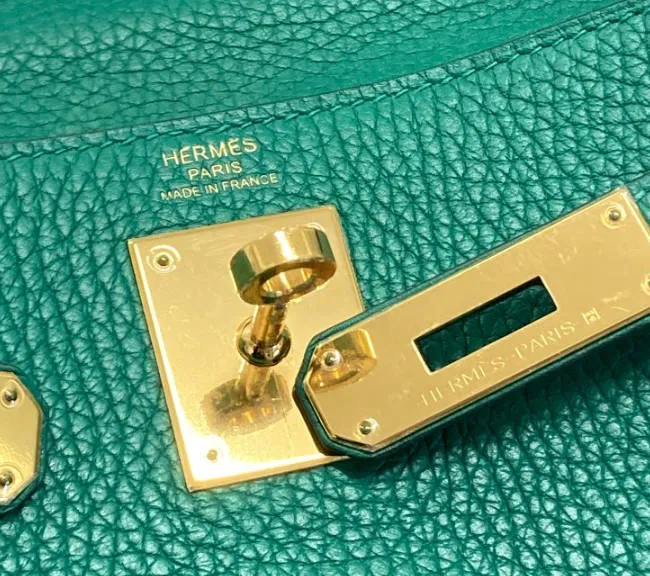
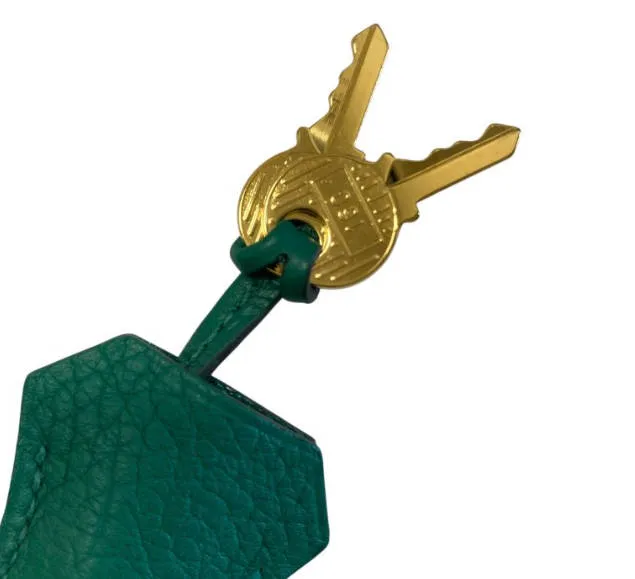
Real:
-
Solid weight (never hollow or lightweight).
-
High-quality palladium or gold plating.
-
Sharp, precise engravings (e.g., "Hermès Paris" on the turn-lock).
-
Flathead screws (Hermès does not use Phillips screws).
-
Smooth turn-lock rotation with zero wobble.
Fake:
-
Light, tin-like metal.
-
Shallow, crooked, or fuzzy engravings.
-
Incorrect screw types.
-
Dull or uneven plating.
4. Logo Stamp: "Hermès Paris Made in France"
The logo stamp is located beneath the flap and is one of the most scrutinized details.
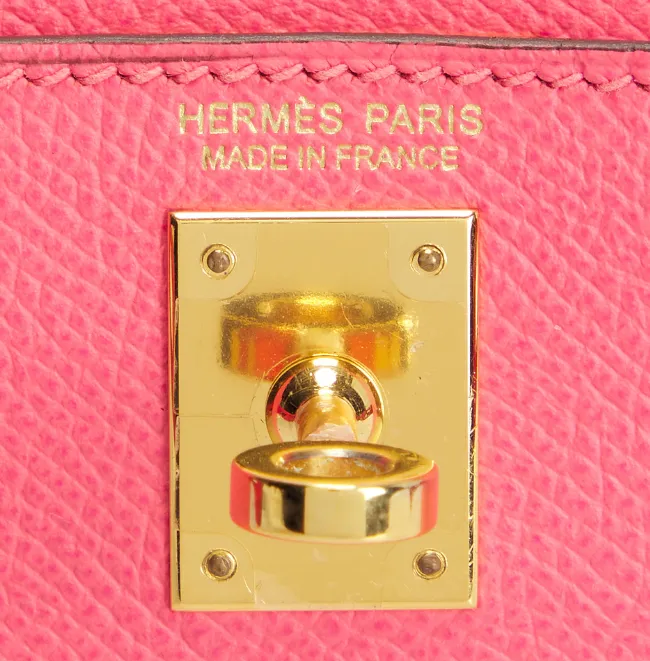
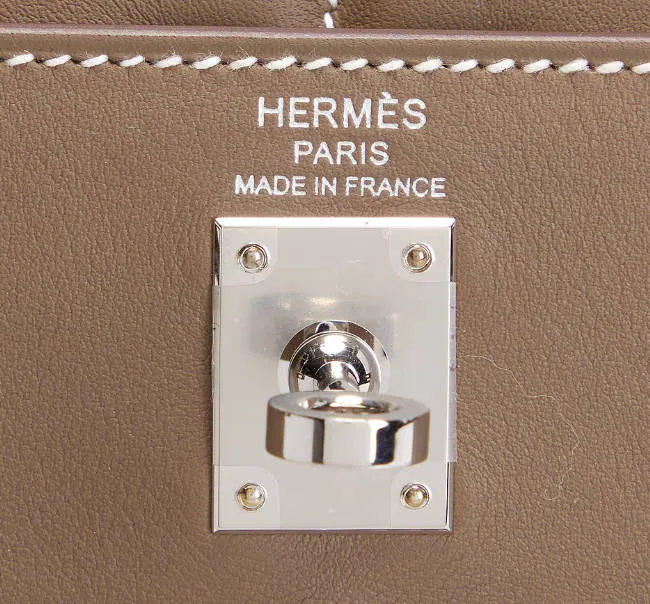
Real:
-
Crisp, deeply pressed, and evenly aligned.
-
Clean spacing and consistent font.
-
Foil color (gold/silver) consistent with hardware for certain leathers.
Fake:
-
Blurry or shallow debossing.
-
Uneven letters or misalignment.
-
Incorrect spacing or font thickness.
5. Blind Stamp / Date Stamp
Hermès uses blind stamps to indicate the year of production and sometimes the artisan.
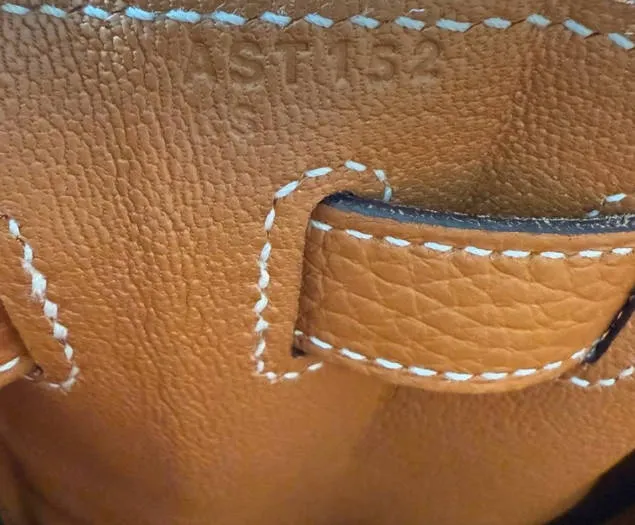
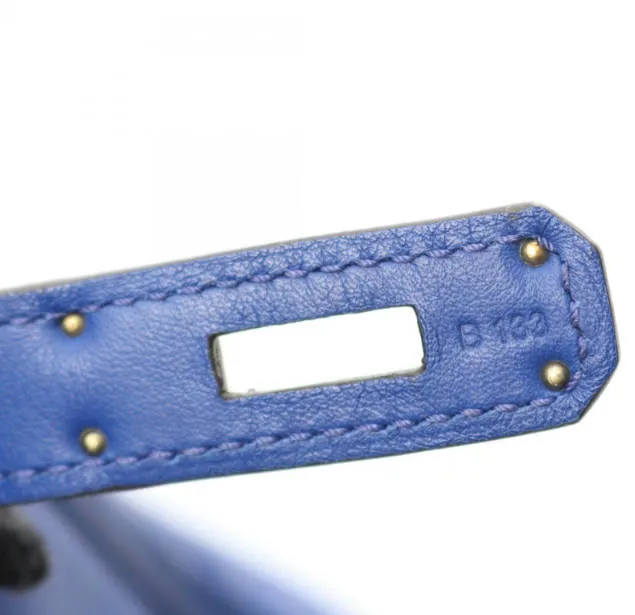
Real:
-
Found inside the bag (on the left interior panel for newer Kellys).
-
Clear, clean embossing.
-
Year letter code must match Hermès' known production charts.
Fake:
-
Incorrect letter codes.
-
Stamps that are too deep, too shallow, or poorly aligned.
-
Wrong placement compared to the production year.
6. Shape, Structure & Handle Construction
The silhouette is one of the easiest ways to spot a fake.
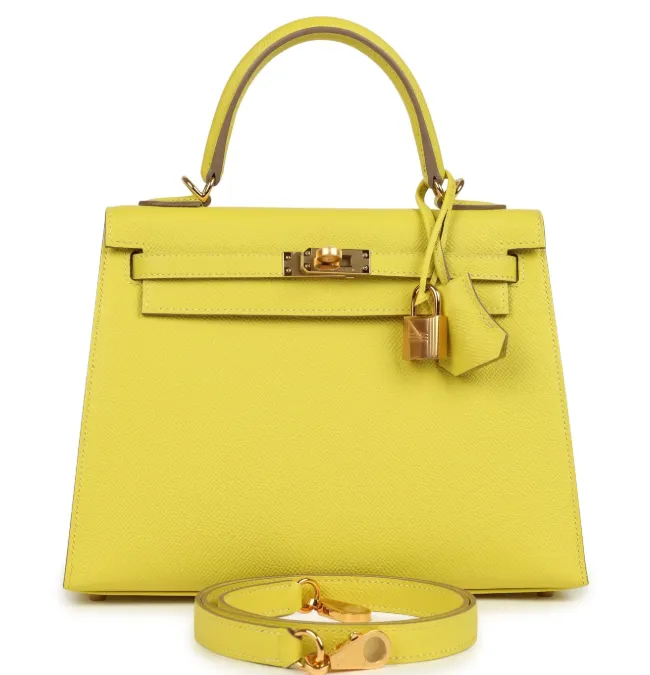
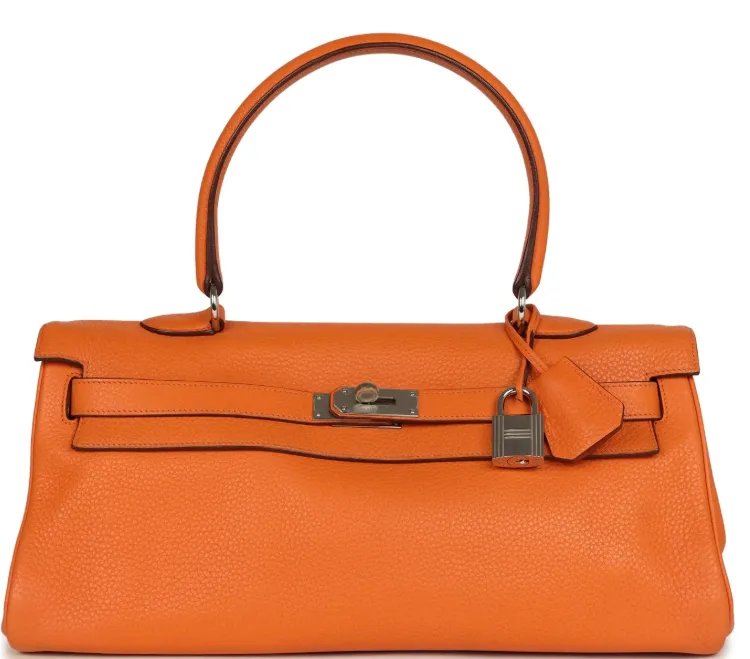
Real:
-
Symmetrical trapezoid shape.
-
Firm, upright handle that stands straight.
-
Sellier: sharp, structured edges.
-
Retourne: softer, rounded edges.
Fake:
-
Slouchy shape or collapsed sides.
-
Handle that flops over.
-
Incorrect proportions or uneven sides.
7. Interior Workmanship
Inside finishes reveal a lot about authenticity.
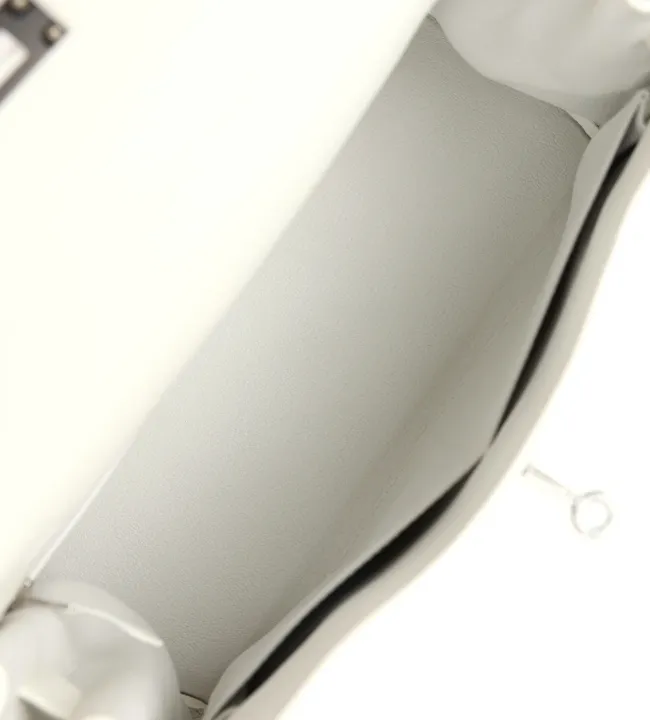
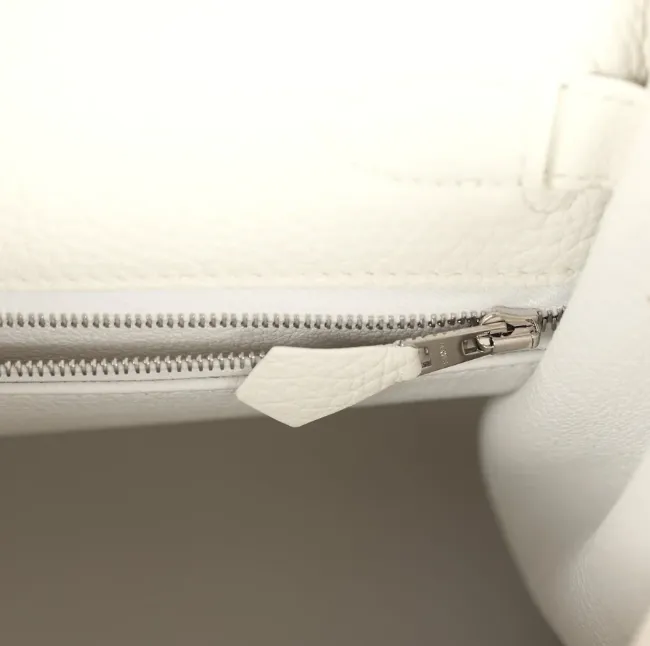
Real:
-
High-quality leather lining.
-
Smooth zipper operation.
-
Clean interior seams without glue residue.
Fake:
-
Synthetic lining materials.
-
Sticky or noisy zippers.
-
Uneven trimming or visible glue.
8. Packaging, Accessories & Provenance
Hermès packaging is high-end—but packaging alone never proves authenticity.
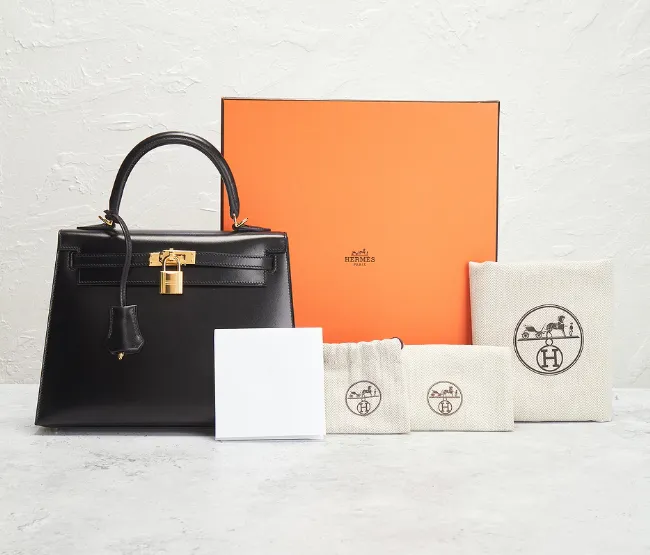
What to keep in mind:
-
Dust bags use thick herringbone fabric with clean logo printing.
-
Orange boxes are high quality, with consistent color and texture.
-
Hermès does not use traditional authenticity cards—cards included with fakes are common.
Community warnings:
-
Many scammers rely on "full set, box included" to mislead buyers.
-
Papers and receipts can be forged and should never be your deciding factor.
9. Buying Tips
Experts across global communities repeatedly recommend:
Ask for specific photos
Request clear images of:
-
Logo stamp
-
Blind/date stamp
-
Hardware screws & turn-lock
-
Corners & handle base stitching
-
Side profile to check structure
-
Interior zipper & lining
Cross-check the year code
If the year stamp doesn't match expected placement or style, be cautious.
Use reputable resale platforms
Choose platforms with strong guarantees rather than random social sellers.
When in doubt, get professional authentication
Third-party luxury authenticators and reputable resale shops can verify borderline cases.
🔔 Conclusion
Authenticating an Hermès Kelly bag is all about understanding the brand's uncompromising craftsmanship and knowing which details expose a counterfeit. While no single feature can confirm authenticity on its own, examining the leather, stitching, hardware, stamps, and overall structure together provides a reliable foundation for making a confident judgment. Community experts consistently emphasize that packaging and receipts alone are never enough—true verification lies in the craftsmanship. When uncertainties arise, turning to reputable resale platforms or professional authenticators is always a wise investment. With careful inspection and the right knowledge, you can navigate the luxury resale market with clarity and protect yourself from costly mistakes.