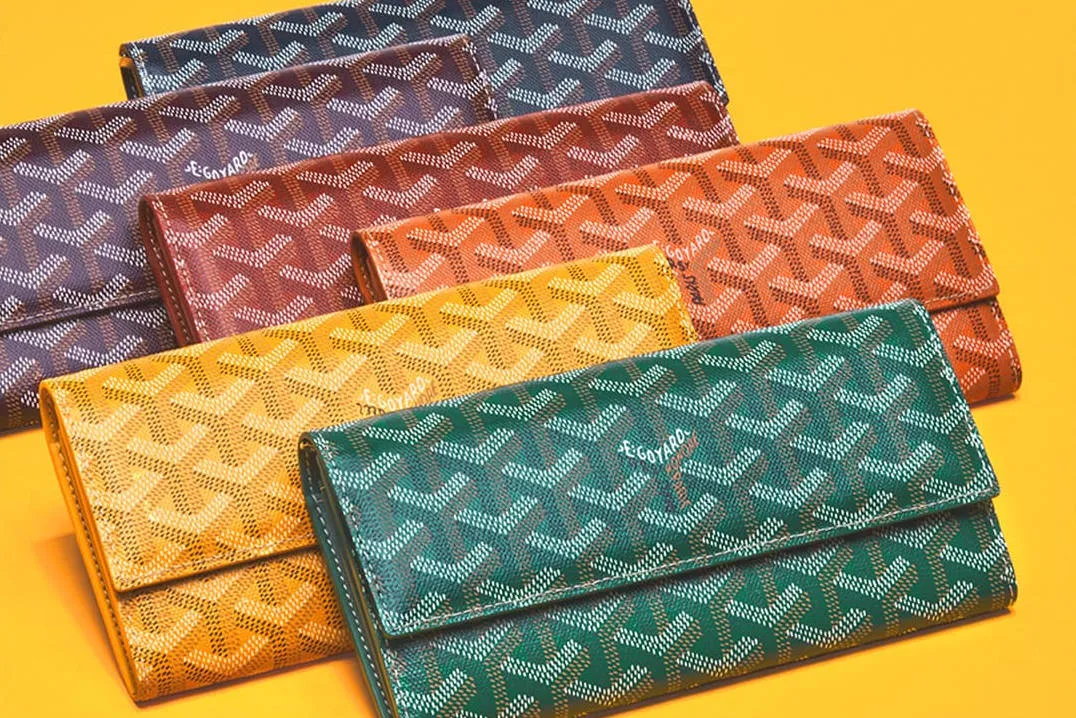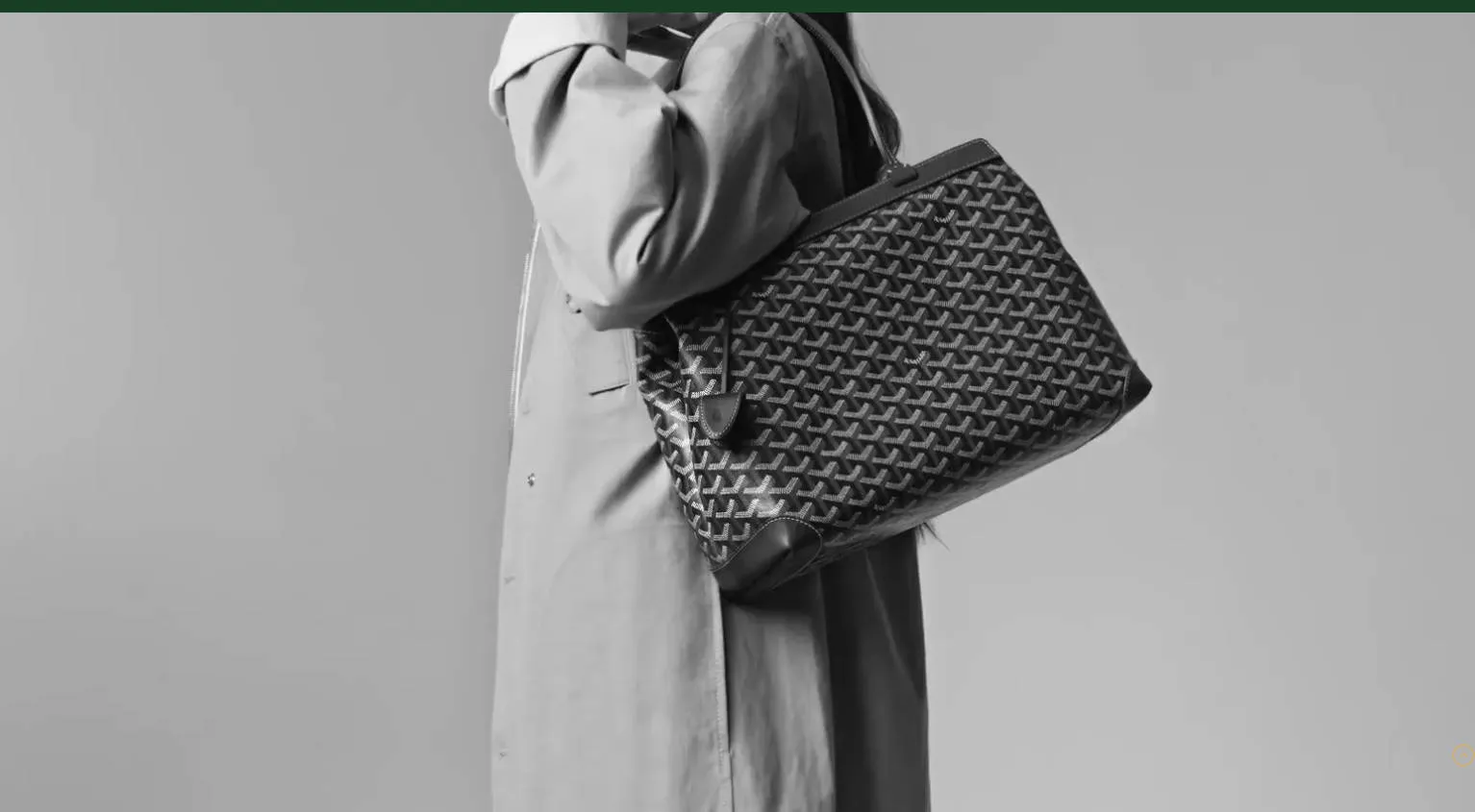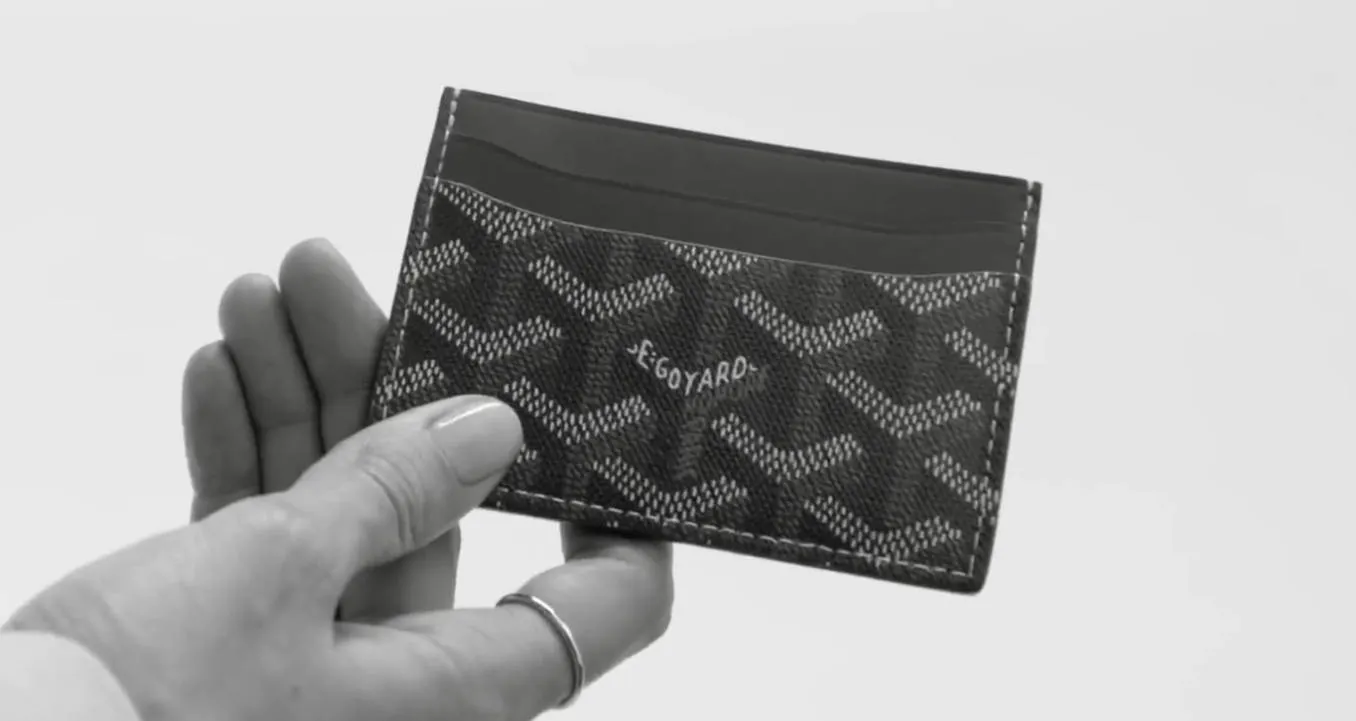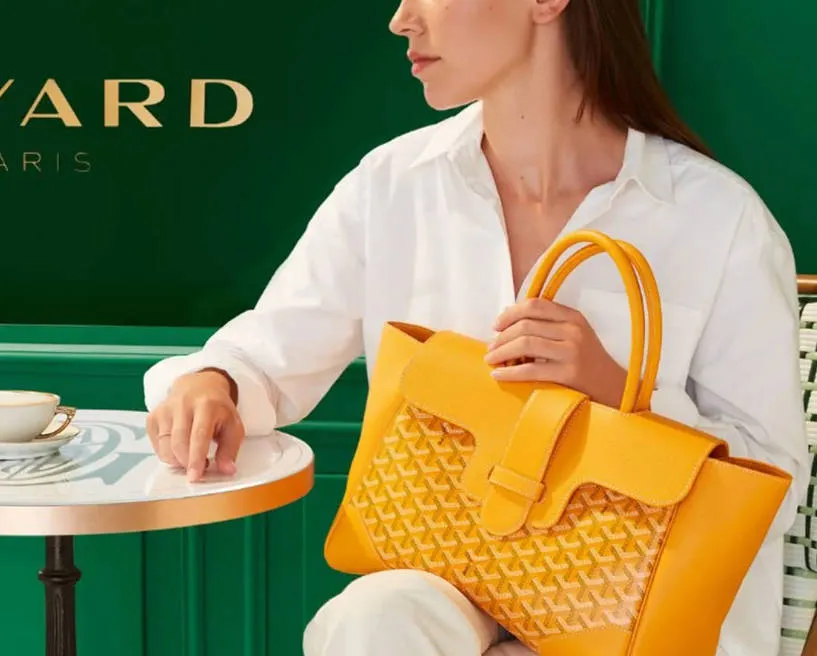
The allure of designer handbags often comes with the risk of encountering imitations. When it comes to prestigious labels like Goyard, understanding how to verify a product's legitimacy is essential for any discerning shopper. Known for its distinctive chevron pattern and rich history, Goyard creates coveted bags and travel pieces that are frequently targeted by counterfeiters. Don't let a deceptive reproduction spoil your luxury experience. We've compiled a comprehensive checklist of distinct features to empower you in recognizing an original Goyard versus a deceptive imitation.
👜 About Goyard Bag
Goyard is one of the most prestigious and discrete French luxury brands, renowned for its trunk-making heritage and exclusive approach to retail. Founded in 1853, just one year before Louis Vuitton, Goyard has cultivated an air of mystery and exclusivity by refusing to sell products online and maintaining a limited number of boutiques worldwide.
1. Brand Heritage and Exclusivity
Goyard originated in 1792 as Maison Martin, specializing in box-making and packing for the French aristocracy. François Goyard took over and renamed the company in 1853, establishing the Goyard family legacy in luxury goods.
-
Exclusivity Model: Unlike many modern luxury houses, Goyard maintains an extremely exclusive business model:
✧ No E-Commerce: Products are not sold through their website; they must be purchased in one of their limited physical boutiques (like Paris, New York, or Tokyo).
✧ Discreet Branding: The brand relies on word-of-mouth and its distinct pattern rather than widespread advertising or flashy logos.
2. Signature Material: Goyardine Canvas
The key material that defines Goyard bags is the Goyardine canvas, an invention of Edmond Goyard in 1892 (though it wasn't named until 1982).
|
Feature |
Description |
|
Composition |
A proprietary textile composed of a blend of natural fibers: cotton, linen, and hemp, which is then coated with resin. |
|
Characteristics |
The canvas is celebrated for being extremely lightweight, durable, water-resistant, and hard-wearing. |
|
Pattern |
The signature interlocking "Y" chevron pattern, which is hand-painted onto the canvas. The three chevrons represent the Goyard family history as log-drivers. |
3. Most Popular Goyard Bag Styles
Goyard's most sought-after bags are variations of the classic tote, favored for their practicality, durability, and instantly recognizable pattern.
|
Bag Style |
Key Features |
|
Saint Louis Tote |
The brand's most iconic and popular model. It is unlined, reversible, and extremely lightweight. It includes a removable interior pouch. The Saint Louis drives the majority of the brand's revenue. |
|
Anjou Tote |
Similar silhouette to the Saint Louis but considered more luxurious. It is reversible with a canvas exterior and a full leather lining inside, giving it a sturdier structure. |
|
Artois Tote |
A structured, more secure version of the Saint Louis. Key differentiators are a top zipper closure, reinforced leather corners, and a structured flat bottom that allows it to stand upright. It is not reversible. |
|
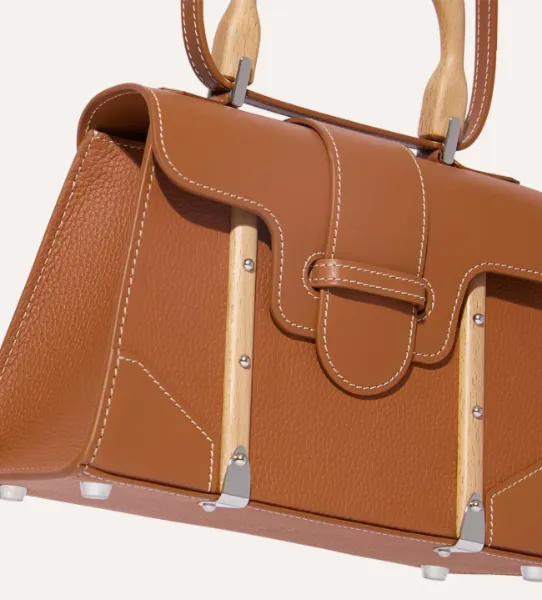
Saigon Bag |
A structured, top-handle bag that more closely resembles the brand's trunk-making origins, often featuring wooden handles or wood trim details. |
4. Pricing and Investment Value
Goyard bags command a premium price due to the hand-finished craftsmanship, quality materials, and enforced scarcity.
-
Customization: Hand-painted customization (stripes and initials, known as marquage) is a signature service, adding to the cost and personalization of the bag.
-
Resale Value: Due to the difficulty in purchasing new Goyard bags directly from the store, they maintain exceptional value on the secondary market. Some models, like the Anjou and Artois, often sell for close to, or even above, their retail price, with rare colors and limited-edition pieces exceeding $7,000 to $12,000.
🧭 Goyard Bag Real vs. Fake Guide
Quick Authenticity Checklist
| Category | What Real Looks Like | What Fake Looks Like |
| Canvas (Goyardine) | Hand-painted dots, slight variations, matte texture, non-repeating pattern | Identical machine dots, glossy surface, repeating print tiles |
| Chevron Pattern | Depth and layering in paint, natural imperfections | Flat digital print, no paint depth |
| Stitching | Even, tight, clean corners, no loose threads | Uneven, skipped stitches, misaligned corners |
| Leather Trim | Natural Vachetta, smooth, soft, edges neatly glazed, develops patina | Plasticky, stiff, overly shiny, sloppy edge glazing |
| Heat Stamp | Sharp, centered, correct font, consistent spacing | Blurry, too thick/thin letters, misaligned, wrong spacing |
| Serial Code | Two letters + four digits (e.g., AB1234), clean embossing | Wrong format, crooked or too deep stamping |
| Hardware | Slightly heavy, smooth zippers, clean engraving | Very shiny metal, light weight, rough zippers, shallow engraving |
| Interior Lining | Cotton/linen feel, correct yellow tone in totes | Synthetic, waxy texture, incorrect yellow shade |
| Shape & Structure | Symmetrical, handles upright but flexible | Distorted proportions, handles stiff/floppy |
| Dust Bag | Thick mustard cotton with crisp logo print | Neon yellow, thin polyester, off-font logo |
| Packaging | Minimal, simple accessories | Excess cards/booklets, overdone packaging |
| Price & Provenance | Reasonable market range, verifiable source | Too cheap, unverified seller, inconsistent story |
Goyard is one of the most frequently counterfeited luxury brands, largely because the house is discreet, produces in limited quantities, and uses a signature hand-painted technique that is difficult to replicate. This guide combines professional authenticity checks with real-world knowledge shared by experienced buyers.
⭐ 1. The Goyardine Canvas
The signature chevron pattern—made of layered dots forming "Y" shapes—is the heart of Goyard's identity.
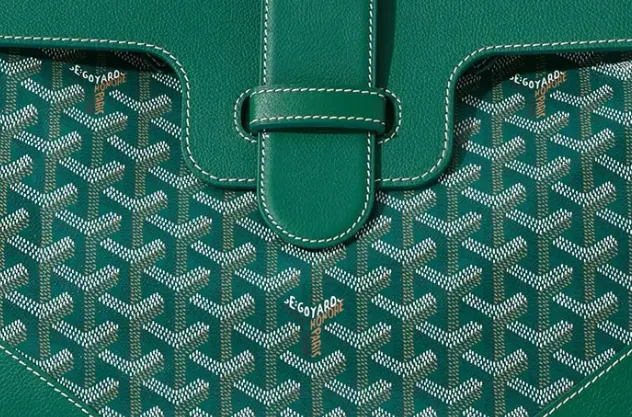
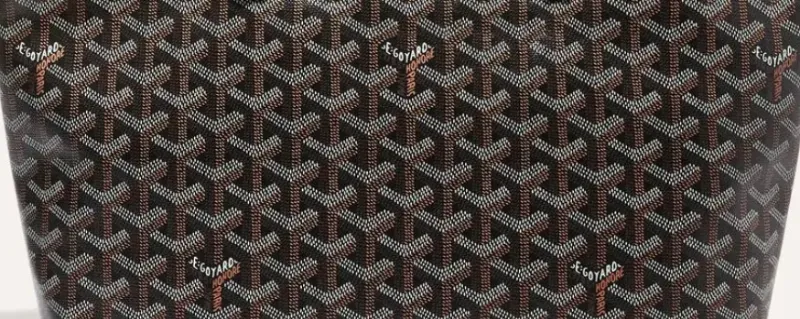
Authentic:
-
The pattern is hand-applied, so the dots show subtle variations in thickness and spacing.
-
The canvas looks matte, lightly textured, never glossy.
-
You can see depth in the paint layers, not a flat digital print.
-
The pattern does not repeat perfectly; small irregularities are normal.
Fake:
-
Machine-perfect dots that look identical and overly uniform.
-
A shiny, plasticky surface.
-
Repeating print tiles that look cloned.
-
Flat, lifeless color without layering.
🔔 Many experienced owners say you can often judge authenticity just from the canvas if photographed clearly.
⭐ 2. Stitching Quality
Luxury-level craftsmanship is obvious in the stitching.
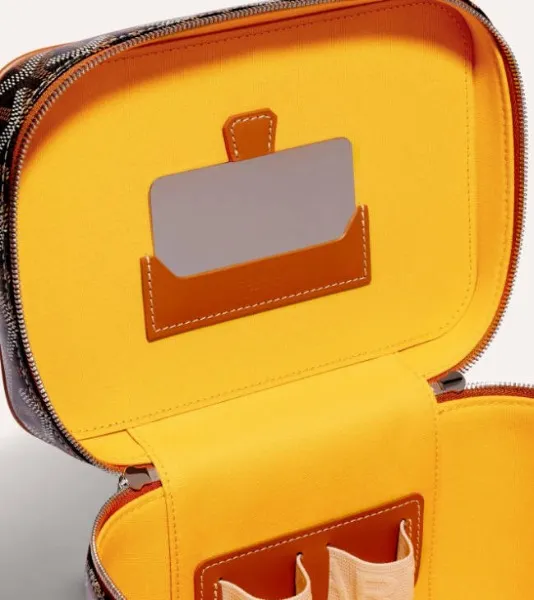
Authentic:
-
Consistent stitch length.
-
No loose threads.
-
Clean and symmetrical corners.
-
Reinforced stitching on handles and pressure points.
Fake:
-
Uneven or wandering stitches.
-
Very thin or cheap thread.
-
Misalignment around trim, tabs, or pockets.
🔔 Collectors often inspect the stitching before everything else because poor sewing is a common flaw in counterfeits.
⭐ 3. Leather Trim (Vachetta)
Goyard uses natural Vachetta leather on many models.
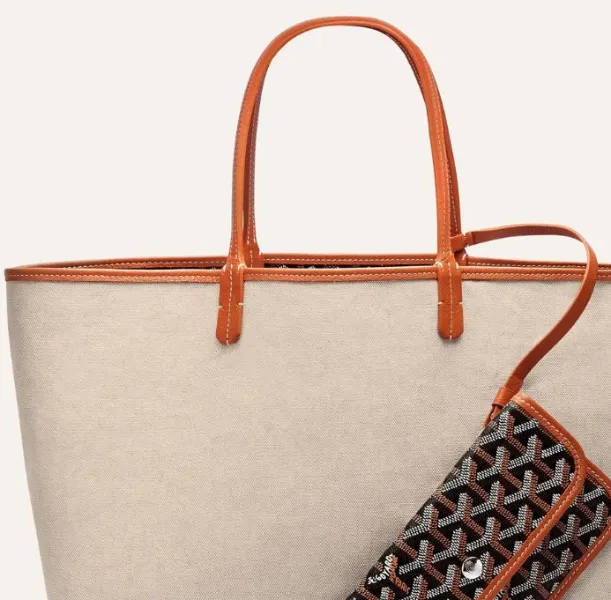
Authentic:
-
Smooth, soft, and natural-feeling.
-
Develops a light patina over time.
-
Edges are neatly glazed, not sticky or lumpy.
Fake:
-
Plastic-like texture.
-
Stiff or overly glossy surface.
-
Edge glazing that looks sloppy or uneven.
🔔 Long-time users often mention that Goyard leather ages beautifully—fakes do not.
⭐ 4. Heat Stamp (Interior Logo)
The interior stamp is one of the most frequently examined details.
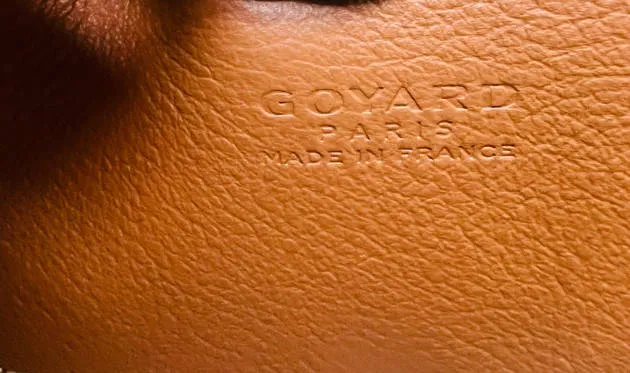
Authentic:
-
"GOYARD PARIS" is clean, sharp, and perfectly centered.
-
Letter spacing is even.
-
The embossing has crisp depth without bleeding.
Fake:
-
Thick or fuzzy lettering.
-
Misaligned or incorrect spacing.
-
Uneven pressure or overly deep stamping.
🔔 Many counterfeit bags fail this detail because the font is difficult to reproduce accurately.
⭐ 5. Serial Code / Style Code
Goyard uses a specific alphanumeric format.
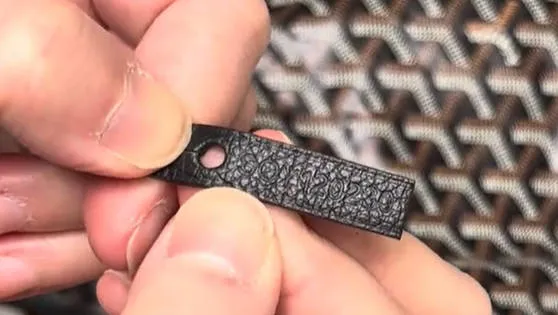
Authentic:
-
Format: two letters + four digits (e.g., AB1234).
-
Discreetly placed inside the bag, usually on the internal leather trim or pocket.
-
Stamping is neat and lightly pressed.
Fake:
-
Wrong format such as only numbers or random letters.
-
Code placed in an unusual location.
-
Deep, messy, or crooked stamping.
🔔 Owners often cross-check the code's format and placement, not the meaning, since Goyard does not offer online verification.
⭐ 6. Hardware
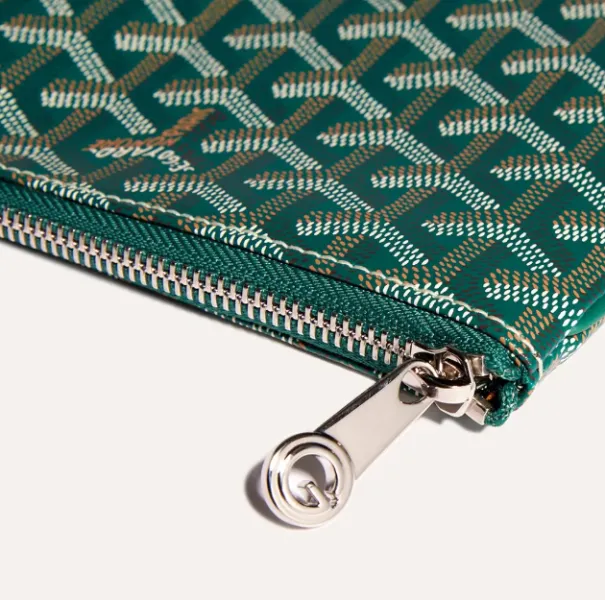
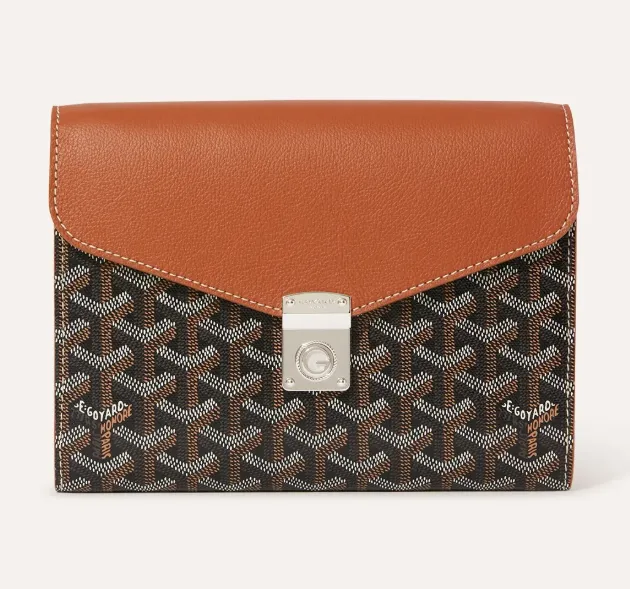
Goyard hardware is subtle and high quality.
Authentic:
-
Smooth, solid, slightly heavy feel.
-
Natural metal sheen (not mirror-like).
-
Clean engravings.
-
Zippers glide smoothly and feel premium.
Fake:
-
Lightweight metal.
-
Very bright, overly shiny finish.
-
Rough zippers.
-
Shallow or sloppy engravings.
🔔 Side-by-side video comparisons highlight hardware differences clearly.
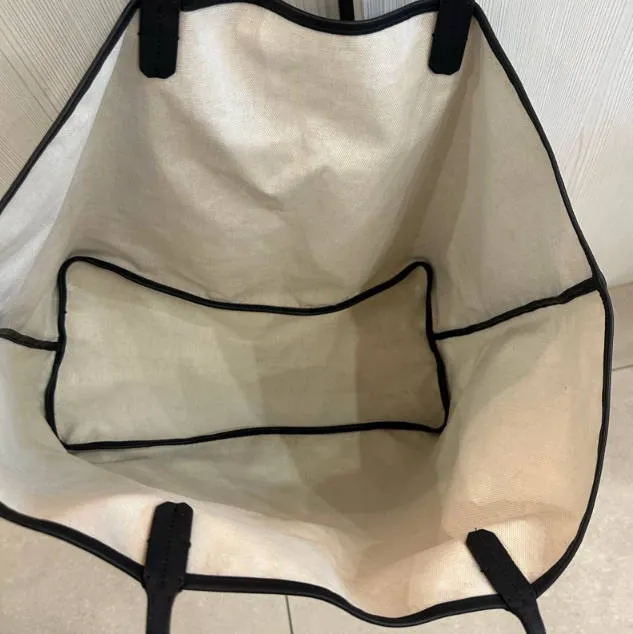
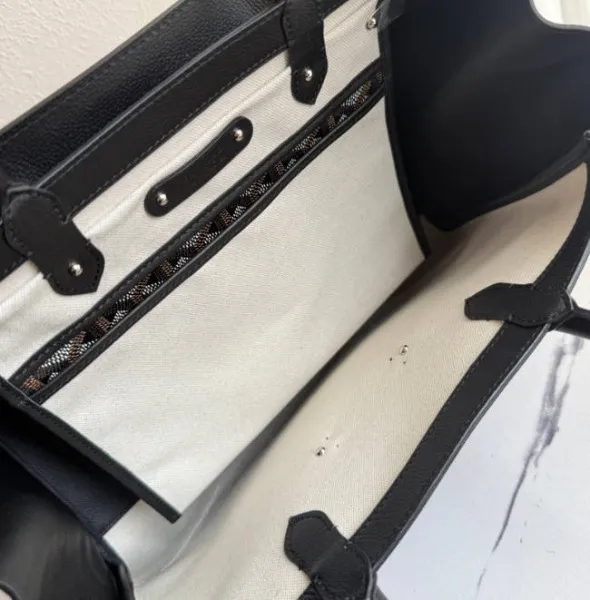
⭐ 7. Interior Lining
The lining varies by model, but the quality is consistent.
-
St. Louis Tote: lightweight yellow cotton/canvas, soft and non-plasticky.
-
Other models (Saigon, Belvédère, Hardy, etc.): linen or cotton blends with visible natural texture.
Fake:
-
Synthetic feel.
-
Wrong shade of yellow (too neon or dull).
-
Shiny or waxy interior fabric.
⭐ 8. Construction & Shape
Goyard bags maintain structure even when unfilled.
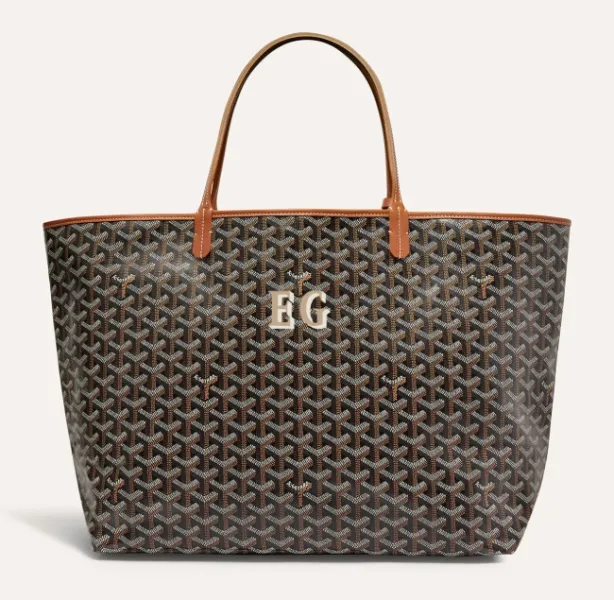
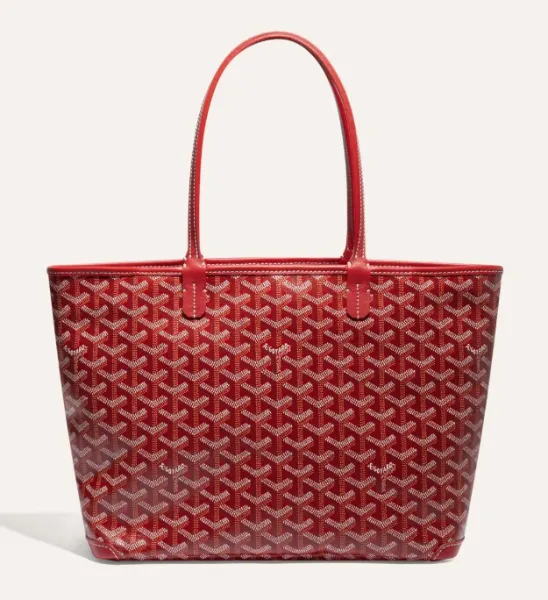
Authentic:
-
Shape is clean and symmetrical.
-
Handles stand upright but remain flexible.
-
Edges are straight; bottom is even.
Fake:
-
Handles too stiff or overly floppy.
-
Bag collapses in odd ways.
-
Proportions slightly off.
🔔 Several long-time collectors say the silhouette "just looks right" on authentic bags.
⭐ 9. Dust Bag & Packaging
Goyard keeps packaging minimal.
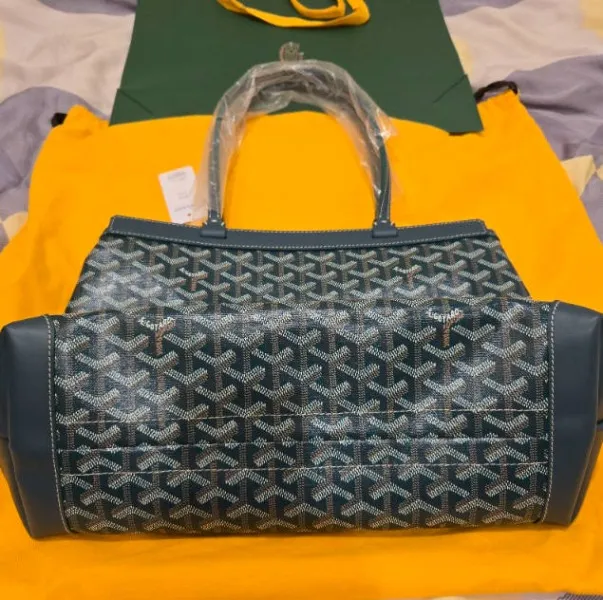
Authentic:
-
Dust bag is thick cotton in mustard yellow.
-
Logo print is sharp, deep brown.
-
Shopping bags are dark green with rope handles.
Fake:
-
Very bright or neon yellow dust bags.
-
Thin polyester-like fabric.
-
Excessive cards or booklets that Goyard never includes.
⭐ 10. Buyers' & Authenticators' Tips
Combine all of the above with real-world wisdom:
A. Many counterfeit bags look convincing from far away
People frequently report near-perfect fakes that only fail under close inspection—especially in the canvas, stamp, and stitching.
B. Viral thrift finds are rarely reliable
Enthusiastic "found a Goyard for $10" claims often trigger heated authenticity debates. Rare finds do exist, but buyer communities recommend skepticism first.
C. Marketplace verification varies
There are reports of the same bag being approved as authentic by one service and rejected by another. Provenance, clear photos, and detailed inspection matter more than a single opinion.
D. Some recent bags show natural wear and marks
A few buyers mention corner rubbing, handle staining, or paint transfer—these issues occur more in authentic bags than many expect. Wear alone is not a sign of fakery.
E. Always ask sellers for specific close-up photos
Experienced buyers consistently request:
-
Clear close-ups of pattern dots
-
Heat stamp
-
Serial code
-
Stitching at stress points
-
Hardware
-
Leather trim
If a seller refuses, that's a red flag.
💡 Conclusion
Authenticating a Goyard bag relies on studying small, precise details. The hand-painted Goyardine pattern is the strongest indicator, followed closely by stitching, leather quality, interior stamping, and hardware. Combined with community insights from real owners—such as inconsistent marketplace verification, unreliable thrift claims, and the importance of specific close-up photos—you gain a practical, comprehensive foundation for verifying authenticity.